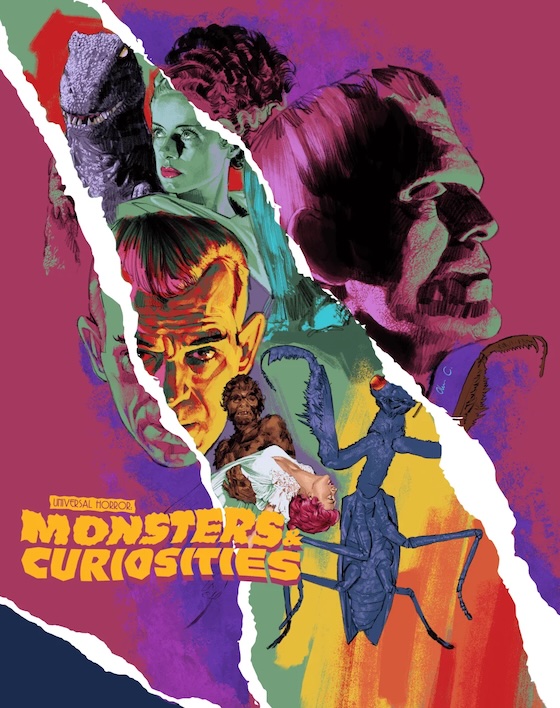
Universal has given us vampires, werewolves, invisible men, reanimated corpses, mad doctors, murderous apes, and Boris Karloff doing pretty much anything Boris Karloff felt like doing.
Now somebody turns a gorilla into a hot woman. Welcome to Captive Wild Woman.
Released in 1943 and tucked deep inside Umbrella Entertainment's Universal Horror: Monsters and Curiosities (1923–1960) collection, Captive Wild Woman is exactly the kind of movie I hoped we'd eventually encounter when we started digging through this enormous set. It's barely over an hour long, completely fucking ridiculous, occasionally uncomfortable for reasons the filmmakers probably never intended, and absolutely committed to its premise. There is no winking at the audience. No acknowledgement that perhaps transforming a gorilla into a beautiful woman through glandular surgery might require further explanation. Universal gives us John Carradine in a laboratory, points him toward a gorilla, and trusts that we'll figure out the rest.
The human story belongs to Beth Colman (Evelyn Ankers), whose fiancé Fred Mason (Milburn Stone) is an animal trainer working with lions, tigers, and a female gorilla named Cheela. Beth's sister Dorothy is suffering from a mysterious illness, which brings her into the care of endocrinologist Dr. Sigmund Walters. Yes, we're dealing with endocrinology again. Apparently Universal's medical department discovered glands and decided they were capable of absolutely fucking anything. Walters isn't simply treating patients, of course. He's conducting experiments involving transplantation and evolution, eventually acquiring Cheela and using glandular material to transform the gorilla into a human woman.
That woman is Paula Dupree. And here comes Acquanetta.
Few performers in Universal Horror arrive with an introduction quite like hers because Paula barely needs dialogue to command the movie. Acquanetta was promoted during her career with the exoticized nickname "The Venezuelan Volcano," and Captive Wild Woman uses her less as a conventional actress than as a physical presence. Paula watches. She moves. She reacts. She seems simultaneously human and not quite human, which is exactly what the character requires. The performance is largely constructed from expression and body language, but there's something genuinely compelling about her stillness. Everyone else behaves like they're in a Universal programmer. Acquanetta sometimes appears to have wandered in from another movie entirely.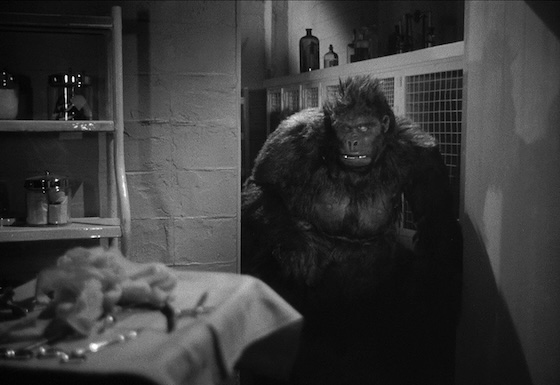
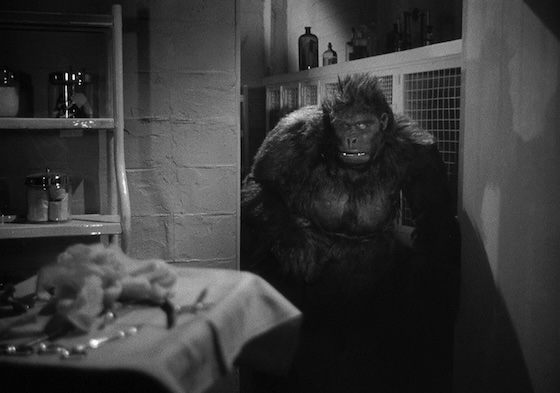
The transformation itself belongs to that wonderful tradition of Universal science in which somebody explains something impossible with enough confidence that everyone simply accepts it. Walters uses glandular transplantation and brain surgery to push Cheela across some imaginary evolutionary boundary, and Paula emerges looking considerably better than anyone has a right to look after experimental gorilla surgery. But Walters hasn't erased the animal underneath. Paula retains a connection to Fred and reacts instinctively when he's threatened during his animal act. Fred doesn't understand who—or what—Paula actually is.
Neither does Paula.
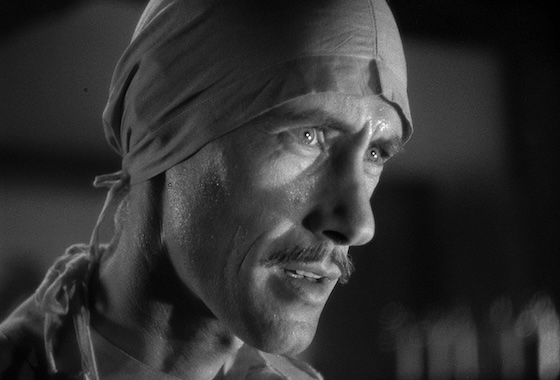
That's where Captive Wild Woman becomes more interesting than its exploitation premise suggests. Paula didn't ask for any of this. She's an animal forcibly transformed into something human by a scientist who views her body as experimental material, and whatever danger she represents grows directly from that violation. John Carradine makes Walters particularly effective because he refuses to play any of this as a joke. He gives the pseudoscience weight, delivers the dialogue as though the Nobel committee might be listening, and carries just enough arrogance to make it clear Walters considers himself a visionary. Carradine's long face and severe presence already do half the Gothic work for him. Put that man in a laboratory and the experiment is going wrong. You don't need to read the chart.
Evelyn Ankers once again finds herself trapped in Universal Horror's orbit, and there's something comforting about seeing her here. Ankers spent enough time being endangered by monsters that she should have received hazard pay from the studio. Beth is primarily our conventional point of identification, but Ankers gives her the intelligence and emotional urgency necessary to keep the human story moving while Carradine and Acquanetta occupy the stranger corners of the movie. Milburn Stone is likable enough as Fred, although the real attraction of his storyline is the animal-training footage.
And there's a lot of it.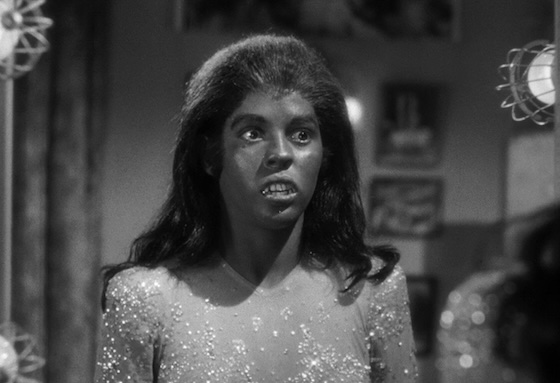
Captive Wild Woman incorporates extensive footage of Clyde Beatty performing with lions and tigers, and these sequences are simultaneously fascinating and unnerving to watch now. Whatever narrative excuse the movie provides, you're still watching a man enter an enclosure filled with large predators while Universal apparently assumes this is perfectly normal entertainment. The footage gives the movie an authenticity its laboratory scenes obviously can't provide. When those animals move, charge, or react, there are no visual effects protecting anyone.
The cultural baggage surrounding Paula deserves acknowledgement too. The movie's fascination with transformation, primitive instinct, exotic beauty, and evolutionary hierarchy carries ideas that haven't aged gracefully, while Universal's marketing of Acquanetta leaned heavily into a manufactured exotic persona. Watching the film more than eighty years later means recognizing that material without allowing it to swallow everything else interesting about the picture. Acquanetta's strange screen presence remains the reason Paula works. Beneath all the pseudoscience and exploitation, she creates a character caught between identities, responding to a human world she was never prepared to inhabit.
By the final stretch, Walters' experiment begins collapsing, Paula's transformations become increasingly unstable, and the film moves toward the tragedy baked into the premise from the beginning. There was never going to be a normal life waiting for Paula Dupree. She's an experiment that became inconvenient, and Universal's old theme of creation without responsibility surfaces again without requiring another Frankenstein laboratory.
The gorilla wasn't the problem. The guy with the scalpel was.



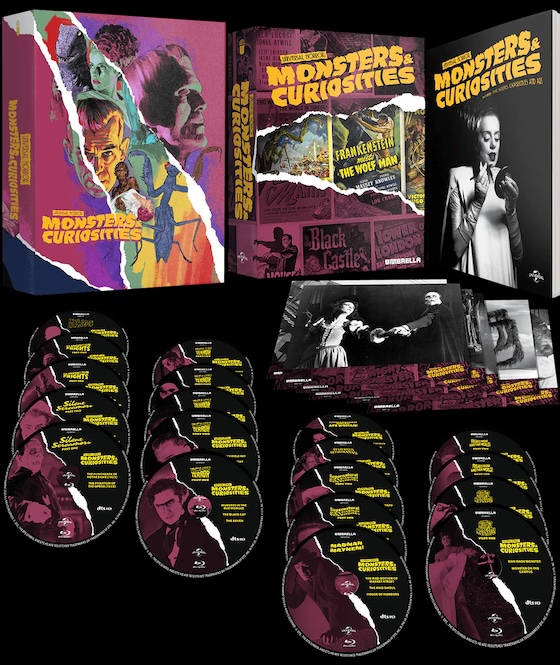
Universal Horror: Monsters And Curiosities Blu-ray - Umbrella Entertainment Exclusive / Collector's Edition
Home Video Distributor: Umbrella Entertainment
Available on Blu-ray - July 1, 2026
Screen Formats: 1.33:1; Various
Subtitles: English SDH
Video: 1080p
Audio: DTS-HD Master Audio 2.0
Discs: Blu-ray Disc; nineteen-disc set
Region Encoding: Locked to Region A
Captive Wild Woman is pure Universal programmer insanity: mad science, animal attacks, glandular experimentation, John Carradine staring intensely at medical equipment, Evelyn Ankers in danger, and Acquanetta turning from gorilla to woman and back again. At barely feature length, it doesn't have enough time to become boring, which is probably the perfect delivery system for material this wonderfully absurd.
Its secret weapon is Acquanetta. Paula Dupree could easily have been nothing more than a gimmick, but her stillness and unusual screen presence give the movie an unexpectedly melancholy center. She's confused, instinctive, jealous, protective, and trapped between two states of existence she never chose.
His name was Frankenstein's Monster. Paula just has better cheekbones.
Video
The black-and-white presentation suits the movie's mixture of laboratory Gothic and circus spectacle nicely. The scientific interiors benefit from stronger contrast and detail, while Acquanetta's close-ups are particularly important because so much of Paula's characterization comes through her face rather than dialogue. The animal footage inevitably varies somewhat in texture from the dramatic material, but that difference becomes part of the film's strange documentary-meets-monster-movie personality.
Audio
The mono presentation keeps dialogue and Franz Waxman's dramatic scoring clear, but the animal sequences are where the track gains much of its energy. Roaring lions, agitated crowds, cracking whips, and the chaos of Fred's performances give those scenes a visceral quality that the quieter laboratory material deliberately lacks. Carradine's measured delivery remains essential. The more insane Walters' science becomes, the calmer Carradine sounds explaining it.
That's how you know you're dealing with a professional.
Supplements:
Commentary:
- None
Special Features:
Within Umbrella Entertainment's Universal Horror: Monsters and Curiosities (1923–1960) collection, Captive Wild Woman begins one of the studio's strangest miniature franchises: the Ape Woman trilogy. Paula Dupree would return in Jungle Woman and The Jungle Captive, allowing Universal to do what Universal always did when it stumbled upon a monster audiences might recognize.
Bring the monster back. Explain later.
After spending this much time wandering through Universal's vaults, I wouldn't have it any other way.

| Movie |  |
|
| Video | |
|
| Audio | |
|
| Extras |  |
|
|
Composite Blu-ray Grade
|
||