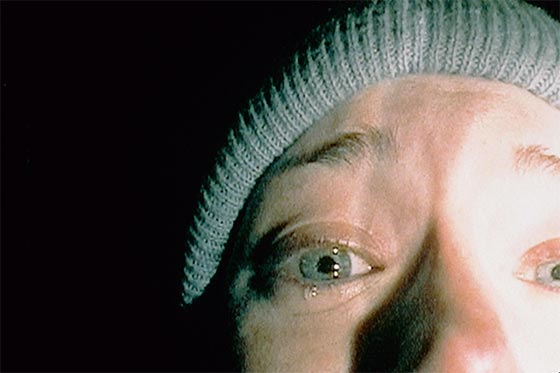
I remember when The Blair Witch Project (1999) came along and seemingly half the country lost its collective mind over three idiots wandering around the woods with a couple of cameras. The other half couldn't understand what all the fuss was about. No monsters, no elaborate murders, no naked teenagers getting hacked to pieces. Just a bunch of trees, some strange noises, and Heather Donahue screaming into a camera like she'd just discovered the end of civilization somewhere outside Burkittsville, Maryland.
And somehow, against every conceivable rule of commercial filmmaking, the damn thing worked.
What fascinated me then, and still fascinates me now, wasn't simply the movie but the extraordinary circus surrounding it. The website, the missing-person mythology, the mockumentaries, the carefully cultivated suggestion that these three people might actually have disappeared. This was 1999, when the internet still felt like a slightly dangerous frontier rather than an endless shopping mall populated by idiots arguing about politics. Myrick and Sánchez understood that the audience's imagination could do more damage than any special-effects department, and they exploited that understanding with the enthusiasm of a couple of carnival barkers who'd somehow gotten hold of a modem. It was guerrilla filmmaking, guerrilla marketing, and one hell of a cultural practical joke.
Watching The Blair Witch Project today is an interesting experience, particularly when you know exactly how the trick was accomplished. The first act is deliberately ordinary, almost irritatingly so. Heather, Josh, and Mike bicker, stumble around, make questionable decisions, and demonstrate the survival instincts of three people who probably shouldn't have ventured beyond the parking lot. Heather's determination to keep filming becomes increasingly maddening, while the escalating arguments begin to feel less like scripted drama and more like the sort of miserable vacation where everyone secretly wishes somebody else would disappear. But that's where the movie gets under your skin. These aren't particularly likable people, and the filmmakers aren't interested in making them heroic. They're exhausted, frightened, and slowly realizing that whatever confidence they brought into the woods has evaporated. The nights become increasingly unbearable, the noises more difficult to explain, and the woods themselves begin to feel like an enormous, indifferent trap. The famous tent sequence remains a master class in doing practically nothing and making it terrifying. No elaborate creature effects, no helpful explanation, just panic and darkness. And that final image? Christ. It's one of the great closing moments in modern horror, precisely because the movie has spent eighty minutes teaching you to fear what isn't there.
Now, I have enormous affection for independent horror, particularly films that manage to turn financial limitations into creative advantages, but I'm not going to pretend The Blair Witch Project is flawless. The middle section occasionally feels like an endurance test, the repetitive arguments can become tiresome, and the shaky camerawork remains a legitimate obstacle for anyone susceptible to motion sickness. There are moments when you want to reach through the screen, confiscate the camera, and hand these people a compass.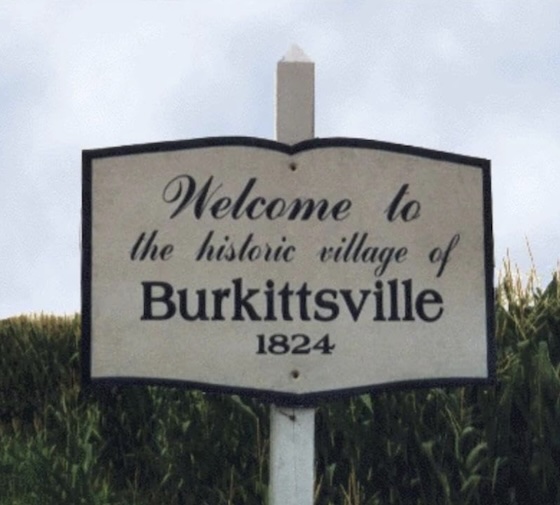
But what Myrick and Sánchez accomplished with virtually nothing remains remarkable. They took the aesthetics of amateur documentary filmmaking, stripped horror down to its psychological essentials, and trusted the audience to fill in the blanks. More importantly, they understood the difference between being startled and being frightened. A jump scare lasts a second. The suggestion that something might be standing just beyond the reach of your flashlight can follow you home. And while the found-footage genre subsequently became a dumping ground for every aspiring filmmaker with a consumer-grade camera and a questionable screenplay, blaming The Blair Witch Project for its imitators is like blaming Jaws for every lousy shark movie that followed. The original still has something most of those imitators never understood: restraint.
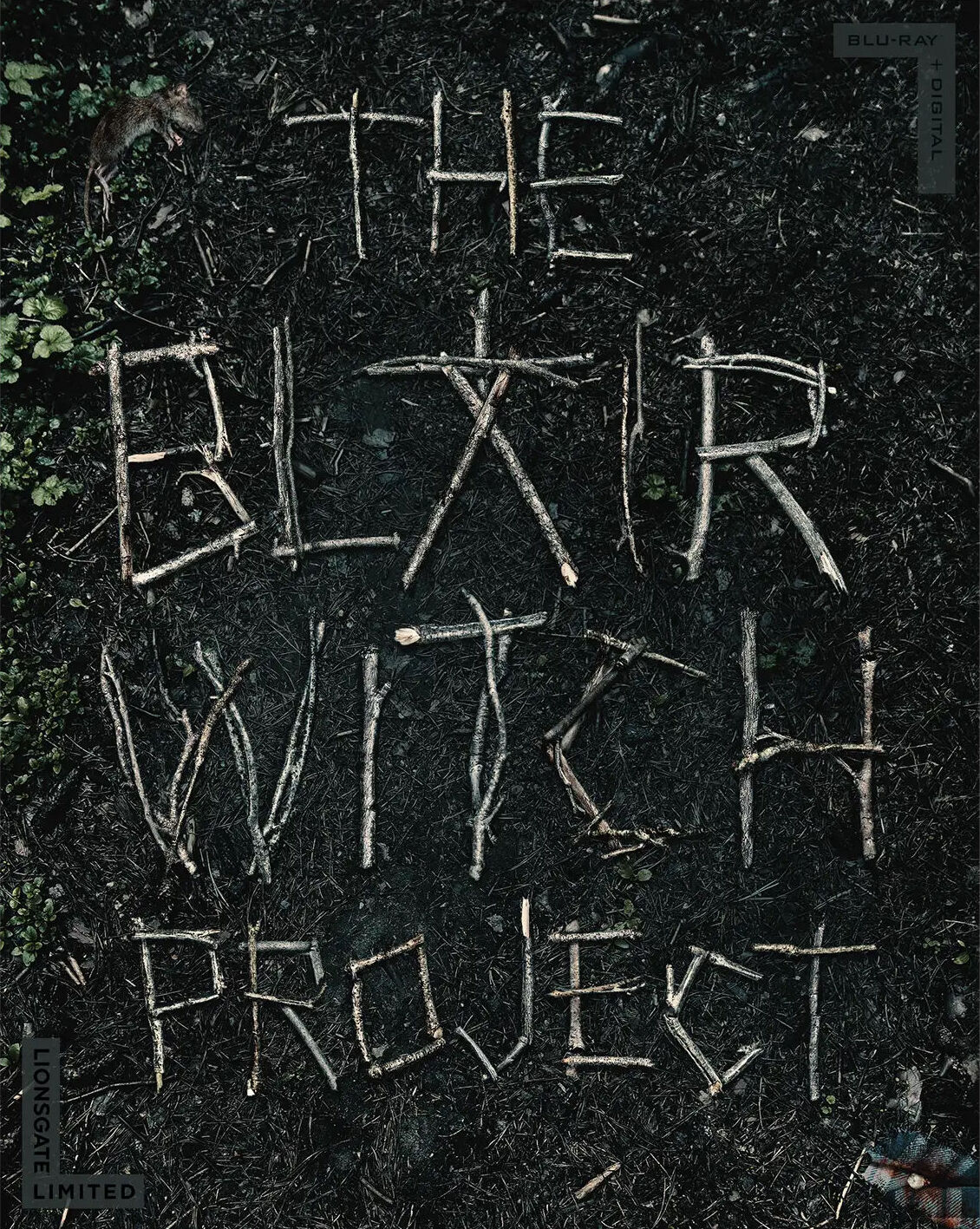
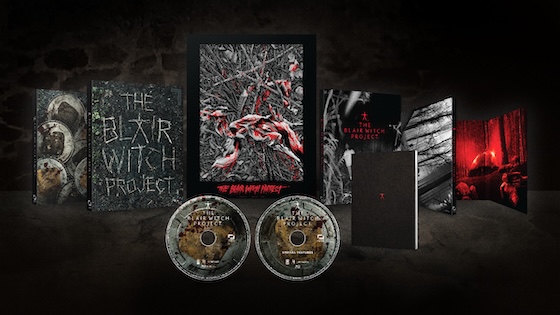
Which brings me to Lionsgate Limited's Definitive Collector's Edition, and frankly, this is the reason we're revisiting the movie in the first place. I've never been particularly interested in buying the same film over and over simply because somebody slapped a new cover on the box and called it definitive. If you're going to ask collectors to open their wallets again, you'd better bring something worthwhile to the table. Fortunately, this edition understands the assignment. The filmmaker-approved restorations, multiple cuts, extensive archival supplements, and substantial collection of production materials offer something considerably more valuable than another cosmetic upgrade. They provide a window into how this peculiar little independent production became one of the defining horror phenomena of the 1990s. For somebody who appreciates the history of low-budget filmmaking as much as the movies themselves, that's the real attraction. I want the commentaries, the discarded footage, the production documents, the stories about what went wrong and how they managed to pull it off anyway. I want to understand the madness behind the movie.
The Blair Witch Project remains a slow, abrasive, occasionally infuriating masterpiece of psychological manipulation, and this collector's edition finally treats it like the important piece of independent cinema history it is. The film won't suddenly convert everyone who hated it in 1999, but the restoration and supplements make a compelling argument for owning it again. This isn't just another overpriced box designed to look pretty on a shelf. It's the sort of thoughtful, historically minded release that reminds me why I still collect physical media. The movie scared the hell out of audiences with practically nothing. Twenty-seven years later, the story of how they pulled that off might be the most fascinating thing in the box.


Home Video Distributor: Lionsgate Films
Available on Blu-ray - October 13, 2026
Screen Formats: 1.37:1
Subtitles: English SDH
Video: 1080p
Audio: DTS-HD Master Audio 2.0
Discs: Blu-ray Disc; two-disc set
Region Encoding: Locked to Region A
Three film students disappear into the Maryland wilderness in October 1994, armed with a couple of cameras, a questionable sense of direction, and the increasingly foolish belief that investigating a local witch legend might make for an interesting documentary. What remains is a collection of videotapes documenting their descent from youthful enthusiasm into absolute terror. Daniel Myrick and Eduardo Sánchez's The Blair Witch Project (1999) turned a shoestring production into a cultural phenomenon, helped rewrite the rules of independent horror, and convinced a remarkable number of people that the whole damn thing might actually be real. Heather Donahue, Michael Williams, and Joshua Leonard aren't battling elaborate monsters or dodging buckets of Hollywood blood. They're lost, exhausted, frightened, and slowly turning on one another. And somewhere beyond the trees, something may be watching. Twenty-seven years later, the movie remains a remarkable exercise in suggestion, paranoia, and the terrifying possibilities of what you never actually see.
Video
Lionsgate's Definitive Collector's Edition finally brings the filmmaker-approved 2024 restorations to American Blu-ray, sourced directly from the original Hi8 videotapes and 16mm film elements rather than relying entirely on the compromised theatrical presentation we've lived with for decades.
The two-disc set includes three versions: the restored theatrical cut, the slightly longer festival cut, and the original-release version, all presented in the film's intended 1.33:1 framing. And here's the beautiful irony: this restoration makes The Blair Witch Project look better by allowing it to look appropriately terrible.
The video footage retains its smeary, low-resolution ugliness, while the black-and-white 16mm photography exhibits the grain, texture, and unsettling atmosphere that made those sequences so effective. Nobody needs this movie looking like it was photographed for a luxury automobile commercial. Its visual limitations are essential to the illusion, and the restoration respects them.
Audio
The English DTS-HD Master Audio 2.0 presentation understands that The Blair Witch Project doesn't require an elaborate surround-sound extravaganza to crawl beneath your skin. Its greatest sonic weapons remain snapping branches, distant noises, frantic arguments, and the increasingly desperate voices of three people who have absolutely no idea where the hell they are. The understated stereo mix preserves the intimacy of the original recordings, allowing those moments of nighttime uncertainty to become genuinely uncomfortable.
This is a movie where the sound of something moving outside a tent can be more disturbing than an entire army of computer-generated monsters. Dialogue remains central to the experience, while the natural environmental sounds do much of the psychological damage. English SDH subtitles are provided, although I'd strongly recommend watching this one in complete darkness with the volume turned up and your imagination doing the heavy lifting.
Supplements:
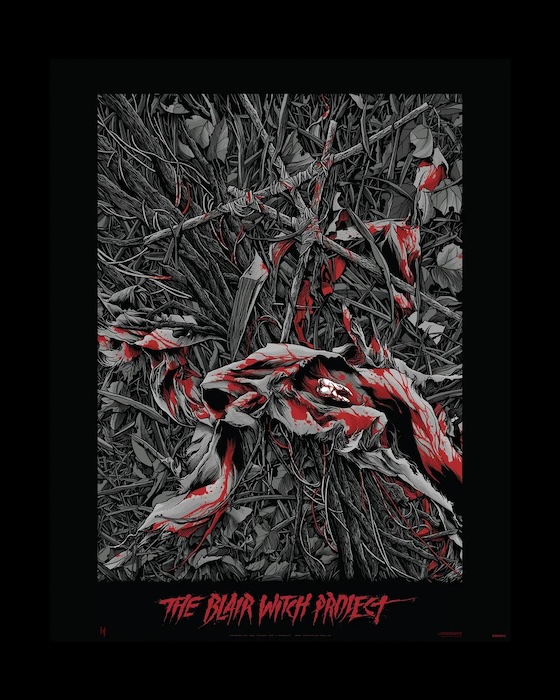
Lionsgate has assembled an impressive collection of archival material and newly produced supplements, making this considerably more than another excuse to sell us a movie we've already purchased three times. The package includes the original filmmakers' commentary, Curse of the Blair Witch, deleted scenes, alternate endings, Cannes interviews, trailers, and examinations of the film's mythology and cultural influence. New material includes Season of the Witch, featuring interviews with the filmmakers and actors Joshua Leonard and Michael C. Williams; Expanded Lore, exploring the accompanying mockumentaries; The Matt Blazi Project, revisiting shooting locations; and Film Is Life, a tribute to cinematographer Neal Fredericks. Additional features examine the franchise's expansion into other media and the preservation of its artifacts. There's also a 104-page booklet filled with original production documents, handwritten notes, and behind-the-scenes material, plus a new poster by Ken Taylor. For somebody who appreciates the history of independent filmmaking, this is precisely the kind of stuff I want from a collector's edition. The movie was an extraordinary achievement, but the story of how a handful of filmmakers convinced the world to believe in their little nightmare is nearly as fascinating
Commentary:
- Audio Commentary with Directors Eduardo Sanchez & Daniel Myrick, Producer Robin Cowie, and Coproducer Michael Monello (Only on the Original-Release Version)
Special Features:
Legacy Special Features:
- Curse of the Blair Witch Mockumentary
- Sticks and Stones: An Exploration of the Blair Witch Legend
- The Blair Witch Legacy
- Analogue Horror in a Digital World
- Deleted Scenes
- Cannes 1999: Archive Directors Interviews
- Directors Interviews
- Fear Sections
- Alternate Endings
- B-Roll
- Theatrical Trailers
Lionsgate Limited Extras:
- Season of the Witch (New Interviews with Filmmakers & Actors Joshua Leonard and Michael C. Williams)
- Expanded Lore (Exploration of Two Mockumentaries)
- The Matt Blazi Project (Shooting Location Tours and Making-of Book)
- Mythos (Blair Witch in Other Media)
- Eternal Impact (The Blair Witch Project Archive at the University of Pittsburgh Special Horror Collection)
- Iconic Artifacts: The Blair Witch Project at MOPOP (Museum of Pop Culture)
- Film Is Life: A Tribute to Cinematographer Neal Fredericks

| Movie |  |
|
| Video |  |
|
| Audio | |
|
| Extras | |
|
|
Composite Blu-ray Grade
|
||