There are horror franchises, there are cinematic institutions, and then there's Halloween, the seemingly indestructible bastard child of John Carpenter's imagination that has spent nearly half a century demonstrating that a cheap William Shatner mask, a kitchen knife, and a complete disregard for the laws of human mortality can generate an astonishing amount of cinematic mileage.
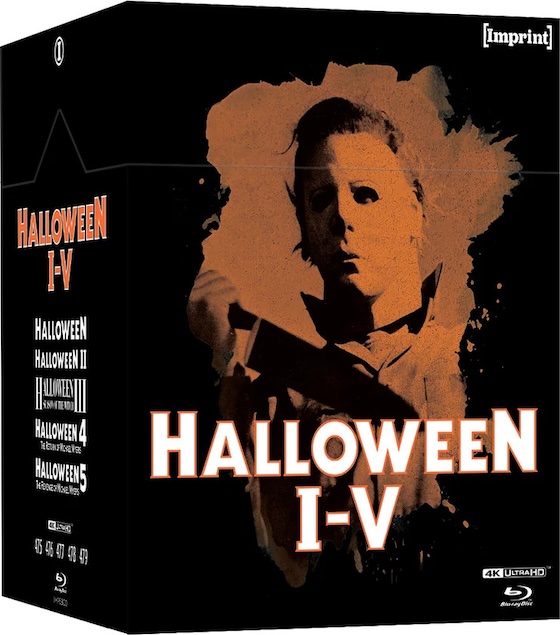
Now, Australia's Imprint Films has gathered the first five installments into one spectacularly excessive SteelBook Library Collection, a 13-disc monstrosity that celebrates everything wonderful, ridiculous, groundbreaking, and occasionally downright idiotic about the franchise's formative years.
Five films. Five individual SteelBooks. Limited to just 2,000 copies. This is the sort of release that makes physical-media collectors start sweating through their shirts, calculating available shelf space, and quietly wondering whether the electric company really needs to be paid this month. But the real attraction isn't simply another opportunity to throw money at Michael Myers. It's the chance to revisit eleven years of horror history, from the birth of one of cinema's most terrifying icons to the moment the franchise began disappearing so far up its own mythology that even Dr. Loomis would have needed a road map to find his way out.
Some of these movies are brilliant. Some are gloriously ridiculous. And one or two make a compelling argument that the people responsible should have been subjected to psychiatric evaluation themselves.
The presentation is a magnificent exercise in collector-oriented excess, with each film receiving its own individually designed SteelBook, accompanied by an essay booklet, and housed inside a substantial metal library case. The entire enterprise has the appearance of some forbidden psychiatric archive nobody was ever supposed to open, which seems particularly appropriate for a franchise whose central character has spent decades making a mockery of institutional security. Of course, the collection has already endured its own little horror story. Imprint originally intended to house the films inside an illuminated jack-o'-lantern, an idea so gloriously unnecessary that it practically demanded immediate purchase. Unfortunately, manufacturing problems killed that particular pumpkin before it ever reached the front porch, forcing the company to substitute the metal library case and triggering the inevitable online outrage from collectors who apparently had their hearts set on displaying a glowing plastic vegetable next to their televisions.
Personally, the replacement feels more appropriate. It's industrial, ominous, and considerably less likely to wind up looking like a discarded Halloween decoration sometime around Thanksgiving. More importantly, the individual SteelBooks give each installment its own identity without sacrificing the visual unity of the collection. It's handsome stuff, the kind of physical-media presentation that reminds us there was once a time when owning a movie meant possessing something more substantial than a password and a monthly subscription.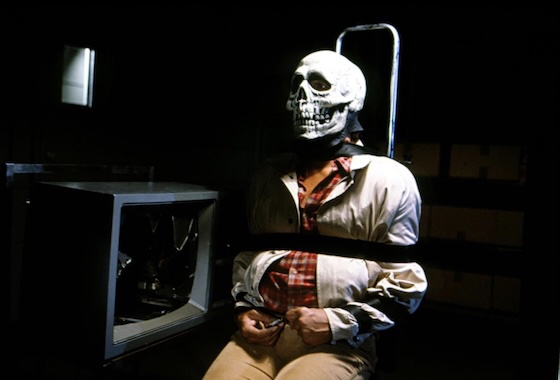
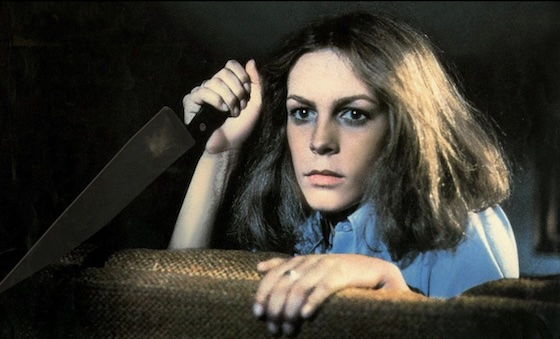
At the center of this murderous little museum sits John Carpenter's original Halloween (1978), a film so profoundly influential that nearly every slasher movie produced in its wake has spent some portion of its existence either imitating it, borrowing from it, or desperately trying to convince audiences that it invented something Carpenter perfected decades earlier. What makes the original so extraordinary is its restraint. Carpenter doesn't need buckets of blood, elaborate mythology, or a masked lunatic delivering sarcastic one-liners. He needs a suburban street, a handful of teenagers, a few carefully positioned shadows, and the growing realization that something profoundly evil is standing just outside the frame. Jamie Lee Curtis becomes an instant horror icon as Laurie Strode, Donald Pleasence attacks every scene with the conviction of a man who knows the apocalypse is coming and cannot understand why nobody else gives a shit, and Michael Myers establishes himself as perhaps the most terrifyingly uncomplicated killer in American cinema.
Halloween II (1981) picks up immediately where the original ends, trading Carpenter's delicate suspense for a considerably bloodier excursion through the world's most understaffed hospital. It's louder, nastier, and more determined to compete with the emerging slasher boom, but there's still something irresistible about watching the nightmare continue without allowing anybody, including the audience, a decent night's sleep. Together, the first two films form one long, increasingly hysterical Halloween night, beginning with elegant cinematic terror and concluding with enough carnage to make the Haddonfield Chamber of Commerce seriously reconsider its annual tourism campaign.
And then, just when the franchise seems to have established a reliable formula, along comes Halloween III: Season of the Witch (1982), one of the most wonderfully batshit studio horror productions of the entire decade. No Michael Myers. No Laurie Strode. No Dr. Loomis running around screaming that evil has returned. Instead, we get Tom Atkins, a sinister novelty manufacturer, murderous Halloween masks, ancient Celtic witchcraft, and a television commercial so relentlessly infectious that hearing it once practically guarantees you'll be humming the goddamn thing until Christmas. Originally conceived as an attempt to transform Halloween into an anthology franchise, Season of the Witch was greeted with considerable hostility by audiences expecting another round of masked suburban homicide. Their loss. Tommy Lee Wallace's bizarre little nightmare is a delirious cocktail of science fiction, corporate paranoia, folk horror, and eighties consumer culture, with a genuinely nasty streak that makes its increasingly outrageous developments all the more entertaining.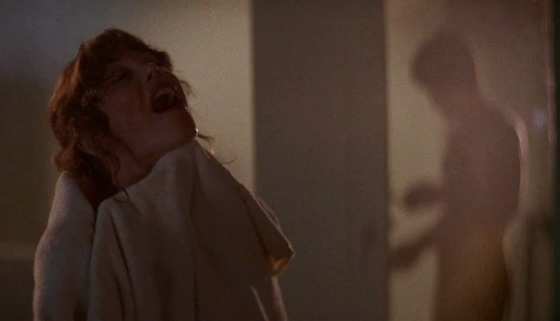
It's also a fascinating reminder of what the franchise might have become had audiences been willing to embrace something beyond Michael Myers and his apparently inexhaustible supply of kitchen knives. Instead, the film spent years being treated like the embarrassing relative nobody wanted to acknowledge at Thanksgiving. Time, thankfully, has been considerably kinder. Viewed alongside its predecessors, Season of the Witch isn't an unwelcome interruption. It's a glorious detour into the sort of imaginative, unapologetically weird horror filmmaking that the eighties occasionally produced when nobody was paying close enough attention to stop it.
By the time Halloween 4: The Return of Michael Myers arrived in 1988, the message from audiences had become abundantly clear: enough with the masks that turn children's heads into insect-infested nightmares; bring back the big asshole with the knife. And so Michael returned, accompanied by Donald Pleasence's increasingly unhinged Dr. Loomis, a new generation of potential victims, and young Jamie Lloyd, whose unfortunate family connections make her the latest target of Haddonfield's least desirable resident. Surprisingly, the fourth installment works considerably better than its existence might suggest. There's an appealing return to autumnal atmosphere, an effective sense of small-town dread, and a willingness to restore some of the original's uncomplicated menace. It isn't Carpenter's masterpiece, but it understands the fundamental appeal of the character and delivers a satisfying late-eighties slasher with a genuinely memorable conclusion.
Unfortunately, Halloween 5: The Revenge of Michael Myers (1989) demonstrates what happens when filmmakers mistake narrative complication for creative ambition. Psychic connections, mysterious strangers, baffling character decisions, and increasingly convoluted mythology begin piling up like unpaid parking tickets, while Pleasence appears to be approaching the sort of emotional breakdown normally associated with people who have spent eleven years warning everybody about a homicidal maniac only to discover that nobody has learned a goddamn thing. It's messy, frustrating, occasionally unintentionally hilarious, and nowhere near as effective as its predecessor. But it also possesses that peculiar late-eighties slasher charm, when studios were throwing increasingly ridiculous ideas at established franchises in the desperate hope that something might stick.
Watching the fourth and fifth films together is like witnessing a respectable family reunion gradually deteriorate into a drunken fistfight. You know things are going terribly wrong, but there's no chance in hell you're leaving before the police arrive.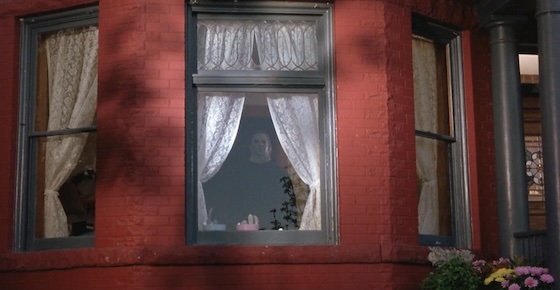
What ultimately makes Imprint Films' Halloween I–V SteelBook Library Collection worth celebrating is the opportunity to watch an entire horror movement evolve, mutate, and occasionally collapse under the weight of its own commercial ambitions. The original remains a masterpiece of independent filmmaking, its sequel an entertaining escalation, the third installment a gloriously deranged experiment, the fourth a surprisingly effective resurrection, and the fifth a fascinating example of what happens when a franchise begins confusing narrative complication with genuine mythology. Together, they trace the transformation of the American slasher from a relatively simple exercise in suspense into a commercial juggernaut increasingly dependent upon body counts, recognizable villains, and the promise that absolutely nobody stays dead as long as there's money to be made.
And that's the peculiar beauty of this collection. It doesn't attempt to rewrite the franchise's history or pretend that every installment deserves equal admiration. Instead, it invites us to experience the entire messy, exhilarating progression, complete with creative triumphs, spectacular miscalculations, and enough questionable character decisions to make a room full of horror fans scream themselves hoarse. In an era when studios increasingly seem determined to convince audiences that temporary access is somehow equivalent to ownership, there's something genuinely satisfying about a release that treats these movies as cultural artifacts worth preserving. Michael Myers has survived gunshots, explosions, burning buildings, and some truly catastrophic screenwriting. His legacy, for better or worse, remains indestructible.
Evil never dies. It just keeps finding new ways to make us buy the same goddamn movies.

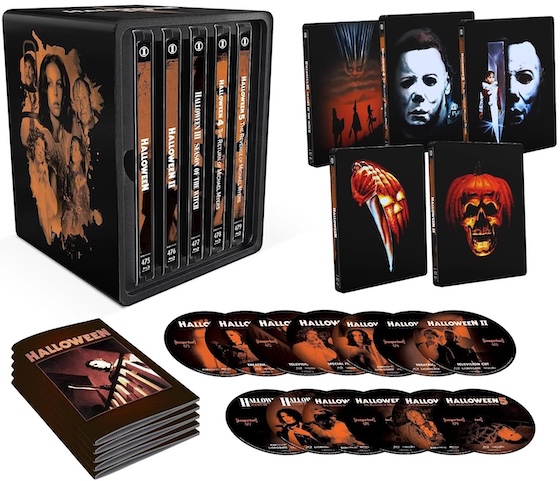

 4K Ultra HD + Blu-ray SteelBook / Imprint #475-479 | Hardbox Edition
Home Video Distributor: Imprint
Available on Blu-ray - December 2, 2026
Screen Formats: 2.39:1, 2.35:1, 1.85:1
Subtitles: English; English SDH; Spanish
Video: Native 4K; Dolby Vision; HDR10
Audio: Dolby Atmos; DTS-HD Master Audio 5.1; DTS-HD Master Audio 2.0 Mono
Discs: 4K Ultra HD; Blu-ray Disc; thriteen-disc set
Region Encoding: 4K region-free; blu-ray locked to Region A
FIVE FILMS. ELEVEN YEARS. ONE UNKILLABLE SON OF A BITCH.
In 1978, John Carpenter introduced the world to Michael Myers, a masked psychopath with a kitchen knife, a deeply troubled family history, and absolutely no respect for the sanctity of Halloween. What followed was eleven years of cinematic carnage, increasingly hysterical psychiatrists, questionable family reunions, and enough creative insanity to make the entire town of Haddonfield consider relocating to someplace considerably safer. Like Detroit.
Now Imprint Films has gathered the first five Halloween films into one gloriously excessive 13-disc SteelBook collection, featuring Carpenter's stone-cold original masterpiece, its blood-soaked sequel, the magnificently batshit Season of the Witch, Michael's triumphant return, and the fifth installment, where the mythology goes completely off the fucking rails.
Five films. Five SteelBooks. One imposing metal case. More murder, mayhem, and Donald Pleasence screaming about pure evil than any respectable household should reasonably accommodate.
Lock the doors. Turn off the lights. Hide the babysitter. And for Christ's sake, stop checking whether Michael Myers is dead.
HE ISN'T. HE NEVER FUCKING IS.
VIDEO
If there's one thing Michael Myers has always understood, it's the importance of lurking in the shadows, preferably while some unfortunate teenager wanders around a darkened house demonstrating the survival instincts of a drunken houseplant. Thankfully, Imprint Films has given the first five Halloween films the kind of 4K treatment that allows those shadows to do their goddamn jobs. Presented in 2160p with Dolby Vision and HDR10, sourced from 4K scans of the original camera negatives, these transfers have the technical foundation to deliver precisely what fans should want: rich film grain, improved fine detail, more nuanced contrast, and a healthy respect for the original cinematography. John Carpenter's 1978 masterpiece is the obvious attraction, with Dean Cundey's extraordinary compositions, suburban streets, autumnal atmosphere, and carefully orchestrated darkness benefiting from the increased resolution and dynamic range. Halloween II brings its oppressive hospital corridors and harsher visual personality into the equation, while Season of the Witch offers an entirely different playground of sinister factories, electronic-age paranoia, and wonderfully grotesque practical effects. Most importantly, the presentations aren't supposed to make these movies look like they were shot last Thursday on somebody's goddamn iPhone. They're supposed to look like film. Glorious, imperfect, occasionally grimy, beautifully photographed film. And the inclusion of an alternative original-color-timing presentation for the first movie is a particularly welcome concession to purists who have spent decades arguing about the precise shade of blue in Haddonfield's nighttime skies.
The fourth and fifth installments present an interesting contrast, trading the relatively restrained visual language of the earlier films for the more polished, occasionally garish aesthetics of late-eighties commercial horror. Halloween 4 benefits conceptually from its foggy streets, seasonal atmosphere, and carefully staged nighttime sequences, while Halloween 5 offers a more aggressive visual approach, with elaborate lighting, deeper interiors, and enough shadowy corners to conceal an entire convention of masked psychopaths. The 4K restorations should help reveal the textures of costumes, makeup appliances, production design, and practical effects without sacrificing the inherent photographic character of their respective eras. Just as importantly, retaining the original theatrical aspect ratios allows each film to preserve its intended compositions rather than forcing everything into some artificially uniform presentation. These are five productions made across eleven years, with different cinematographers, budgets, technologies, and creative ambitions, and they shouldn't look identical. That's the whole fucking point. A proper restoration preserves those differences instead of polishing away the history. Imprint's source materials, HDR presentations, and Fidelity in Motion encoding provide an encouraging technical pedigree, although the ultimate verdict on black levels, compression, and grain reproduction requires direct playback. On paper, this is exactly how these movies deserve to be treated: not as disposable slasher sequels, but as distinct pieces of cinematic history whose imperfections are part of their charm. Because Michael Myers may be an indestructible killing machine, but that doesn't mean he needs digital noise reduction, artificial sharpening, or a goddamn facelift.
AUDIO
If John Carpenter's original Halloween taught us anything, it's that you don't need a hundred-piece orchestra, a room full of screaming violinists, or some overpaid Hollywood composer waving his arms around like a deranged traffic cop to scare the absolute shit out of an audience. Sometimes all you need is a synthesizer, a piano, and five goddamn notes arranged in precisely the right order. Imprint Films presents the first five Halloween films with Dolby Atmos soundtracks alongside lossless DTS-HD audio options, providing a substantial technical upgrade while respecting the franchise's original sonic character. The whisper of autumn wind, distant footsteps, creaking floorboards, and unsettling ambient noises are fundamental to making Haddonfield feel like the last place on Earth anybody should be wandering around after sunset. But the real magic remains Carpenter's extraordinary minimalist compositions, particularly the original film's relentless main theme, which has lost absolutely none of its ability to make perfectly rational adults reconsider walking down a dark hallway. The inclusion of the original mono soundtrack is particularly welcome, preserving the film's historical identity and reminding us that sometimes restraint is considerably more frightening than sonic excess. Carpenter understood that better than just about anybody working in the genre. Besides, if Michael Myers suddenly starts breathing directly behind your head, the last thing you're going to worry about is whether your speakers are properly calibrated.
The sequels provide an increasingly entertaining demonstration of how horror soundtracks evolved throughout the eighties, moving from the relatively spare, oppressive soundscape of Halloween II to the glorious electronic insanity of Halloween III: Season of the Witch, where Carpenter and Alan Howarth unleash a wonderfully sinister collection of pulsing synthesizers, mechanical rhythms, and ominous electronic textures that practically deserve their own restraining order. Season of the Witch is particularly fascinating because its music is so integral to the film's paranoid atmosphere, transforming an already deranged story about murderous Halloween masks and corporate conspiracy into something resembling a nightmare sponsored by an exceptionally evil electronics manufacturer. By the time Halloween 4 and Halloween 5 arrive, the sound design has become bigger, more aggressive, and considerably more interested in announcing every murderous encounter with the subtlety of a refrigerator being thrown down a flight of stairs. The shifting musical approaches are as revealing as the films themselves, charting the franchise's journey from carefully orchestrated psychological terror to the increasingly bombastic conventions of late-eighties slasher cinema. While a definitive assessment of dialogue clarity, dynamic range, and soundtrack fidelity requires direct listening, the collection's audio specifications offer plenty for enthusiasts to appreciate. Ultimately, it doesn't matter how sophisticated your home theater happens to be. When that familiar piano theme begins creeping out of the speakers, somewhere in the darkness Michael Myers is standing perfectly still, waiting for you to make another spectacularly stupid decision.
And no amount of expensive audio equipment is going to save your ass.
Supplements:
Commentary:
- See below
Special Features:
The Halloween franchise has accumulated nearly half a century of interviews, documentaries, deleted scenes, alternate endings, television edits, production photographs, and assorted cinematic debris, enough material to make even the most dedicated horror historian consider abandoning civilization and taking up recreational alcoholism. Fortunately, Imprint Films has decided to gather a substantial portion of that madness into one enormous 13-disc celebration of Michael Myers and the unfortunate bastards who keep finding themselves on the receiving end of his cutlery. The result is a gloriously obsessive examination of the franchise's formative years, featuring commentary tracks, retrospective documentaries, archival interviews, location tours, and production material that collectively reveal just how much ingenuity, improvisation, commercial desperation, and occasional creative lunacy went into keeping this murderous enterprise alive. The original Halloween receives the sort of historical attention normally reserved for important archaeological discoveries, with John Carpenter, Jamie Lee Curtis, Debra Hill, Dean Cundey, Nick Castle, and other principal contributors revisiting the making of a low-budget horror film that somehow changed the entire genre. The subsequent installments offer their own fascinating accounts of escalating violence, shifting creative ambitions, studio interference, and the increasingly difficult task of finding something interesting for Michael Myers to do besides murder another group of spectacularly unobservant teenagers. And the material devoted to Season of the Witch is especially welcome, finally giving that magnificent cinematic oddball the respect it deserved before audiences decided that a Halloween movie without Michael Myers was apparently a violation of the Geneva Convention.
The real pleasure of these supplements is watching the franchise's mythology being constructed, dismantled, reinvented, and occasionally driven directly into a goddamn ditch by the very people responsible for keeping it alive. Documentaries such as Halloween Unmasked 2000, A Cut Above the Rest, Stand Alone, Back to Basics, and Dead Man's Party provide a sprawling oral history of the series, while the Horror's Hallowed Grounds location tours offer the irresistible spectacle of grown adults enthusiastically tracking down suburban houses, hospital corridors, and otherwise ordinary stretches of pavement where fictional psychopaths once terrorized fictional teenagers. Deleted scenes, alternate openings, additional gore footage, and television versions provide further evidence of how these films evolved between production and release, sometimes for the better and occasionally because somebody in a position of authority made a spectacularly questionable decision. The accompanying essay booklets add another layer of historical appreciation, giving collectors something to read when they're not watching Donald Pleasence slowly lose his goddamn mind. Longtime fans should be aware that a considerable amount of this material has appeared on previous editions, so this isn't necessarily a collection of newly unearthed cinematic treasure. Its greatest achievement is bringing together an enormous amount of franchise history in one place, preserving the triumphs, disasters, creative disagreements, and wonderfully ridiculous anecdotes that helped transform a modest independent horror film into an international institution. Michael Myers may never have much to say, but apparently everybody who ever worked on one of his movies has a fucking story.
HALLOWEEN (1978) — 4 DISCS
- Disc 1 — 4K UHD: Three audio commentaries featuring Carpenter, Curtis, Hill, Cundey, Wallace, and Castle; Film Fast Facts trivia track; theatrical trailer.
- Disc 2 — Blu-ray: Theatrical cut, alternate original-color-timing presentation, three commentaries, Film Fast Facts, and trailer.
- Disc 3 — Blu-ray: Extended television version, original broadcast version, additional TV footage, NBC promo, trailers, radio spots, and galleries.
- Disc 4 — Blu-ray: Halloween Unmasked 2000, A Cut Above the Rest, 25 Years of Terror, The Night She Came Home!, On Location: 25 Years Later, two Horror's Hallowed Grounds features, Moustapha Akkad interview, and Trailers From Hell.
HALLOWEEN II (1981) — 3 DISCS
- Disc 5 — 4K UHD: Four commentaries featuring Dustin McNeill, Rick Rosenthal, Leo Rossi, Dick Warlock, Stephen Jones, and Kim Newman; theatrical trailer.
- Disc 6 — Blu-ray: The Nightmare Isn't Over!, Horror's Hallowed Grounds, deleted scenes, alternate ending with optional commentary, four feature commentaries, trailers, TV and radio spots, and galleries.
- Disc 7 — Blu-ray: Television cut in upscaled HD and standard definition.
HALLOWEEN III: SEASON OF THE WITCH (1982) — 2 DISCS
- Disc 8 — 4K UHD: Four commentaries featuring Lee Gambin, Joe Dante, Tommy Lee Wallace, Tom Atkins, Stephen Jones, and Kim Newman; theatrical trailer.
- Disc 9 — Blu-ray: Stand Alone, Horror's Hallowed Grounds, Tricks, Treats and Terror, Make-up From Scratch, four commentaries, trailers, radio and TV spots, and promotional galleries.
HALLOWEEN 4: THE RETURN OF MICHAEL MYERS (1988) — 2 DISCS
- Disc 10 — 4K UHD: Commentaries featuring Ellie Cornell and Danielle Harris, and Dwight H. Little and Justin Beahm; theatrical trailer.
- Disc 11 — Blu-ray: Back to Basics, Final Cut, Horror's Hallowed Grounds, both commentaries, trailers, television spots, and galleries.
HALLOWEEN 5: THE REVENGE OF MICHAEL MYERS (1989) — 2 DISCS
- Disc 12 — 4K UHD: Commentaries featuring Dominique Othenin-Girard, Danielle Harris, Jeffrey Landman, Don Shanks, and Justin Beahm; theatrical trailer.
- Disc 13 — Blu-ray: Dead Man's Party, Of Darkness and Shadows, Inside Halloween 5, Halloween 5: On the Set, Horror's Hallowed Grounds, The Doctor Is In alternate opening, additional gore footage, both commentaries, trailers, television spots, and galleries.
THIRTEEN DISCS. FIVE MOVIES. ENOUGH BONUS MATERIAL TO KEEP YOU LOCKED INSIDE THE HOUSE UNTIL NEXT HALLOWEEN.

| Movie |  |
|
| Video | |
|
| Audio | |
|
| Extras | |
|
|
Composite Blu-ray Grade
|
||