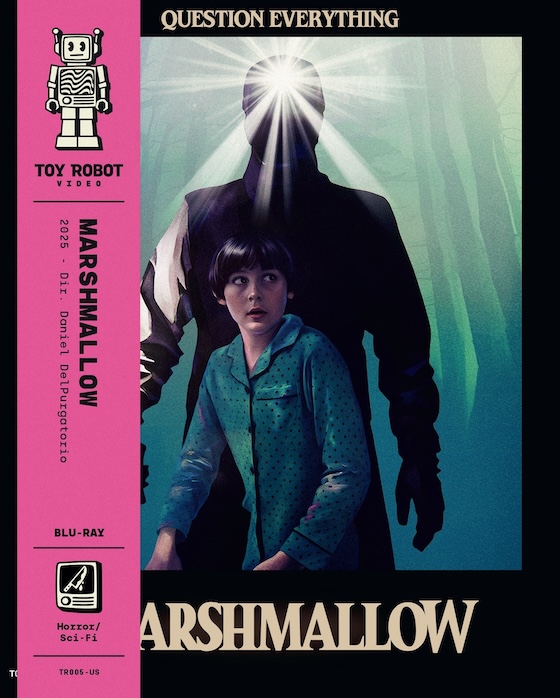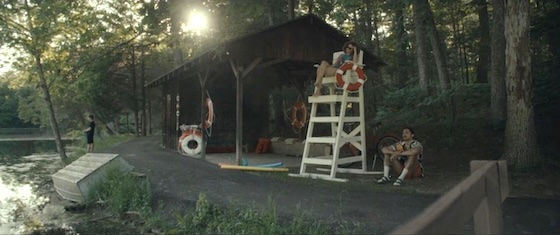
The kids aren't being told the truth. That much is obvious almost immediately in Marshmallow, and it is also about the only thing the movie wants you to feel certain about. Summer camp has always been fertile ground for horror because adults send children into the woods, leave them with people they barely know, and somehow convince themselves that matching T-shirts and organized canoeing constitute adequate supervision.
Director Daniel DelPurgatorio understands the inherent weirdness of that arrangement. Working from Andy Greskoviak's screenplay, he gives us the familiar campfires, cabins, counselors and stories designed to scare children who will eventually pretend they weren't scared at all. But something is wrong here. The counselors know more than they are saying. The camp itself seems to be operating according to rules nobody bothered to explain. And the children, as usual, are expected to trust the adults simply because they're adults. We all remember how well that worked when we were kids.
Morgan is already carrying enough fear with him before anybody starts telling scary stories around the fire. Kue Lawrence gives the kid an appealing vulnerability without turning him into the standard horror-movie child who exists primarily to stare nervously into dark corners. Morgan watches people. He notices things. More importantly, he recognizes the small inconsistencies adults assume children won't catch. That becomes Marshmallow's strongest weapon. The movie isn't really asking whether there is something dangerous in the woods. Of course there is something dangerous in the woods. This is a horror movie set at summer camp; it would be disappointing if the greatest threat were poison ivy. The more interesting question is why the adults seem prepared for it. When warnings become rules and stories begin sounding suspiciously like instructions, Morgan and the other campers start realizing that whatever is happening around them didn't begin when they arrived.
DelPurgatorio has some fun with our expectations because Marshmallow knows exactly what kind of movie we think we're watching. There are echoes of decades of summer-camp horror here, and the film isn't embarrassed by them. Cabins after dark are still creepy. Flashlights remain terrible sources of illumination whenever somebody desperately needs to see more than six feet in front of them. Counselors still possess that magical horror-movie ability to disappear at precisely the moment a child needs an adult. But Marshmallow gradually begins pulling away from the movie we expected. The title itself starts feeling less cute. The mythology surrounding the camp becomes stranger. Science fiction begins slipping underneath the horror without announcing itself with flashing lights and a giant explanation scene. The movie trusts us to notice the shift, which is refreshing in an era when too many films stop halfway through the third act so somebody can explain the plot to everyone who has apparently been checking their phone.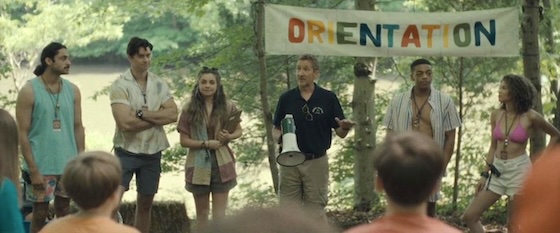
The young cast is essential because none of this works if we don't believe the friendships forming between these kids. Lawrence, Kai Cech, Max Malas, Maxwell Whittington-Cooper and Winston Vengapally give the camp an actual social ecosystem rather than simply assembling a collection of future victims. Giorgia Whigham and Pierson Fodé bring the necessary uncertainty to the adults hovering around them, while veterans Alysia Reiner and Corbin Bernsen immediately make you suspicious simply because horror movies have trained us never to completely trust recognizable adults who appear to know more than the protagonist. There is humor here, but DelPurgatorio doesn't use it to apologize for the horror. Better still, he doesn't treat the children like miniature adults. They make bad decisions. They get frightened. They misunderstand things. They also understand considerably more than the adults believe they do, which may be the most truthful thing in the entire movie.
What ultimately makes Marshmallow work is that underneath the creature-feature mechanics, summer-camp nostalgia and science-fiction machinery is a very old childhood realization: adults lie. Sometimes they lie because they're cruel. Sometimes they lie because they're afraid. And sometimes they lie because they have convinced themselves that withholding the truth is the same thing as protecting a child. Marshmallow takes that idea and pushes it somewhere increasingly strange, allowing the mystery to become bigger without sacrificing the frightened kids trapped inside it. Not every turn lands with equal force, and viewers looking for a straightforward camp slasher may wonder where the hell their movie went. That's part of the fun. By the time Marshmallow finally shows more of its hand, the monster in the dark is almost beside the point. Morgan has discovered something much more unsettling. The adults knew. They knew all along. They just didn't think the kids deserved the truth.

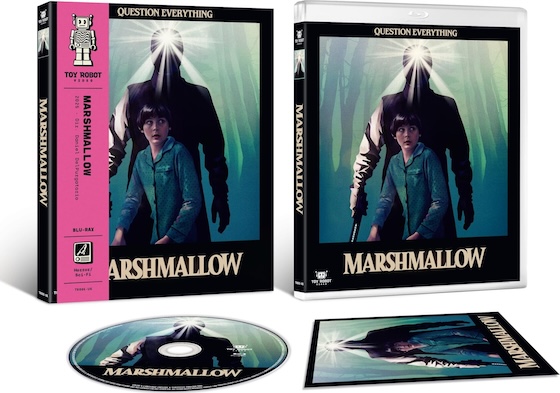

Blu-ray
Home Video Distributor: Toy Robot Video
Available on Blu-ray - September 15, 2026
Screen Formats: 2.39:1
Subtitles: English SDH
Video: 1080p
Audio: English: DTS-HD Master Audio 5.1; DTS-HD Master Audio 2.0
Discs: Blu-ray Disc; single-disc edition
Region Encoding: blu-ray locked to Region A
Summer camp is supposed to mean swimming, campfires, new friends and scary stories told after dark. For Morgan, it becomes something considerably more disturbing. Already struggling with his own fears, he begins to suspect that the frightening stories surrounding the camp may contain more truth than anyone is willing to admit. When strange events begin unfolding in the woods, Morgan and his fellow campers discover that the adults responsible for protecting them know considerably more than they have been saying.
What begins with the familiar ingredients of summer-camp horror gradually becomes something stranger as Marshmallow mixes creature-feature scares, childhood paranoia and science fiction into a story about the moment kids realize adults don't always tell them the truth.
VIDEO
Toy Robot Video gives Marshmallow a strong Blu-ray presentation that suits the movie particularly well. The 2.35:1 image handles the contrast between bright summer-camp exteriors and the considerably less welcoming nighttime material nicely, with the woods retaining detail rather than collapsing into murky blacks. That's important for a movie that spends so much time asking us to stare into the darkness and wonder whether we actually saw something moving out there. Colors are natural, detail is solid and the presentation preserves the movie's polished but appropriately ominous visual style.
There is a surprising amount of visual information packed into the darker sequences, particularly once the campers start wandering into places where common sense suggests they probably shouldn't be. Skin tones remain convincing, daylight sequences have an appropriately warm appearance and the image doesn't suddenly become artificially glossy. For a movie dependent upon atmosphere, shadows and what might be hiding just beyond the flashlight beam, Marshmallow looks very good on Blu-ray.
AUDIO
The English 5.1 surround track is more active than you might expect from a relatively intimate horror movie. Camp activity and environmental sounds give the surrounds plenty to do, while the woods become considerably more interesting once things start going wrong. Dialogue remains clean and centered, the score gets room to breathe and the more aggressive moments bring enough low-end weight to make themselves felt without suddenly turning Marshmallow into an amusement-park ride.
More importantly, the mix understands silence. Horror soundtracks sometimes become so determined to scare us that every approaching threat receives enough bass to announce itself three cabins away. Marshmallow is more effective when we're listening for something that may or may not be there. Branches, distant movement and the ordinary nighttime sounds of the woods create an effective sound field, making the eventual bursts of activity considerably more effective.
Supplements:
Commentary:
- See below
Special Features:
Toy Robot Video didn't simply throw a trailer onto the disc and call it a collector's edition. The centerpiece is an audio commentary featuring director Daniel DelPurgatorio alongside Kue Lawrence and Kai Cech, providing some welcome perspective on the production and the experience of making the movie with its young cast. A deleted scene and Filming the Dream Sequence take viewers further behind the production, while storyboards, script pages and a behind-the-scenes still gallery provide the sort of nuts-and-bolts material physical-media fans rarely get from streaming releases.
Three video podcast interviews expand the package with conversations involving DelPurgatorio, screenwriter Andy Greskoviak and actor Dylan Friedman. Perhaps the most interesting inclusions, however, are two earlier DelPurgatorio shorts, Other and Body(s). Rather than functioning as promotional filler, the shorts give viewers an opportunity to see some of the filmmaker's earlier work and make the supplements feel more like a small retrospective than a collection of advertisements for the movie we just watched.
- Audio Commentary with director Daniel DelPurgatorio, Kue Lawrence and Kai Cech
- Deleted Scene
- Filming the Dream Sequence
- Storyboards
- Script Pages
- Behind-the-Scenes Still Gallery
- Video Podcast Interview with Daniel DelPurgatorio
- Video Podcast Interview with screenwriter Andy Greskoviak
- Video Podcast Interview with Dylan Friedman
- Other (2012) — Short Film
- Body(s) (2015) — Short Film
- Two Teaser Trailers
- Theatrical Trailer

| Movie |  |
|
| Video | |
|
| Audio | |
|
| Extras | |
|
|
Composite Blu-ray Grade
|
||