Boris Karloff hears a beautiful woman sing and decides the appropriate response is to hypnotize her, destroy her career, and generally make everyone around her miserable.
So, yes, we're back in familiar territory.
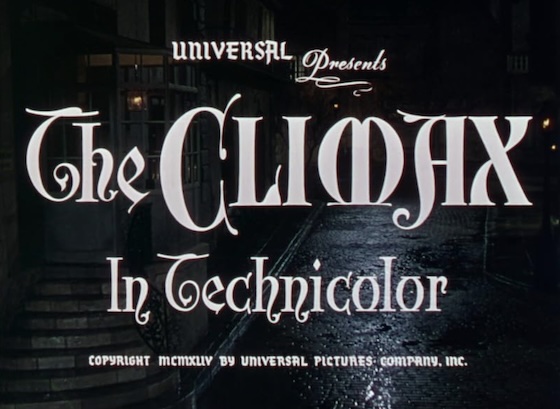
The Climax is a strange fucking movie. It's lavish, colorful, romantic, musical, Gothic, occasionally creepy, and saddled with a title that promises considerably more excitement than the movie intends to deliver. Watching it in 2026 as part of Umbrella Entertainment's Universal Horror: Monsters and Curiosities (1923–1960) collection, I understand exactly why it's here while simultaneously understanding why nobody puts The Climax beside Frankenstein, The Black Cat, or Bride of Frankenstein when discussing Boris Karloff. This isn't really a horror movie. It's a Technicolor operetta with a psychopath wandering around inside it. Fortunately, that psychopath is Boris Karloff.
"What's most fascinating about revisiting The Phantom of the Opera today is realizing how much of modern horror it quietly invented"Karloff plays Dr. Friedrich Hohner, physician to the Vienna Royal Theatre, who once loved—or more accurately possessed—an opera singer named Marcellina. Ten years after her mysterious disappearance, Hohner remains completely obsessed with her, preserving her memory and refusing to tolerate anything that threatens it. Enter Angela Klatt (Susanna Foster), a young singer whose voice reminds Hohner of Marcellina. That resemblance is enough to crack open everything he's spent a decade burying. Hohner hypnotizes Angela and convinces her that singing will destroy her voice, effectively shutting down a rising career because he can't tolerate another woman occupying the emotional territory he's reserved for the dead. That's the horror of The Climax. Hohner doesn't want Angela. He wants to control what she represents.
And Karloff knows exactly how to play that. There's no Monster physicality here, no Ygor wig, no executioner's axe, no mad-scientist equipment throwing sparks behind him. Hohner is controlled, intelligent, respected, and utterly diseased by obsession. Karloff barely needs to raise his voice. He simply looks at Angela and begins quietly dismantling her confidence. That's what makes the character unsettling. Hohner is a doctor, which gives him authority. He's trusted. When he tells Angela something is wrong with her, she believes him. His weapon isn't supernatural power despite the film's use of hypnosis; it's credibility. He understands exactly how frightened a singer would be of losing her voice and inserts himself into that fear.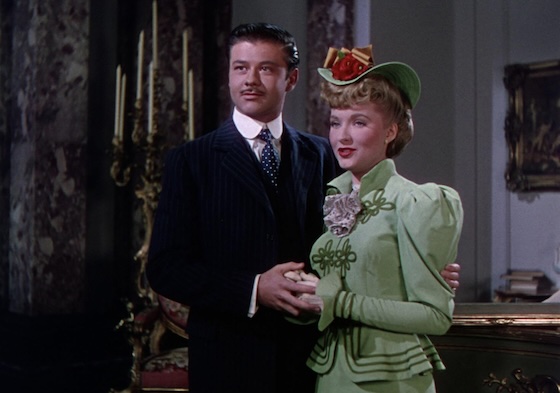
Susanna Foster has the much harder job because Angela has to function as both character and instrument. The entire plot depends upon her voice being extraordinary enough to trigger Hohner's obsession, and Foster—who had already starred in Universal's 1943 Phantom of the Opera—can actually deliver the goods. The operatic sequences aren't simply decoration; they're central to the movie's identity. Angela's voice represents everything Hohner cannot control: youth, beauty, talent, renewal, the possibility that life continues after Marcellina. He can preserve a room. He can preserve memories. He can obsess over the past until it becomes a shrine. But another singer will eventually take the stage.
Hohner cannot fucking stand that.
Turhan Bey plays Franz Munzer, Angela's romantic interest and the theatrical company's manager, while Gale Sondergaard brings her usual welcome presence as Luise, Hohner's housekeeper. Sondergaard barely has to enter a room before I assume she knows where the bodies are buried, and in this case that's not an unreasonable suspicion. She's one of those performers who seems genetically engineered for Universal Gothic. Even surrounded by the bright Technicolor extravagance of the opera house, Sondergaard carries shadows around with her.
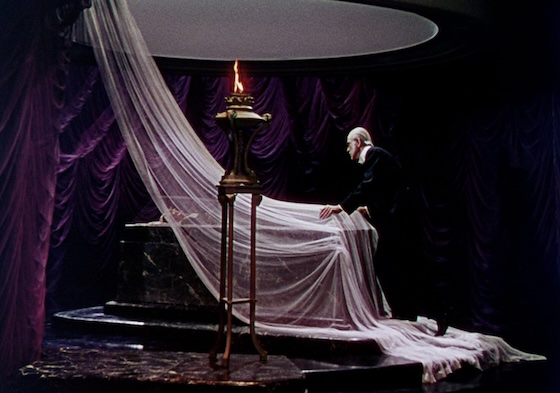
The production itself is gorgeous. Universal originally developed The Climax as something of a follow-up vehicle to its successful Phantom of the Opera, and you can feel that DNA everywhere. The opera setting returns, Susanna Foster returns, and enormous theatrical spaces once again become locations for obsession and danger. Director George Waggner and cinematographer W. Howard Greene take full advantage of Technicolor, creating a movie that looks almost obscenely expensive compared with some of the programmers we've been watching lately. Costumes explode off the screen. The stage productions are elaborate. Reds and golds dominate the theatrical spaces, while Hohner's private world feels darker and more suffocating.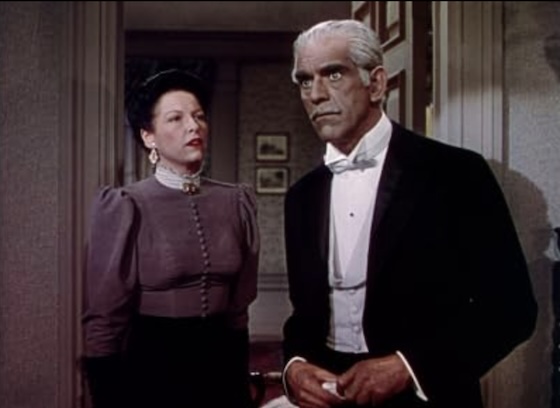
That's also where the movie runs into trouble. The Climax is often too much musical and not enough Karloff.
The operatic performances are impressive, but they repeatedly stop the Gothic machinery just when it begins gathering momentum. Every time Hohner's obsession starts tightening around Angela, the movie remembers it has another production number waiting backstage. If you're here primarily for horror, patience is required. This isn't Karloff stalking people through a castle for eighty minutes. It's Universal mounting a lavish musical melodrama and occasionally remembering there's a murderer in the building.
But when Karloff takes control, the movie wakes up. Hohner doesn't love women. He loves ownership. And suddenly The Climax becomes a better title.
Not because the movie delivers some enormous horror spectacle at the end, but because we're watching obsession reach the only conclusion it ever could. Hohner has spent years trying to freeze time, and Angela's arrival forces time to begin moving again. The more desperately he attempts to stop it, the more completely his carefully preserved world collapses.


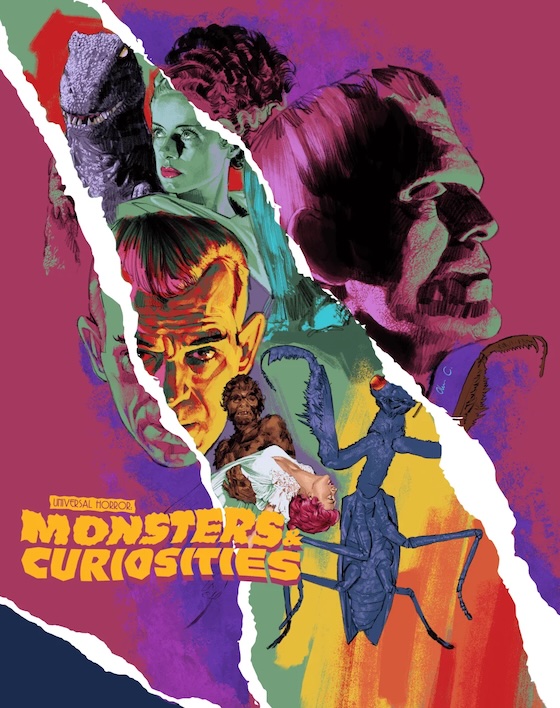
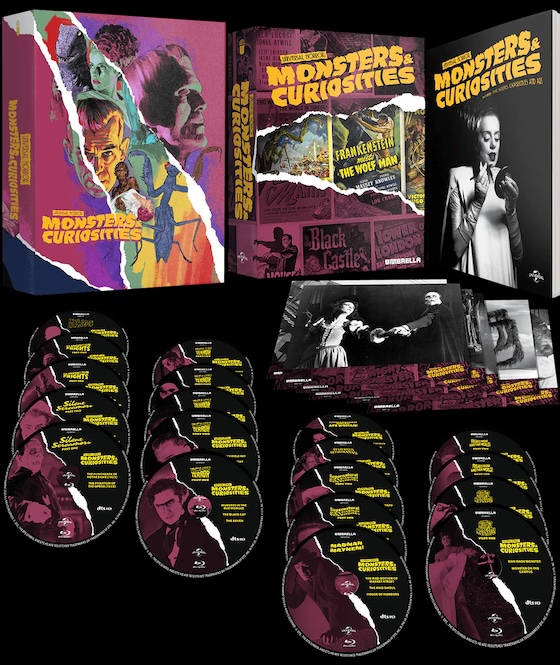
Universal Horror: Monsters And Curiosities Blu-ray - Umbrella Entertainment Exclusive / Collector's Edition
Home Video Distributor: Umbrella Entertainment
Available on Blu-ray - July 1, 2026
Screen Formats: 1.33:1; Various
Subtitles: English SDH
Video: 1080p
Audio: DTS-HD Master Audio 2.0
Discs: Blu-ray Disc; nineteen-disc set
Region Encoding: Locked to Region A
The Climax is an oddball, and that's exactly why it belongs in Monsters and Curiosities. Anyone expecting another classic Boris Karloff horror picture is going to wonder why everyone keeps singing. Anyone expecting a lavish Universal operetta may wonder why Boris Karloff keeps staring at the soprano like he's deciding where to hide her corpse. Somehow those two movies occupy the same Technicolor frame.
It doesn't always work. The musical sequences slow the suspense, the romantic material is considerably less interesting than Hohner's obsession, and the movie never becomes as dark or dangerous as its premise suggests. But Karloff is excellent, Susanna Foster gives the production genuine musical credibility, Gale Sondergaard is incapable of being boring, and the sheer visual richness makes the movie fascinating even when the story wanders.
Most importantly, Karloff understands the monster. Hohner doesn't have bolts in his neck or radiation in his veins. He's simply a man who mistakes possession for love and control for devotion.
Universal had created uglier monsters. Not many were more human.
Video
Umbrella Entertainment delivers another beautiful high-definition presentation that allows The Phantom of the Opera to shine. Fine detail throughout the lavish Paris Opera House sets is outstanding, black levels are deep without swallowing shadow detail, and film grain remains natural and cinematic.
Most impressive is the surviving two-strip Technicolor Masquerade Ball sequence, whose vibrant reds continue to leap off the screen nearly a century later.
The restoration honors the film's age while presenting it in the strongest home video quality many collectors are ever likely to experience.
Audio
This is one of the films in the collection where the visual presentation matters enormously because The Climax was designed around Technicolor spectacle. The theatrical interiors, elaborate costumes, stage lighting, floral arrangements, and deep reds and golds of the production demand a presentation capable of preserving both color saturation and fine detail without making the image look artificially modern.
The contrast between the brilliant opera sequences and Hohner's darker private spaces becomes part of the storytelling itself. This isn't the shadowy monochrome Universal Gothic we've been living in through much of the set. It's horror invading a candy box.
Supplements:
While short on extras, the commentary is just a plethora of film history talking about everything from Whale to the actors to Pre-Code history and much more. It more than compliments the film well.
Commentary:
- None
Special Features:
Within Umbrella Entertainment's Universal Horror: Monsters and Curiosities (1923–1960) collection, The Climax is another title that makes the word Curiosities do some serious work. Its connection to Universal Horror comes through Karloff, the studio's Gothic visual language, its relationship to the 1943 Phantom of the Opera, and a story built around obsession, murder, and psychological control. But it's equally committed to being a lavish musical showcase.
That's the fun of reaching this deep into the box. We've watched Karloff become Frankenstein's Monster, scientists, killers, an executioner, sympathetic outsiders, and assorted madmen. Now Universal puts him in the middle of a Technicolor opera and lets him terrorize a soprano.
At this point, I'd watch the man menace somebody in a cooking show.

| Movie |  |
|
| Video | |
|
| Audio | |
|
| Extras |  |
|
|
Composite Blu-ray Grade
|
||