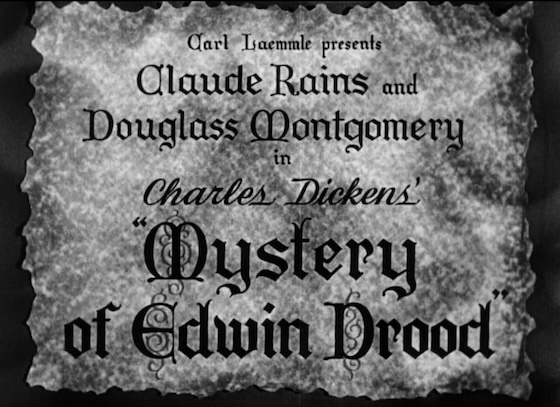
Charles Dickens died before he could tell anybody who killed Edwin Drood. Universal looked at that problem in 1935 and essentially said, Fine. We'll handle it.
That's already enough to make The Mystery of Edwin Drood one of the stranger residents of Umbrella Entertainment's Universal Horror: Monsters and Curiosities (1923–1960) collection. It isn't really a horror movie, certainly not in the Frankenstein or The Black Cat sense, but Universal shoots the damn thing like one. Fog rolls through narrow streets. Cathedral towers loom over the town. An opium den provides our introduction to the story. Graves are opened. Crypts wait beneath the church. And standing in the middle of everything is Claude Rains, looking like a respectable choirmaster while barely containing enough sexual obsession, jealousy, addiction, and murderous rage to power several other Universal pictures. There isn't a monster here because there doesn't need to be one. We have John Jasper.
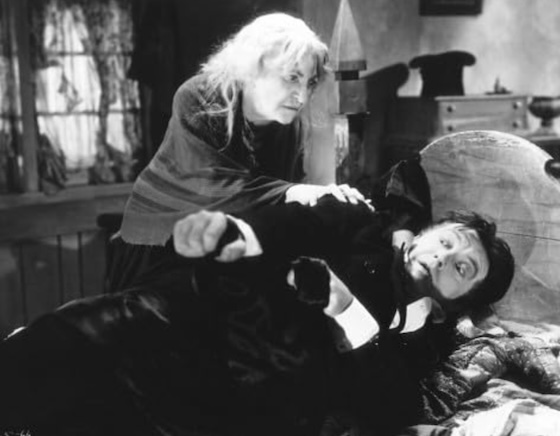
Rains plays Jasper, choirmaster at Cloisterham Cathedral and uncle to young Edwin Drood (David Manners), who is engaged to the beautiful Rosa Bud (Heather Angel). That's unfortunate because Jasper is also violently obsessed with Rosa. He hides those feelings behind the respectable exterior expected of him while escaping regularly into an opium haze, and Rains lets us see the strain of maintaining both identities. This isn't the explosive Claude Rains of The Invisible Man, ranting about power while throwing policemen through windows. Jasper's madness stays behind the eyes until it can't. Rains can be charming, paternal, wounded, predatory, and completely fucking terrifying without changing the volume of his voice. He gives us a man who has spent so long repressing what he wants that desire itself has begun to rot inside him.
Then Edwin disappears.
Now, if you've read Dickens, here's where things get interesting. The Mystery of Edwin Drood was Dickens's final novel, and he died in 1870 after completing only half of it. There is no canonical solution. No final chapter hidden in a desk. No note explaining exactly what happened. Dickens left Edwin's fate unresolved, which has given scholars, readers, playwrights, filmmakers, and assorted obsessive lunatics more than 150 years to argue about what he intended. Universal therefore had to do something wonderfully audacious: finish Charles Dickens's story for him. The screenplay commits to an answer, identifies what happened to Edwin, and pushes the mystery toward a conventional resolution. Whether Dickens would have approved is unknowable. He probably would have had notes.
As a movie, though, the decision works because director Stuart Walker isn't interested in treating the unfinished novel like a sacred literary artifact. He's making a Gothic mystery, and Universal knew how to make Gothic mysteries look gorgeous. Cloisterham feels less like a peaceful English cathedral town than somewhere Dracula might stop for the weekend. The cathedral dominates everything, with its enormous spaces, staircases, bells, tombs, and shadows turning religious architecture into psychological landscape. The production design is elaborate enough to give the movie a scale many of Universal's horror programmers couldn't afford, while George Robinson's photography wraps that world in darkness whenever Jasper takes control of the story. You can practically smell the wet stone.
And then there's the opium den.
Jesus.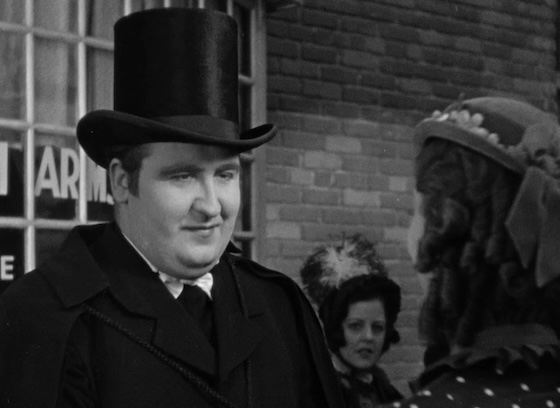
The opening immediately tells us this isn't going to be polite Dickens. Jasper lies amid smoke and bodies, drifting through hallucinations while the respectable life waiting outside becomes another costume he has to put on. It's an unexpectedly sordid introduction for a 1935 Universal literary adaptation, and it establishes the movie's central tension beautifully. Daylight Jasper belongs to the cathedral. Nighttime Jasper belongs to addiction, lust, and whatever poisonous thing he's trying to suppress. Rains makes both versions believable because he never treats them as separate personalities. They're the same man, and that's the horror.
David Manners is also interesting here simply because of the Universal history he brings with him. This is the man who stood opposite Bela Lugosi in Dracula, Boris Karloff in The Mummy, and Karloff and Lugosi together in The Black Cat, and now he's wandered into Dickens. Edwin is necessarily less fascinating than Jasper—the potential victim rarely gets to compete with Claude Rains slowly losing his shit—but Manners gives him enough warmth and youthful confidence that his disappearance creates a genuine absence. Heather Angel has a more difficult assignment as Rosa because the story requires her to become the object around which several male obsessions revolve, but she gives Rosa enough awareness and fear to prevent her from becoming merely another Gothic prize waiting to be claimed.
Douglass Montgomery's Neville Landless provides the convenient alternative suspect. He's volatile, openly hostile toward Edwin, and practically gift-wrapped for anyone looking to blame someone other than Jasper. His sister Helena, played by Valerie Hobson, brings another familiar Universal face into the picture—Hobson would appear the same year as Elizabeth in Bride of Frankenstein—and the Landless twins help expand the story beyond Jasper's obsession into something closer to a genuine murder mystery. Everybody has secrets. Everybody is watching everybody else. And because Dickens never finished the damn book, even viewers familiar with the source can't completely hide behind literary certainty.
What surprised me most revisiting The Mystery of Edwin Drood in 2026 is how naturally it fits alongside Universal Horror despite lacking anything supernatural. This was the same year Universal released Bride of Frankenstein, Werewolf of London, and The Raven, and the studio's Gothic machinery was operating at full strength. Give Universal a cathedral, a graveyard, an opium addict, and Claude Rains lusting after somebody he absolutely shouldn't be lusting after, and apparently that's close enough.
The monster is obsession.
Universal already knew how to photograph that.
The Verdict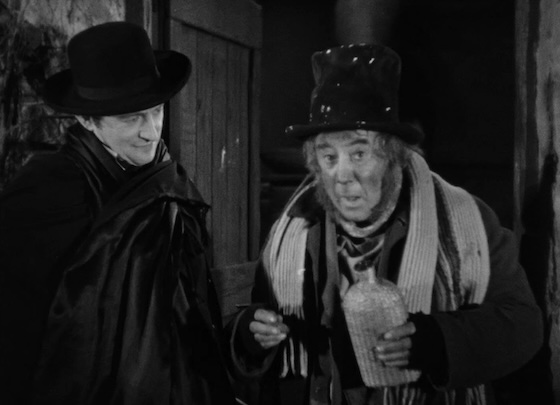
The Mystery of Edwin Drood is less a horror movie than a Gothic melodrama wearing Universal Horror's beautifully tailored coat, but that's precisely why it belongs in this collection. Stuart Walker turns Dickens's unfinished mystery into a shadowy tale of obsession, addiction, jealousy, and murder, while Universal's production machinery supplies enough fog, tombs, cathedral architecture, and nocturnal menace to make Cloisterham feel only a few miles down the road from Frankenstein's village.
But this is Claude Rains' movie.
He doesn't need bandages. He doesn't need invisibility. He doesn't need Jack Pierce to spend hours turning him into something inhuman. John Jasper looks perfectly respectable, sings in the cathedral choir, and walks among everyone without raising suspicion.
That's scarier.
The Universal monsters usually had the courtesy to look like monsters.


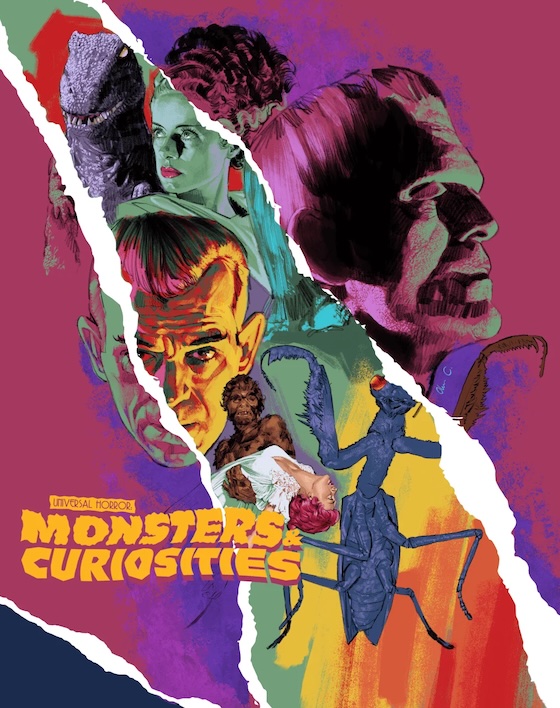
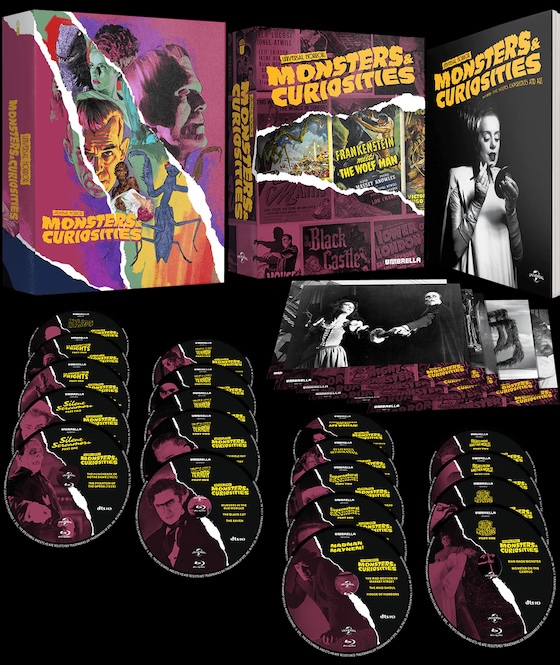
Universal Horror: Monsters And Curiosities Blu-ray - Umbrella Entertainment Exclusive / Collector's Edition
Home Video Distributor: Umbrella Entertainment
Available on Blu-ray - July 1, 2026
Screen Formats: 1.33:1; Various
Subtitles: English SDH
Video: 1080p
Audio: DTS-HD Master Audio 2.0
Discs: Blu-ray Disc; nineteen-disc set
Region Encoding: Locked to Region A
Video
Umbrella Entertainment's presentation is particularly rewarding here because The Mystery of Edwin Drood is an unusually handsome Universal production. George Robinson's black-and-white cinematography moves between richly detailed interiors, foggy streets, the cathedral, crypts, and the wonderfully disreputable opium den, with the stronger image allowing the elaborate sets and costumes to register without sacrificing their Gothic atmosphere. Facial detail also matters enormously with Rains because so much of Jasper's menace lives in tiny shifts of expression rather than overt physical transformation.
Audio
The film's dialogue-driven nature makes a clean mono presentation essential, and the track allows Rains' extraordinary vocal control to do much of the work. Cathedral music, bells, crowd scenes, and dramatic scoring retain appropriate presence without overwhelming the performances. Rains had one of cinema's great voices, and Edwin Drood repeatedly reminds us that he could make a perfectly ordinary sentence sound like either a seduction or a death threat depending upon where he placed the emphasis.
Supplements:
Commentary:
- None
Special Features:
Within Umbrella Entertainment's Universal Horror: Monsters and Curiosities (1923–1960) collection, The Mystery of Edwin Drood earns its place as one of the genuine curiosities. It's Dickens rather than Shelley, Stoker, or Poe, yet the movie demonstrates how completely Universal's Gothic sensibility could absorb material that wasn't originally conceived as horror. The unfinished nature of Dickens's novel adds another layer because Universal isn't merely adapting the story; it's completing it, choosing answers Dickens never lived long enough to provide and wrapping those answers in the visual language of the studio's monster cycle.
No supernatural creature. No laboratory. No curse. Just Claude Rains, an opium pipe, an unhealthy obsession, and a cathedral full of places to hide a body.
Turns out that's plenty.

| Movie |  |
|
| Video |  |
|
| Audio | |
|
| Extras |  |
|
|
Composite Blu-ray Grade
|
||