There are movies that look good in 4K, movies that look great in 4K, and then there is Spider-Man: Into the Spider-Verse / Spider-Man: Across the Spider-Verse, a pair of animated lunatic masterpieces seemingly designed to crawl out of your television, grab you by the eyeballs, and remind you that movies can still make you feel something other than franchise fatigue. Sony's Amazon Limited Edition collects both films on 4K UHD in one package, and while the packaging itself isn't going to change civilization, what is spinning inside these discs damn near might. These aren't merely two great Spider-Man movies. They aren't even merely two great animated movies. Taken together, they represent some of the most fearless, inventive, emotionally alive filmmaking to come out of the superhero machine, and watching them back-to-back makes most of their live-action competition look positively terrified of taking a creative risk.
Spider-Man: Into the Spider-Verse remains an absolute miracle. Released at a point when Spider-Man had already been rebooted, recast, repackaged, franchised, merchandised, and squeezed for just about every available dollar, the damn thing somehow made the character feel new again. Miles Morales isn't Peter Parker with a different haircut; he's awkward, scared, funny, stubborn, uncertain, and wonderfully human, a kid trying to figure out who the hell he is while everybody around him seems to have already decided. That's the secret weapon buried beneath all the comic-book insanity. For every explosion of color, every visual joke, every Spider-person crashing through another dimension, there is a beating heart underneath it all, and that heart belongs to Miles discovering that becoming Spider-Man isn't about replacing somebody else. It's about finally believing he deserves to take the leap.
And, holy shit, does this movie look like nothing else. Into the Spider-Verse didn't simply borrow the visual language of comic books; it ripped the pages apart, threw them into a blender with graffiti, animation, pop art, halftone printing, hand-drawn flourishes, CG imagery and about fifteen other things somebody probably insisted couldn't possibly work together. Somehow, it all works. Better than works. The movie moves like a comic book having a nervous breakdown in the best possible way, and beneath all that stylistic swagger sits one of the warmest Spider-Man stories ever told. The relationship between Miles and his father hits harder with every viewing, Peter B. Parker remains one of the funniest and saddest interpretations of the character we've gotten, and that climactic leap of faith still gives me goosebumps. Every. Damn. Time.
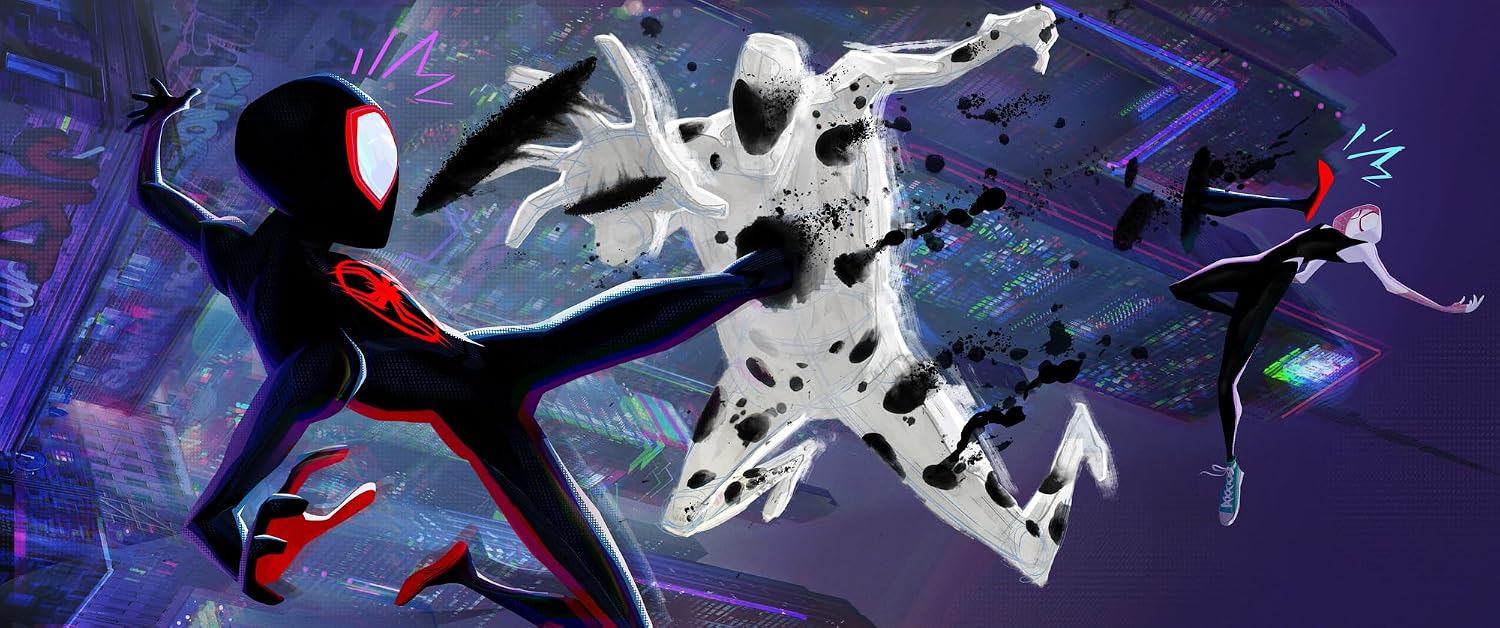
Then Across the Spider-Verse arrives and somehow looks at the impossible visual achievement of the first movie and says, Cute. Watch this. Bigger, stranger, sadder and exponentially more ambitious, the sequel refuses to simply repeat the trick. Instead, Joaquim Dos Santos, Kemp Powers and Justin K. Thompson send Miles and Gwen Stacy hurtling through an ever-expanding collection of worlds that aren't simply different locations but entirely different artistic philosophies. Watercolors bleed according to emotion. Punk-rock collage tears through the frame. Colors change with character psychology. Backgrounds sometimes disappear because the emotion in the foreground is all that matters. There are moments when I'm not entirely sure whether I'm watching a movie, reading a comic book, wandering through an art museum or experiencing some kind of controlled audiovisual hallucination.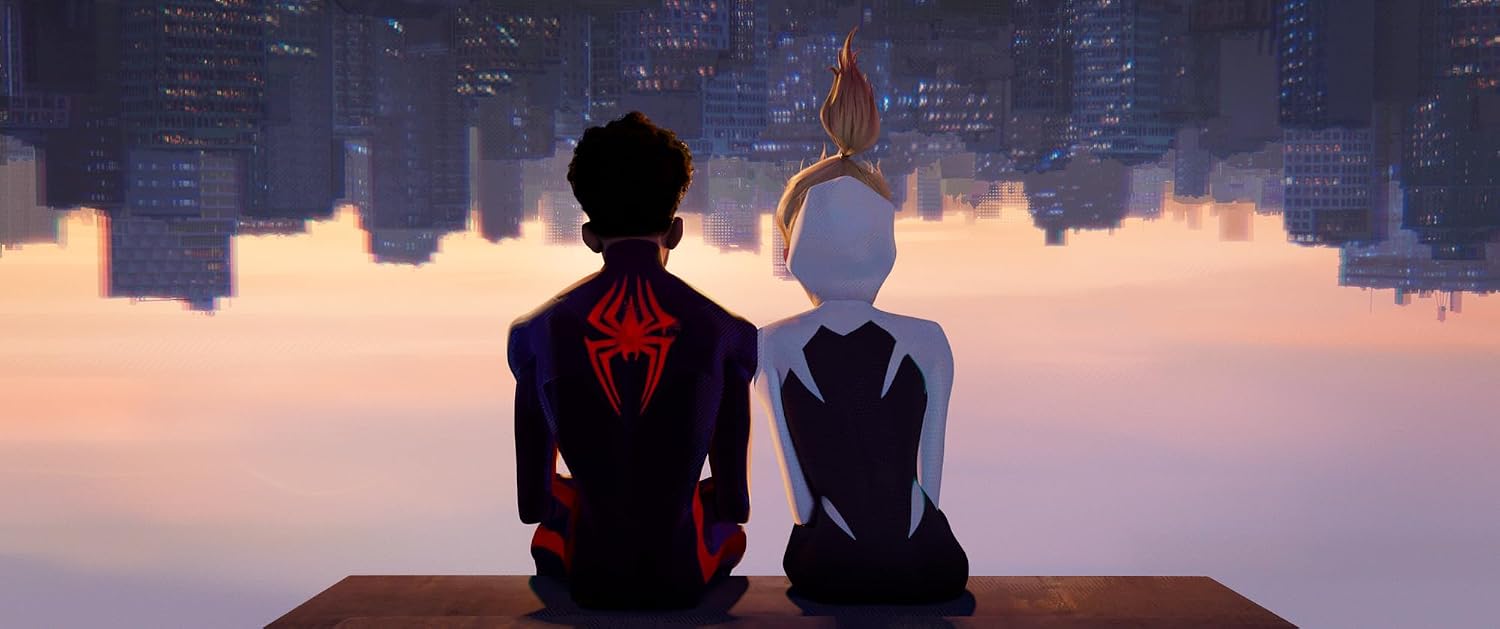
Yet the miracle is that none of this technical showing-off swallows the characters. Across the Spider-Verse is enormous, but its best moments remain painfully intimate. Gwen and her father. Miles and his parents. Miles and Gwen sitting upside down above New York, quietly trying to figure out what they mean to each other. The Spot beginning as an almost pathetic joke before slowly becoming something genuinely threatening. Miguel O'Hara transforming Spider-Man mythology itself into an argument about destiny, sacrifice and whether suffering is somehow required before someone earns the right to call themselves a hero. That's where the movie really sinks its teeth in. Miles isn't fighting another villain who wants to blow up New York. He's fighting the fucking story people have already written for him.
And Miles says no.
That's Spider-Man.
That's why these movies work.
That's why I love them.
The Amazon Limited Edition puts both films together in an exclusive 4K multi-feature package with O-ring packaging, but the real reason to own this set is simple: these movies belong on physical media. Into the Spider-Verse remains gorgeous on UHD, with HDR giving its already outrageous palette deeper blacks, stronger highlights and wonderfully saturated color, while the Dolby Atmos presentation adds genuine dimensionality to the action and Daniel Pemberton's magnificent score. Across the Spider-Verse, however, is where the format gets to stand on the table and start pounding its chest. The Dolby Vision presentation is staggering. Reds burn. Blues glow. Blacks plunge into nothingness. Paint, pencil strokes, Ben-Day dots, paper textures and deliberately imperfect printing effects are visible everywhere, and the image can shift from delicate watercolor softness to retina-searing comic-book insanity in seconds without ever losing control. If you bought a big OLED and have been waiting for something to justify the ridiculous amount of money you spent on it, congratulations. Feed it this disc.
The Dolby Atmos tracks are equally impressive, particularly on Across the Spider-Verse, where the soundstage seems determined to use every available inch of the room. Webs snap across channels, bodies rocket overhead, dimensional portals erupt around you, bass hits with real weight, and Pemberton's score doesn't politely accompany the movie so much as invade your house. The mix can be enormous when it needs to be, yet dialogue remains clear and the quieter emotional moments are allowed room to breathe. That's important because these movies aren't two-hour demo reels masquerading as storytelling. The technical wizardry serves the characters rather than replacing them, which is precisely why cranking the volume becomes such a ridiculously satisfying experience.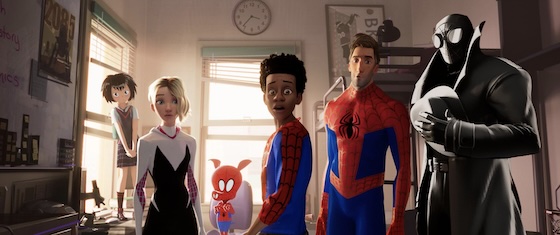
If there's a frustration with this collection, it's that it inevitably feels incomplete because Miles' story isn't finished yet. Across the Spider-Verse ends with one hell of a cliffhanger, and suddenly having both films sitting together only makes the wait for the conclusion more agonizing. But maybe that's also part of the appeal. This set captures the first two movements of something genuinely special, before we know exactly how the final movement lands, and watching them together makes their achievement even clearer. The first movie asks whether Miles can become Spider-Man. The second asks whether Miles gets to decide what being Spider-Man actually means. Wherever the third film eventually takes that idea, the foundation sitting here is astonishingly strong.
Spider-Man: Into the Spider-Verse and Spider-Man: Across the Spider-Verse are what happens when enormously talented filmmakers are given familiar characters and decide familiarity isn't good enough. They're funny without becoming disposable, emotional without becoming manipulative, experimental without disappearing up their own asses, and spectacular without confusing noise for excitement. Most importantly, they understand something too many superhero movies have forgotten: underneath the costumes, multiverses, villains, portals and collapsing realities, we have to give a shit about the person wearing the mask.
I give a shit about Miles Morales.
A lot.
And this gorgeous 4K collection makes falling in love with his story all over again ridiculously easy.



 2-Movie Collection | 4K Ultra HD + Digital 4K | Amazon Exclusive
Home Video Distributor: Sony
Available on Blu-ray - September 5, 2023
Screen Formats: 2.39:1
Subtitles: English; English SDH; French; Spanish
Video: Upscaled 4K; HDR10
Audio: English: Dolby Atmos; Dolby TrueHD 7.1; French (Canada): Dolby Digital 5.1; Spanish: Dolby Digital 5.1
Discs: 4K Ultra HD; Blu-ray Disc; Two-disc set
Region Encoding: 4K region-free; blu-ray locked to Region A
ANYONE CAN WEAR THE MASK. MILES MORALES MAKES IT HIS OWN.
Experience the first two chapters of the spectacular Spider-Verse saga together in this Limited Edition 4K Ultra HD collection. Spider-Man: Into the Spider-Verse introduces Brooklyn teenager Miles Morales, an ordinary kid suddenly confronted with extraordinary powers, alternate dimensions, and the terrifying realization that becoming Spider-Man means taking a leap before you know where you're going to land. Then Spider-Man: Across the Spider-Verse blows the doors off the Multiverse, sending Miles into a breathtaking collision with hundreds of Spider-People—and forcing him to decide whether being a hero means accepting the story already written for him or tearing the damn thing up and writing his own.
Bold, funny, wildly inventive and packed with more visual imagination than most franchises manage across a dozen movies, these are superhero films with something beating beneath all that beautiful chaos: heart. Presented together on 4K Ultra HD with Dolby Vision and Dolby Atmos, the Spider-Verse erupts with astonishing color, thunderous sound and comic-book detail seemingly built to punish your home theater in all the right ways.
Two movies. One Miles Morales. Infinite possibilities.
Take the leap.
VIDEO
If ever there were two movies made to justify the continued existence of 4K physical media, these are the bastards. Spider-Man: Into the Spider-Verse arrives in 2160p with HDR10, and the increased resolution, deeper blacks and expanded contrast give its already insane visual design even more room to breathe. The comic-book textures are the real star here: halftone dots, deliberately offset colors, ink lines, printing patterns and tiny background details become increasingly apparent without destroying the handcrafted aesthetic. This isn't supposed to look slick and polished. It's supposed to look like a comic book has somehow learned to move, and the UHD presentation absolutely understands the assignment.
Across the Spider-Verse then comes along and basically tells the first movie to hold its beer. Presented in 2160p with Dolby Vision and HDR10, the sequel is a goddamn visual feast. Colors don't merely pop; they attack. Gwen's watercolor universe, Mumbattan's blazing palette, Spider-Punk's constantly shifting collage aesthetic and the darker environments surrounding Miguel O'Hara all benefit enormously from Dolby Vision's control of color and contrast. Black levels are tremendous, highlights can be spectacular, and the amount of intentionally visible texture is staggering. This isn't the sort of 4K disc where you're counting pores or individual hairs. You're looking at paint strokes, pencil lines, paper textures and printing techniques. It might be animation, but it is also one of the best demonstrations of what UHD can do sitting on my shelf.
AUDIO
Both movies bring Dolby Atmos to the party, and you'd better give your speakers some room because these tracks aren't particularly interested in behaving themselves. Into the Spider-Verse uses the soundstage beautifully, with web-slinging effects, dimensional chaos and Daniel Pemberton's score spreading throughout the room while the low end gives the action some serious weight. The Atmos mix adds height and space without sacrificing dialogue, which remains clean and firmly prioritized even when the movie is throwing everything it has at you.
But once again, Across the Spider-Verse decides that "more" is a perfectly reasonable philosophy. The Atmos presentation is enormous, aggressive and wonderfully playful, with characters swinging across the room, dimensional portals opening in every direction and effects making constant use of the surrounds and overhead channels. Then there's Pemberton's score, which is practically another character in the movie and sounds fucking glorious here. Bass is powerful without becoming stupid, dialogue remains crystal clear, and the mix knows when to back away from the spectacle and let the quieter moments breathe. When the Spider Society sequence kicks into gear, though, your home theater gets one hell of a workout.
Supplements:
Commentary:
- See below
Special Features:
Sony doesn't treat the supplements as an afterthought, although it's important to know where everything lives. Much of the bonus material resides on the accompanying Blu-ray discs rather than the UHD platters, so don't throw those blue discs into a drawer and forget about them. Into the Spider-Verse offers the excellent Alternate Universe Mode, which uses unfinished and alternate material to create an extended look at roads the filmmakers ultimately didn't take, alongside making-of pieces, character explorations, Easter eggs, music videos and the completely ridiculous—and completely welcome—Spider-Ham: Caught in a Ham short. The filmmaker commentary is especially worthwhile because Phil Lord, Christopher Miller and directors Bob Persichetti, Peter Ramsey and Rodney Rothman dig into just how the hell they pulled this thing off.
Across the Spider-Verse goes even deeper, with Sony touting more than 90 minutes of supplemental material. There's a deleted Miguel O'Hara sequence, examinations of the film's various dimensions and Spider-characters, material covering Miles' family, the score and soundtrack, the comics connection and the astonishing Spider Society escape. The UHD disc itself carries the filmmaker commentary, while the bulk of the featurettes are housed on the Blu-ray. Considering how visually complicated these movies are, I could happily watch another three hours about their creation, but what's here provides a substantial trip behind the curtain and makes this collection feel like something intended for people who actually give a damn about movies rather than simply another pair of discs stuffed into a case.
Special Features Include:
Spider-Man: Into the Spider-Verse
- Audio Commentary with filmmakers
- Spider-Ham: Caught in a Ham original short
- Alternate Universe Mode
- We Are Spider-Man
- Spider-Verse: A New Dimension
- The Ultimate Comics Cast
- A Tribute to Stan Lee and Steve Ditko
- The Spider-Verse Super-Fan Easter Egg Challenge
- Designing Cinematic Comics Characters
- Heroes and Hams
- Scorpions and Scoundrels
- "Sunflower" Lyric Video
- "Familia" Lyric Video
Spider-Man: Across the Spider-Verse
- Filmmaker Commentary
- Miguel Calling – Deleted Scene
- Creating the Ultimate Spider-Man Movie
- Obscure Spiders and Easter Eggs
- "I'mma Do My Own Thing": Interdimensional Destiny
- Across the Worlds: Designing New Dimensions
- Your Friendly Neighborhood Spider-Cast
- Designing Spiders and Spots
- Raising a Hero
- Scratches, Score and the Music of the Multiverse
- Across the Comics-Verse
- Escape from Spider-Society
- "Annihilate" Lyric Video
- "Calling" Lyric Video
Sony's Spider-Verse 4K pairing delivers exactly what a physical-media release should: reference-level eye candy, room-rattling Atmos and enough supplemental material to make digging through the Blu-rays worthwhile. The movies are masterpieces. The presentations are spectacular. And if you've got an OLED and an Atmos system sitting there waiting to show off, this is why you bought the damn things.

| Movie |  |
|
| Video | |
|
| Audio | |
|
| Extras | |
|
|
Composite Blu-ray Grade
|
||