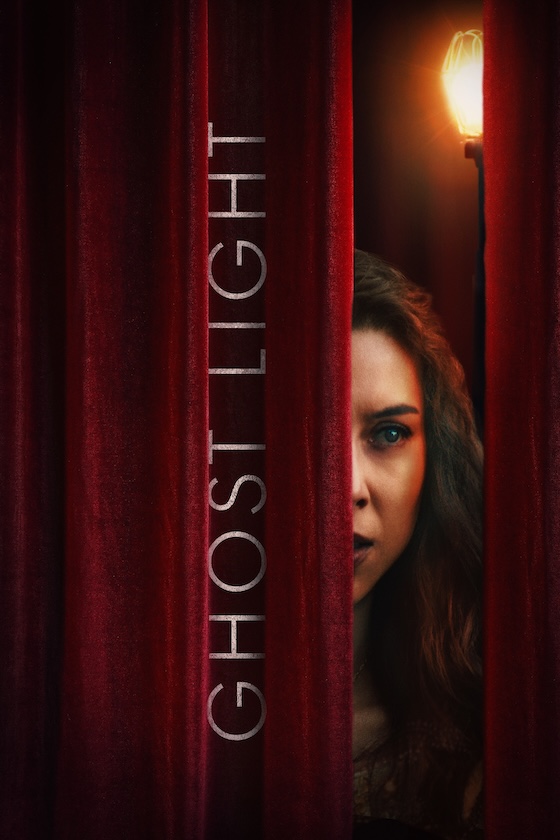
There are few places more naturally suited to a ghost story than an empty theater. The seats facing a darkened stage, the curtains hiding spaces we cannot quite see, dressing rooms filled with the residue of performers who have come and gone—it is a setting that barely needs a supernatural presence to become unsettling. Writer-director Amir Faress understands that in Ghost Light, a deliberately paced mystery that uses the traditions and superstitions of the theater as the backdrop for something considerably more complicated. Rather than rush toward scares, Faress allows the playhouse itself to become part of the mystery.
Lisa Blake Richards stars as Marion Neal, an actress caught in a legal fight over the rights to her playhouse. It initially seems like a decidedly earthly problem involving ownership, competing interests, and people with reasons to want control of the property. Then things begin happening that are harder to explain. Strange occurrences inside the theater gradually suggest that Marion’s problems extend beyond paperwork and attorneys, and what first appears to be a relatively straightforward dispute begins revealing layers of secrets, conspiracies, and competing agendas. Ghost Light is less interested in throwing a ghost directly into the spotlight than allowing us to wonder exactly what—or who—is responsible for what Marion is experiencing.
Richards gives the film much of its weight. There is something refreshing about a horror story centered on characters with histories behind them rather than another collection of teenagers wandering somewhere they obviously shouldn’t. Richards brings that history to Marion, and the performance gives the mystery a sense of consequence. Cindy Dolenc and Laur Allen add to an ensemble in which motivations are not immediately obvious, an important quality for a story that increasingly asks the audience to reconsider what it thinks it knows. Faress uses those uncertainties effectively, letting suspicion move between the supernatural and the very human.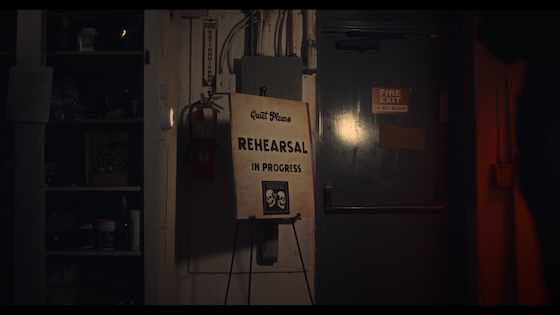
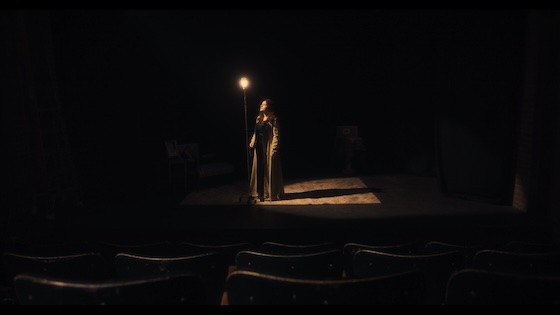
The theatrical setting remains Ghost Light’s greatest asset. Anyone who has spent time inside a theater after everyone else has gone home knows how quickly a familiar space can become something different. A backstage hallway feels longer. An empty auditorium suddenly seems enormous. A sound that would disappear beneath an audience becomes impossible to ignore. The title itself draws upon one of theater’s great traditions—the single light left burning on an otherwise dark stage—and Faress wisely understands that sometimes one light surrounded by darkness can be considerably creepier than no light at all.
Ghost Light ultimately works best as an atmospheric mystery with supernatural edges rather than a conventional scare machine. It asks the audience to pay attention to relationships, motives, and the history surrounding Marion’s playhouse while allowing the eerie possibilities to remain just beyond the curtain. That restraint will probably work better for viewers willing to settle into its deliberate rhythm than those looking for constant jolts. Still, there is something wonderfully appropriate about a movie reminding us why theaters have accumulated so many ghost stories over the centuries. When the audience leaves, the actors go home, and only the ghost light remains burning onstage, who exactly is it there for?
Ghost Light arrives on digital and On-Demand platforms on September 29th.


MPAA Rating: Unrated.
Runtime: 82 mins
Director: Amir Faress
Writer: Amir Faress
Cast: Coby Connell; Stephen Mendillo; Rachel Ashley Johnson
Genre: Horror | Thriller
Tagline:
Memorable Movie Quote:
Distributor: One Tree Entertainment
Official Site:
Release Date: September 29, 2026
DVD/Blu-ray Release Date:
Synopsis: Actress Marion Neal finds herself mired in a lawsuit over the rights to her playhouse. As strange occurrences begin to take place, the hidden truth emerges regarding an intricate web of interwoven conspiracies and villainous agendas.