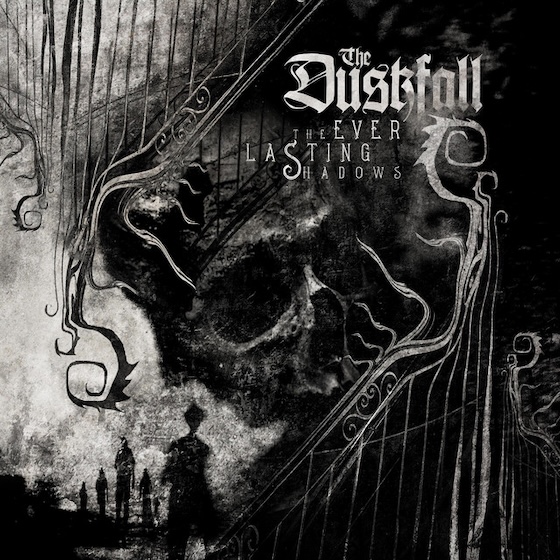
After what feels like an eternity of delays, The Everlasting Shadows finally arrives, and the biggest surprise is how comfortable it sounds in its own skin. Many veteran melodic death metal bands return after a long absence and either chase modern production trends or lean so hard on nostalgia that the result feels dead. The Duskfall sidesteps both traps.
The Duskfall was formed in Luleå, Sweden, in 1999 by guitarist Mikael Sandorf following the break-up of Gates of Ishtar, and, in the golden age of Swedish melodic death metal, the band very quickly carved out its own reputation. Through albums such as Frailty, Source, Lifetime Supply of Guilt, and The Dying Wonders of the World, the band built a reputation for combining razor-sharp riffs, soaring guitar melodies, and a darker, more aggressive edge than many of their peers. The Duskfall disbanded in 2008, but their music still managed to garner a loyal following, especially with fans who considered Source to be one of the genre’s hidden gems. Sandorf would eventually bring the band back, resulting in the 2014 release of Where the Tree Stands Dead, but a proper follow-up took much longer than anyone expected. It has been more than a decade, but The Everlasting Shadows has finally arrived, not as a nostalgic reunion record but as a reminder of why The Duskfall became one of the most respected underground names in melodic death metal to start with.
The thing that struck me the most on first listen was how well the guitar melodies sit in the songs. Nothing feels unnatural. The first couple of minutes of “Entomb My Shadow” instantly recalled memories of the band’s early years, especially how the lead guitars weave around the rhythm riffs rather than just sitting on top of them. By the time the first chorus hit, I was grinning, as it really did sound like The Duskfall and not a modern band trying to sound like The Duskfall.
The opening run is by far the strongest part of the album. "Entomb My Shadow" gets things off to a good start, but it's "As Our Days Are Dying" that things finally come together. The lead melody is what carries the whole song, and it has that rare quality of feeling familiar after one listen. A few hours later, I caught myself humming parts of it without even realizing it. The title track is different, featuring darker riffing and a heavier atmosphere. What I liked most was the contrast between the dense verses and the melodic passages that open the song just before the chorus. The transitions don't feel like separate ideas sewn together, but natural. That's something a lot of melodic death metal bands have trouble with, especially on comeback albums.
The middle of the record is where the songwriting really shines. "World of Lies" contains one of my favorite guitar performances on the album. There's a lead line running through the song that feels uplifting without becoming cheesy, which is a difficult balance to pull off in this genre. Then comes "Legion," which ended up being the track I returned to most. The first time through, I thought six minutes might be pushing it. By the third listen, it became clear why the band gave the song room to breathe. The slower pacing allows the melodies to develop naturally, and the chorus lands with more impact each time it returns. If someone asked me to play one song that captures what this album does well, it would probably be "Legion."
The final stretch is more aggressive, and that's exactly what the album needs at that point. "Night at the Graves" has a sharpness that reminds me of why The Duskfall stood out from so many melodic death metal bands in the first place. The riffs feel hungry. "Kneedeep in the Grave" doesn't immediately demand attention, but it grew on me with repeated listens because of how well the rhythm section drives the song forward. The only track I never fully connected with was "Golem." It's heavy, it's well played, and there isn't really anything wrong with it, but I kept finding myself remembering individual moments from the surrounding tracks while drawing a blank on this one. Every album has a song that ends up in that spot, and for me, this was it.
What I appreciate most about The Everlasting Shadows is that it never sounds desperate to prove its relevance. There's a confidence running through the entire record that comes from a band understanding exactly what it does well. The closing track, "The Peacemaker," is a perfect example. Instead of ending with a grand, seven-minute statement, The Duskfall delivers a short burst of aggression and simply walks off. The first time it ended, I actually checked the running time because I couldn't believe it was already over. In hindsight, that's probably the right way to finish the album. It leaves an impression and avoids the self-indulgence that often sneaks into reunion records. After such a long wait, I wasn't expecting one of the strongest Duskfall albums. Yet after several listens, that's honestly where I land. It may not surpass Source for me, but it's much closer to that level than I ever expected it would be.
And that’s saying a lot. The release can be found wherever the finest of technical death metal releases are found