There’s so much to say about this bona fide classic. The cast. The director. The history. The relevance. The awards. I’m not sure where to start. But let’s give it a go.
Martin Scorsese is a filmmaker I’ve always associated with volatile men, simmering violence, Catholic guilt, and enough street-level tension to make me keep my head on a swivel when walking the dog.
Mean Streets, Boxcar Bertha, Taxi Driver — these are hardly the films that prepare you for Alice Doesn't Live Here Anymore. Yet that's precisely what makes the movie such a wonderful surprise. Instead of gangsters and antiheroes, Scorsese turns his attention toward an ordinary woman trying to rebuild her life, and the result remains one of the warmest, most emotionally satisfying films of the New Hollywood era.
Released during a decade filled with personal, character-driven dramas like The Last Picture Show, Five Easy Pieces, and An Unmarried Woman (which would follow a few years later), Alice Doesn't Live Here Anymore fits comfortably beside those classics while still working with a personality all its own. It embraces the freedom and realism that defined 1970s American cinema, yet never forgets to entertain. There's humor, heartbreak, romance, and enough colorful supporting characters to populate an entire television series—which, amusingly enough, it eventually did.
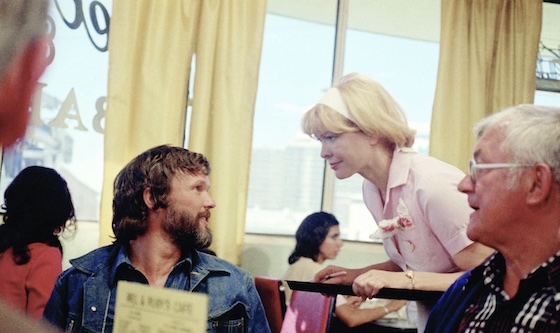
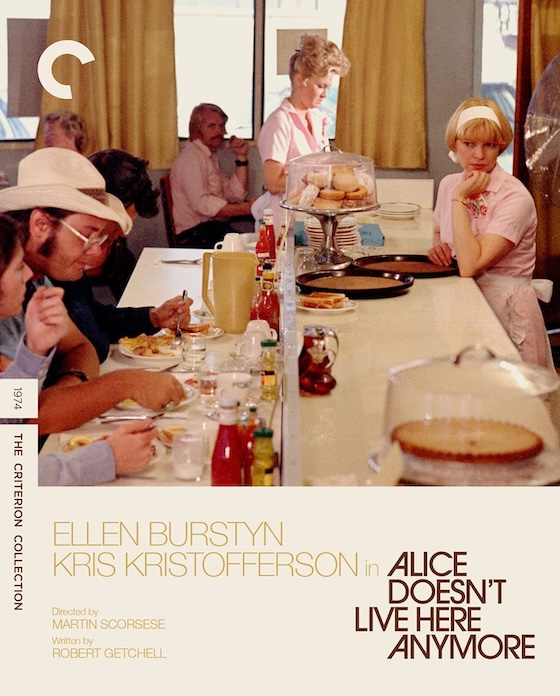
The story follows Alice Hyatt (Ellen Burstyn), a newly widowed mother who packs up her young son Tommy (Alfred Lutter) and heads across the Southwest in hopes of finally pursuing her lifelong dream of becoming a professional singer. Reality, however, has other plans. Bills don't pay themselves, jobs are scarce, relationships become complicated, and independence proves much harder than Alice imagined. Watching her navigate those obstacles becomes the emotional backbone of the film. Alice eventually finds herself waitressing in a greasy roadside diner where insults are flung around more often than the diner’s hash.
The biggest hurdle for many viewers may simply be accepting that this is, in fact, a Martin Scorsese picture. After the pure masculinity of Mean Streets and the exploitative heart of Boxcar Bertha, this feels like the cinematic equivalent of discovering that your tattooed biker neighbor secretly knits sweaters for orphaned puppies. Scorsese never loses his distinctive filmmaking instincts, but he channels them into something remarkably empathetic. Rather than letting us observe Alice from a distance, he fully immerses us in her perspective, capturing the anxieties, frustrations, and small triumphs that define her journey. Our journey.
Cinematographer Kent L. Wakeford deserves enormous credit for helping create that intimacy. His wobbly, restless camera gives the film an unsettled quality that perfectly mirrors Alice's emotional state. Nothing ever feels completely stable because Alice herself isn't stable. She's grieving, financially desperate, emotionally exhausted, and desperately trying to convince herself that everything will somehow work out. The visual style quietly reinforces those feelings without ever becoming distracting.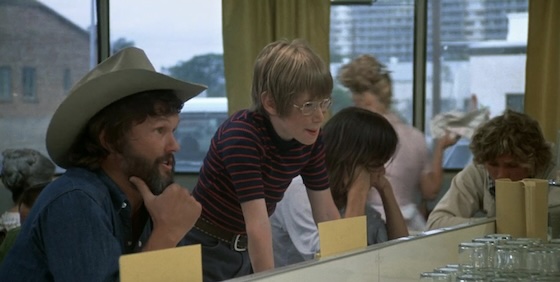
Ellen Burstyn's Academy Award-winning performance anchors every frame. She never asks for sympathy; she earns it naturally through her honest performance. Her Alice is funny, stubborn, vulnerable, impulsive, and sometimes frustratingly human. Burstyn allows all of those qualities to coexist beautifully. Her chemistry with Lutter is especially wonderful. Their mother-son relationship feels refreshingly authentic – if not a bit outdated, complete with sarcastic banter, affection, and the occasional moment where you completely understand why parents occasionally stare blankly into space for five uninterrupted minutes.
The supporting cast is equally terrific. Diane Ladd nearly steals the movie as Flo, whose sharp tongue hides a fiercely loyal heart. Her friendship with Alice becomes one of the film's richest emotional threads, while Valerie Curtin's wonderfully awkward Vera creates several of the funniest exchanges. Watching Vera stumble through conversations while Flo fires back sarcastic one-liners is pure comedic gold. Harvey Keitel delivers one of the film's most disturbing sequences as Alice encounters an abusive relationship, while Kris Kristofferson brings an easygoing charm that makes his David feel refreshingly grounded.
Alice spends the entire story learning that every important decision belongs to her—not her late husband, not an abusive boyfriend, and not society's expectations. Even when the film occasionally leans into melodrama during its violent confrontations, its emotional honesty never wavers.
Some fifty years later, Alice Doesn't Live Here Anymore still feels refreshingly human, proving Scorsese's greatest talent isn't simply portraying dangerous men—it's understanding people.


 4K Ultra HD + Blu-ray Edition
Home Video Distributor: Criterion
Available on Blu-ray - July 14, 2026
Screen Formats: 1.85:1
Subtitles: English SDH
Video: Native 4K; HDR: Dolby Vision, HDR10
Audio: LPCM Mono
Discs: 4K Ultra HD; Blu-ray Disc; Two-disc set
Region Encoding: 4K region-free; blu-ray locked to Region A
VIDEO
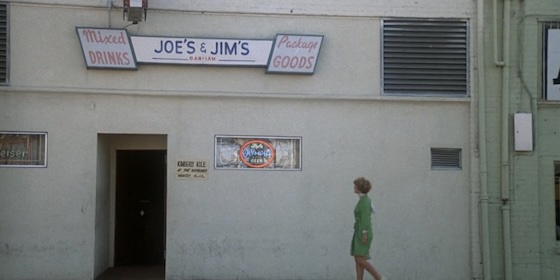
Criterion's new 4K digital restoration of Alice Doesn't Live Here Anymore is a loving presentation that feels remarkably authentic to its 1974 theatrical roots.
Framed in its original 1.85:1 aspect ratio and enhanced with Dolby Vision HDR, the image was supervised and approved by Martin Scorsese, reportedly sourced from a print in his own private collection. That pedigree shows.
Colors remain warm and natural, while contrast and black levels receive a tasteful boost without sacrificing the film's vintage character. The most noticeable element is the pronounced, gauzy layer of film grain, which may strike some viewers as a touch heavy.
Even so, it never becomes distracting, instead reinforcing the wonderfully textured, unmistakably '70s aesthetic that gives the film so much of its enduring charm.
AUDIO
Criterion's presentation of Alice Doesn't Live Here Anymore may only include a monaural audio track, but don't mistake "mono" for "disappointing." This is a clean, well-preserved mix that serves the film exactly as intended.
Dialogue remains consistently crisp and intelligible, allowing every conversation, confrontation, and witty exchange to come through without strain. The film's soundtrack and understated musical score are reproduced with warmth and fidelity, complementing the story rather than overwhelming it.
While this release won't put your surround speakers through their paces, it never needs to. The simplicity of the original mix feels authentic to the film's 1970s roots, preserving its intimate atmosphere while delivering a stable, balanced listening experience that faithfully honors this classic drama.
Supplements:
Commentary:
- See below
Special Features:
There is a wealth bonus features, most carried over from previous release but new are a conversation between Burstyn and film critic Farran Smith Nehme, and an interview with editor Marcia Lucas.
- New 4K digital restoration, supervised and approved by director Martin Scorsese, with uncompressed monaural soundtrack
- One 4K UHD disc of the film presented in Dolby Vision HDR and one Blu-ray with the film and special features
- Audio commentary featuring Scorsese and actors Ellen Burstyn, Jodie Foster, Kris Kristofferson, Diane Ladd, and Alfred Lutter
- New conversation between Burstyn and film critic Farran Smith Nehme
- New interview with editor Marcia Lucas
- Making-of documentary featuring Burstyn and Kristofferson
- Trailer
- English subtitles for the deaf and hard of hearing
- PLUS: An essay by film critic Stephanie Zacharek

| Movie |  |
|
| Video | |
|
| Audio |  |
|
| Extras | |
|
|
Composite 4K UHD/Blu-ray Grade
|
||








![Trick or Treat (1986) – 4K Ultra HD [Standard Edition]](/images/resized/images/stories/2026/trick-or-treat-4k_40_40.jpg "Trick or Treat (1986) – 4K Ultra HD [Standard Edition]")


![Pirates of the Caribbean: 5-movie Collection 4K UHD + Blu-ray [Region Free]](/images/resized/images/stories/2026/pirates-caribbean-collection_40_40.jpg "Pirates of the Caribbean: 5-movie Collection 4K UHD + Blu-ray [Region Free]")