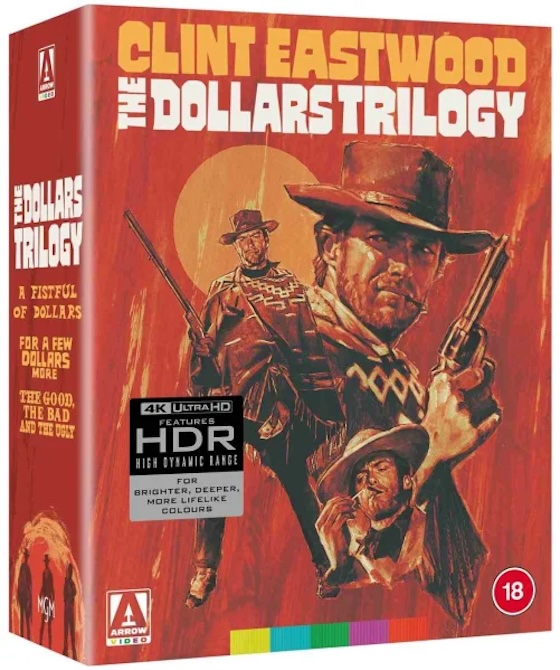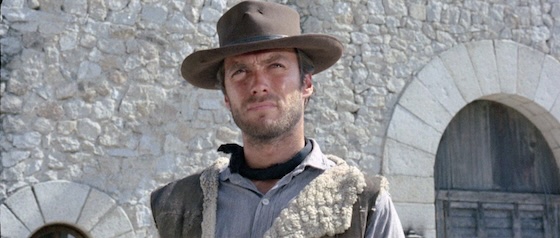
There are movie trilogies, and then there are three-film stretches that permanently fuck with the DNA of cinema. Sergio Leone’s Dollars Trilogy belongs firmly in the latter camp. Watching A Fistful of Dollars, For a Few Dollars More, and The Good, the Bad and the Ugly back-to-back in 2026 is less like revisiting three Westerns than watching somebody slowly dismantle the genre and rebuild the damn thing with sweat, gunpowder, tobacco smoke, extreme close-ups, and Ennio Morricone screaming through the speakers. And there, standing in the middle of it all, is Clint Eastwood. Poncho. Squint. Cigar. Almost no dialogue. The coolest bastard alive. This seven-disc Special Edition gathers the trilogy into one hell of a physical-media monument, complete with 4K UHDs, Blu-rays, reversible artwork, and enough Leone to leave your living room permanently covered in dust.
A Fistful of Dollars (1964) remains the leanest, meanest little son of a bitch of the bunch. Leone takes the bones of Kurosawa’s Yojimbo, drags them across the Spanish desert, and turns Eastwood into an icon practically before the opening credits have cooled. What strikes me now is just how economical the movie is. No wasted movement. No bullshit mythology dumps. Eastwood walks into a town where two families are busy destroying each other, realizes there’s money to be made, and starts playing both sides. That's it. That's the engine. But Leone photographs every stare like it could start World War III, and Morricone turns whistles, bells, guitars, and gunshots into something bordering on rock and roll. The movie feels dangerous because it doesn’t behave like the Westerns that came before it. Sixty-plus years later, it still has dirt under its fingernails.
Then comes For a Few Dollars More (1965), and this is where Leone realizes he can make the whole damn thing bigger without making it bloated. Eastwood is terrific, but Lee Van Cleef walks into the trilogy and nearly steals it out from underneath him. Their competing bounty hunters spend half the movie measuring each other’s balls before reluctantly joining forces against Gian Maria Volonté’s absolutely unhinged El Indio, and the result is arguably the most purely entertaining movie of the three. Leone is more confident here. The pauses get longer. The faces get uglier. The violence gets nastier. And that pocket-watch melody becomes one of the great pieces of cinematic tension because Leone understands something modern filmmakers routinely forget: sometimes anticipation is the action. You don’t need 900 cuts and a CGI building falling over. Give me Van Cleef staring at a man while a goddamn watch plays its tune and I’m good.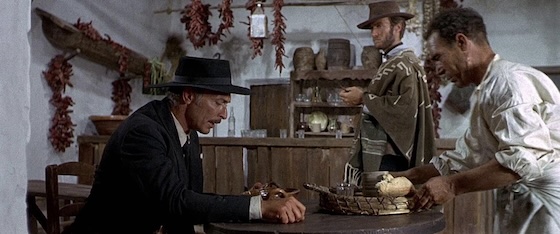
And then Leone blows the doors off the saloon with The Good, the Bad and the Ugly (1966). This isn’t merely the biggest movie of the trilogy; it feels like Leone finally got enough money to put every insane idea rattling around inside his skull onto the screen. Eastwood’s Blondie, Van Cleef’s Angel Eyes, and Eli Wallach’s Tuco chase Confederate gold through a Civil War landscape where everybody is greedy, exhausted, violent, stupid, or some magnificent combination of all four. Wallach is the secret weapon. Eastwood gets the mythology and Van Cleef gets the menace, but Tuco gets the humanity, comedy, desperation, and filth. And then we reach that cemetery. Morricone kicks in. Tuco runs. Leone’s camera starts dancing. The three men eventually face each other in that circular arena and cinema itself seems to stop breathing. Eyes. Guns. Fingers. Eyes again. Morricone going completely apeshit. You know exactly what happens and it still works every single fucking time. That's not nostalgia. That's filmmaking.
Seen together in 2026, the real pleasure of The Dollars Trilogy is watching Leone, Eastwood, and Morricone evolve almost in real time: Fistful is the experiment, Few Dollars More is the refinement, and Good, Bad and Ugly is the glorious detonation. The 4K presentations also finally give these battered, sun-scorched movies the texture they deserve—grain, weathered faces, dusty landscapes, deep shadows—without pretending they were shot yesterday. Yes, the lack of HDR on these particular UHD presentations will annoy the spec-sheet crowd, but the SDR 4K transfers have earned substantial praise for their color, contrast, grain retention, and restoration work. More importantly, none of that technical chatter matters once Morricone starts howling and Eastwood’s hand starts drifting toward the holster. Three movies. Three escalating masterpieces. One poncho. And an entire genre left coughing in the dust behind them. The Dollars Trilogy isn't simply essential Western cinema. It's essential fucking

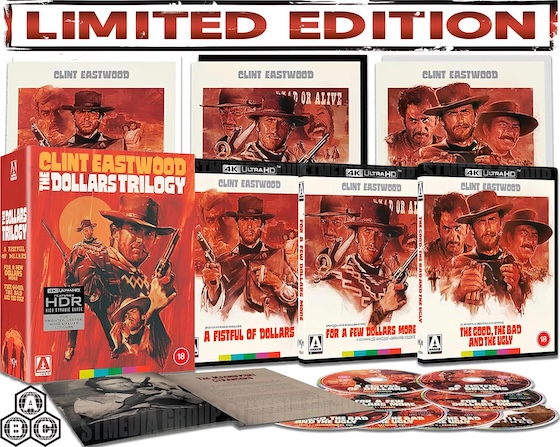

 4K Ultra HD - Limited Edition
Home Video Distributor: Arrow Films
Available on Blu-ray - May 18, 2026
Screen Formats: 2.35:1
Subtitles: English SDH
Video: Native 4K; Dolby Vision; HDR10
Audio: English: DTS-HD Master Audio Mono
Discs: 4K Ultra HD; eight-disc set
Region Encoding: 4K region-free
Three films. One nameless gunslinger. A fistful of money, a few more dollars, and enough blood, sweat, dust, and gunpowder to reinvent the Western forever.
Clint Eastwood straps on the poncho and Sergio Leone gets behind the camera for The Dollars Trilogy, the legendary trio that transformed the American Western into something stranger, meaner, cooler, and infinitely more stylish. Beginning with the stripped-down brutality of A Fistful of Dollars, expanding the mythology with Lee Van Cleef in For a Few Dollars More, and finally exploding across the screen with the operatic grandeur of The Good, the Bad and the Ugly, Leone’s trilogy remains one of cinema’s great three-film runs.
Backed by Ennio Morricone’s immortal scores and filled with sun-scorched landscapes, twitching fingers, squinting eyes, ugly bastards, beautiful widescreen compositions, and some of the longest damn pauses before a gunshot ever committed to film, The Dollars Trilogy turned Eastwood into an international icon and permanently changed what a Western could be.
This Special Edition 7-disc collection brings the complete trilogy together on 4K UHD and Blu-ray, wrapped in reversible artwork and loaded with commentaries, documentaries, archival material, deleted sequences, trailers, galleries, and enough Leone scholarship to keep you wandering the desert long after the final showdown.
The Man with No Name has never needed an introduction. Just give him the damn 4K.
VIDEO
This is where the set earns its spurs. The three films have always presented restoration challenges thanks to their Techniscope origins, decades of wear, different cuts, previous masters, and some occasionally questionable home-video decisions. In 4K, however, Leone's photography finally has room to breathe. The increased resolution benefits exactly what you'd expect: faces, landscapes, clothing, weathered buildings, leather, gunmetal, and every magnificent wrinkle Leone shoves directly into the camera.
A Fistful of Dollars has a deliberately rough, gritty appearance appropriate to the film itself, while For a Few Dollars More opens things up considerably. By The Good, the Bad and the Ugly, Leone's compositions have become enormous—desert vistas followed by gigantic close-ups of sweaty, dirty faces—and 2160p is practically made for this visual language.
Don't expect these movies to suddenly resemble modern digital productions. Thank Christ they don't. Grain, fluctuating source characteristics and the inherent roughness of the original photography remain part of the experience. What matters is that the films retain their cinematic texture rather than looking scrubbed into plastic. The result is appropriately dusty, tactile and wonderfully filmic.
AUDIO
Morricone. That's really where this conversation starts.
The audio presentations aren't about turning the Dollars movies into Top Gun: Maverick. They're about preserving the gunshots, dialogue, environmental effects and—most importantly—those extraordinary Ennio Morricone scores. The restored original mono options are especially welcome because they retain the character of the original presentations, while the available lossless 5.1 alternatives provide listeners with a somewhat broader soundstage. On The Good, the Bad and the Ugly, for example, the confirmed options include restored English 2.0 mono and DTS-HD MA 5.1.
And when Morricone takes over, crank the damn thing. The whistles, electric guitars, percussion, vocal cries and that unmistakable theme from The Good, the Bad and the Ugly don't need Atmos theatrics to command a room. The lossless presentations give the music plenty of weight without losing the distinctly 1960s character of the recordings.
Supplements:
Commentary:
- See below
Special Features:
This is not one of those box sets where the studio dumps three movies into a cardboard sleeve, calls it a "collection," and heads home for lunch. The supplemental material digs into Leone, Eastwood, Morricone, the production histories, alternate material and the restoration of the films themselves.
The real treasure is the scholarly material. Leone biographer Sir Christopher Frayling and film historian Tim Lucas have contributed extensive commentary work to these films, offering exactly the sort of historical and production context that makes revisiting the trilogy worthwhile beyond simply watching the movies again. The releases also preserve archival documentaries, featurettes, trailers, radio material, galleries and deleted or reconstructed footage.
The Good, the Bad and the Ugly is particularly stacked. Its supplements include Leone's West, the two-part Il Maestro examination of Morricone, The Leone Style, The Man Who Lost the Civil War, reconstruction material, deleted scenes, Eli Wallach vignettes, galleries and an assortment of international trailers.
In other words, you're not buying three movies and a couple of trailers. You're buying a miniature film-school course in why three Italian-made Westerns starring an American television actor completely rewired the genre.
Special Features Include:
- Audio commentaries featuring Sir Christopher Frayling
- Audio commentaries featuring film historian Tim Lucas
- Leone's West – Making-of documentary
- Il Maestro: Ennio Morricone and The Good, the Bad and the Ugly – Parts 1 & 2
- The Leone Style – Featurette examining Sergio Leone's filmmaking
- The Man Who Lost the Civil War – Historical documentary
- Reconstruction material for The Good, the Bad and the Ugly
- Deleted and extended sequences
- Alternate transitions and alternate footage
- Extended Tuco torture sequence
- The Socorro Sequence reconstruction
- Skeletons in the Desert deleted scene
- Eli Wallach vignettes, including Uno, Due, Tre, Italian Lunch, New York Accent, and Gun in Holster
- Trailers From Hell with Ernest Dickerson
- Behind-the-scenes image galleries
- Poster and lobby-card galleries
- Original U.S. theatrical trailers
- International theatrical trailers
- Television spots
- Radio spots
- Alternate credit sequences
- Original Italian credits/intermission material
- Reversible cover artwork
For collectors, this is exactly the sort of treatment The Dollars Trilogy deserves: movies first, restoration second, and then pile on the historical material until the horse can't carry another damn thing.

| Movie |  |
|
| Video |  |
|
| Audio | |
|
| Extras | |
|
|
Composite Blu-ray Grade
|
||