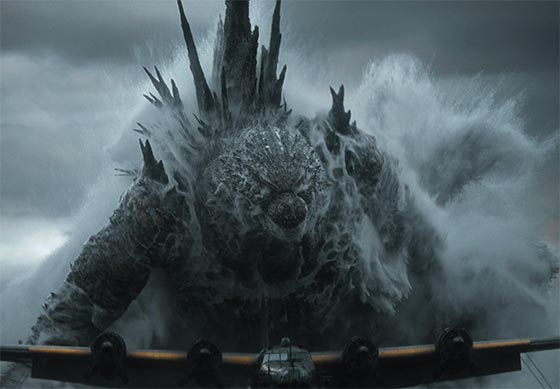
Seventy-two years after Ishirō Honda unleashed a radioactive nightmare on an unsuspecting Japan, the big green bastard is still stomping around, knocking down buildings, incinerating civilians, and reminding humanity that splitting the atom might not have been our brightest fucking idea. Takashi Yamazaki's Godzilla Minus Zero picks up the wreckage left behind by his extraordinary Godzilla Minus One, a film that accomplished the seemingly impossible task of making Godzilla frightening again after decades of rubber suits, miniature cities, and monster wrestling matches that occasionally resembled a particularly violent episode of The Benny Hill Show.
It's 1949, Japan is still licking its wounds from a war that ended with two mushroom clouds, and the survivors are trying to put their miserable lives back together. Unfortunately, somebody forgot to inform the monsters that the war was over. This time, the trouble arrives courtesy of King Ghidorah, a three-headed flying son of a bitch who looks like something airbrushed onto the side of a 1977 custom van belonging to a guy with a cocaine habit and a suspicious interest in high-school girls. Godzilla, meanwhile, is apparently too stubborn to stay dead and too pissed off to consider retirement. So much for the economic recovery.
Returning to the festivities is Kōichi Shikishima, the former kamikaze pilot whose refusal to die for the emperor has left him carrying enough guilt to fill a psychiatrist's appointment book until the next century. He's settled into domestic life with Noriko and their adopted daughter, Akiko, although the poor bastard still looks like somebody just informed him that his entire family has been booked aboard the Titanic. Noriko, having survived her previous encounter with Godzilla, carries scars of her own, and Yamazaki spends considerable time examining the psychological wreckage of people who have already endured more suffering than any human being reasonably deserves. There's genuine emotional weight here, even if the film occasionally wallows in its own misery like a drunken war veteran who won't stop telling the same goddamn story. Still, Yamazaki understands that the people running beneath those collapsing buildings ought to matter, something Hollywood's increasingly soulless blockbuster factories seem to have forgotten somewhere between their seventeenth superhero sequel and the invention of the post-credit scene.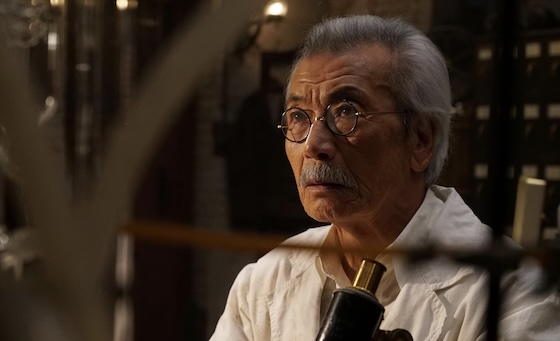
Fortunately, when the monsters finally get around to doing what monsters are supposed to do, the results are spectacular. Ghidorah is a magnificent creation, all snapping jaws, enormous wings, and the sort of electrical temperament usually associated with a malfunctioning toaster dropped into a bathtub. His attack on Matsumoto is a beautifully orchestrated orgy of destruction, with buildings collapsing, terrified citizens fleeing, and enough flying debris to keep the Japanese construction industry employed for another decade. Yamazaki understands the importance of scale, something Hollywood frequently forgets while throwing hundreds of millions of dollars at digital creatures that move like weightless cartoon characters. These monsters have mass, presence, and a genuine talent for urban redevelopment. When something the size of a skyscraper comes crashing down, you can practically feel the theater seats shake beneath your ass.
And Godzilla himself remains a glorious radioactive nightmare, his atomic breath still carrying the terrible implications of Hiroshima and Nagasaki rather than functioning as some convenient superhero laser beam. It's colossal, thunderous, beautifully orchestrated monster mayhem, the kind of spectacle that would have sent every twelve-year-old clutching a Famous Monsters of Filmland magazine into absolute hysterics.
The trouble with Godzilla Minus Zero is that its predecessor had already performed the franchise's greatest magic trick, restoring the horror, tragedy, and nuclear anxiety that made the original Gojira something considerably more important than another drive-in creature feature. Yamazaki now finds himself balancing those ambitions against the irresistible temptation to stage a colossal monster smackdown, and the two impulses don't always play nicely together. The film runs a little long, occasionally mistakes misery for profundity, and sometimes treats the audience as though enjoying a monster demolishing a city requires an immediate apology to humanity.
Nevertheless, Godzilla Minus Zero is a beautifully crafted, frequently exhilarating slab of Japanese monster madness, filled with enough destruction, historical baggage, and three-headed reptilian bullshit to satisfy anyone who remembers when creature features had actual personality. Hollywood can keep its bloated cinematic universes and endless CGI circle jerks. The Japanese have Godzilla, and after seven decades of atomic breath and flattened real estate, the old bastard still hasn't learned to play nice.


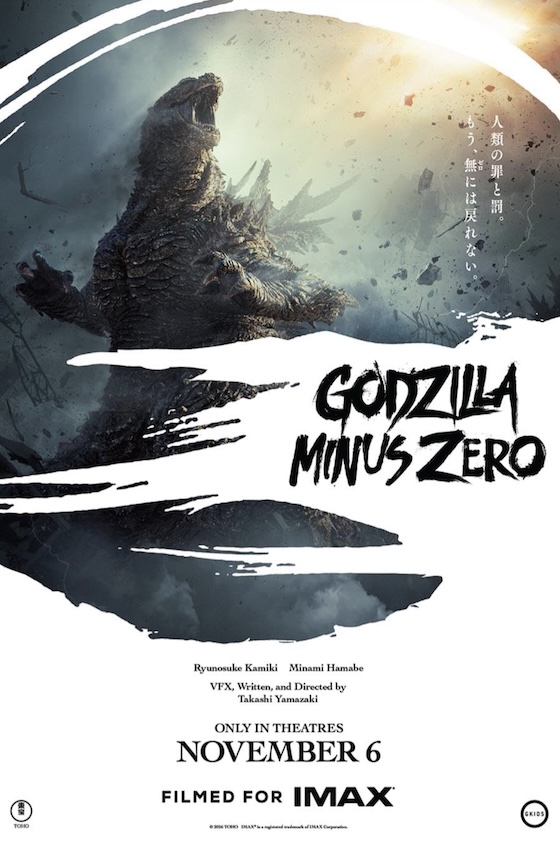
MPAA Rating: R.
Runtime: 135 mins
Director: Takashi Yamazaki
Writer: Takashi Yamazaki
Cast: Minami Hamabe; Ryûnosuke Kamiki; Masami Nagasawa
Genre: Monster Horror | Action
Tagline:
Memorable Movie Quote: "The rest... I leave to you."
Distributor: GKIDS
Official Site:
Release Date: November 6, 2026
DVD/Blu-ray Release Date:
Synopsis: Set in 1949, the Shikishima family confronts a fresh catastrophe two years after surviving their previous ordeal with the legendary monster.