There are movie stars, and then there's Bela Lugosi staring at you with those hypnotic eyes like he's already decided how the evening is going to end. After Dracula, Universal could've played it safe. Give Lugosi another cape. Another castle. Another unsuspecting victim wandering into the wrong crypt.
Instead, they handed him a deranged scientist, an ape named Erik, a syringe full of nightmare fuel, and told him to adapt Edgar Allan Poe. The result is one of the weirdest damn movies Universal ever made.
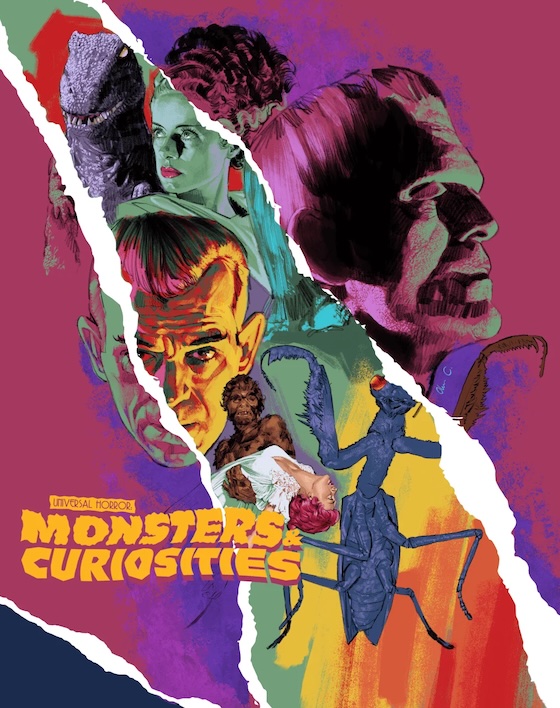
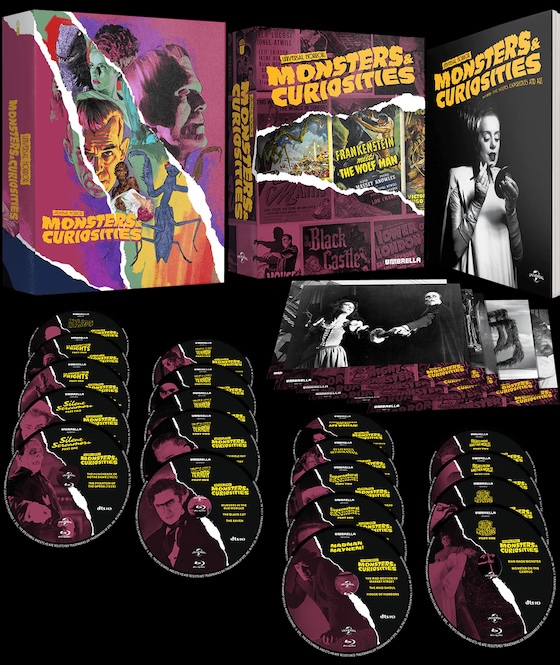
Watching Murders in the Rue Morgue in 2026 as the opening chapter of Karloff and Lugosi's Tales of Gothic Terror – Part One in Umbrella Entertainment's Universal Horror: Monsters and Curiosities (1923–1960) collection is a reminder that early horror wasn't polished. It was dangerous.
This was Pre-Code Hollywood, where filmmakers could still flirt with sex, violence, blasphemy, and moral ambiguity before censorship came crashing down with both feet. Murders in the Rue Morgue practically drips with that freedom. It feels grimier than Universal's monster movies. Stranger. More unpredictable.
Almost like no one had told director Robert Florey what he couldn't do.
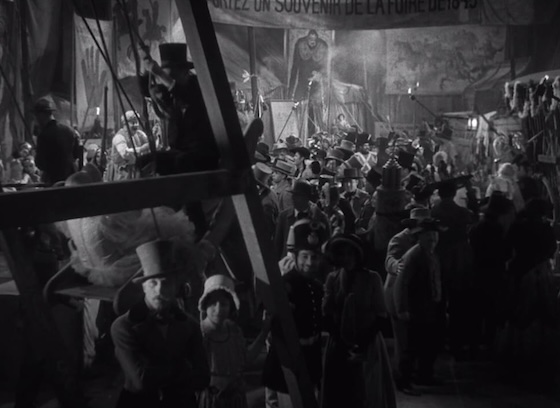
Loosely based on Edgar Allan Poe's famous detective story, the film follows Dr. Mirakle (Bela Lugosi), a carnival showman obsessed with proving humanity evolved from apes. His method of scientific inquiry? Kidnapping innocent women and injecting them with ape blood. Because apparently the institutional review board was on vacation.
Naturally, things don't go according to plan.
Victims begin turning up dead across Paris, police scramble for answers, and young medical student Pierre Dupin races to uncover the truth before Mirakle's latest experiment claims the woman he loves. If you're looking for a faithful Poe adaptation, you're in the wrong movie.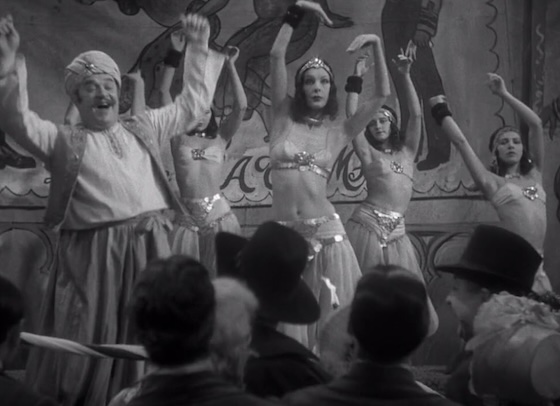
But if you're looking for gothic insanity . . .
Welcome home.
Bela Lugosi absolutely devours this role. Forget Dracula's aristocratic restraint. Dr. Mirakle is loud, sweaty, theatrical, obsessive, and barely hanging onto reality. Lugosi attacks every line like he's preaching from the pulpit of madness itself. His eyes dart wildly. His voice shifts from seductive whispers to explosive declarations. He's less mad scientist than religious fanatic convinced science has made him a god. It's gloriously unhinged.
What's fascinating revisiting the film today is seeing how much of later horror it quietly anticipated. Mad science. Human experimentation. Body horror. Twisted medical ethics. The collision between evolution and religion. Universal would revisit these ideas again and again throughout the decade, but Murders in the Rue Morgue got there first.
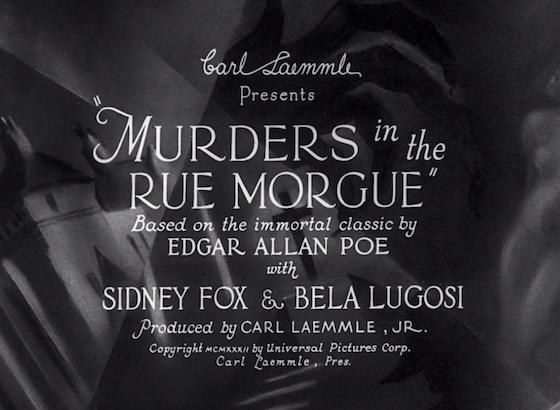
And then there's the visual style. Robert Florey clearly inhaled German Expressionism before stepping onto the set. Every street looks crooked. Every shadow stretches forever. Staircases twist at impossible angles.
Fog pours through Paris like the city itself has contracted a fever. Karl Freund's cinematography transforms ordinary locations into waking nightmares, proving once again that atmosphere costs far less than spectacle and usually lasts a lot longer.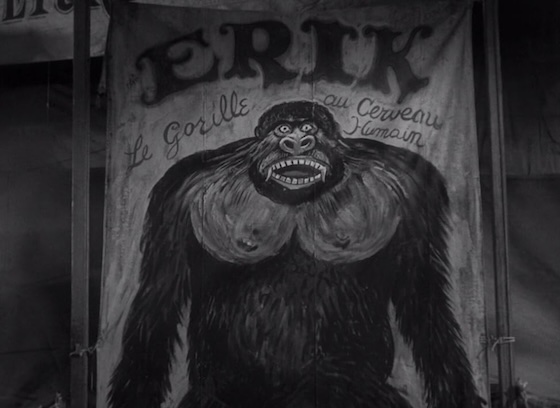
The film's biggest surprise, however, might be Charles Gemora. Hidden beneath the ape makeup, Gemora gives Erik genuine personality rather than simply portraying another rampaging movie monster. There's sadness in his eyes. Confusion. Loyalty. Like so many Universal creatures, Erik becomes another victim manipulated by someone else's obsession. Funny how often that happens around here.
Viewed today, Murders in the Rue Morgue also carries enormous historical significance. This was one of Universal's earliest attempts to move beyond Dracula and Frankenstein, demonstrating the studio's willingness to explore psychological horror alongside supernatural terror. It isn't as polished as James Whale's classics. It doesn't need to be. Its rough edges are part of the charm.
Placed within Umbrella's Karloff and Lugosi's Tales of Gothic Terror lineup, the film feels like the beginning of something darker and stranger than Universal's more famous monster cycle. These aren't fairy tales about misunderstood creatures anymore.
These are nightmares about people. That's even worse. Just the way early horror ought to be.


Universal Horror: Monsters And Curiosities Blu-ray - Umbrella Entertainment Exclusive / Collector's Edition
Home Video Distributor: Umbrella Entertainment
Available on Blu-ray - July 1, 2026
Screen Formats: 1.33:1; Various
Subtitles: English SDH
Video: 1080p
Audio: DTS-HD Master Audio 2.0
Discs: Blu-ray Disc; nineteen-disc set
Region Encoding: Locked to Region A
Murders in the Rue Morgue remains one of Universal's most fascinating early horror experiments. Bela Lugosi delivers one of his most wildly entertaining performances, Robert Florey drenches every frame in expressionistic atmosphere, and the film embraces Pre-Code horror with an energy that still feels refreshingly fearless. It's messy, bizarre, occasionally ridiculous, and completely unforgettable.
Video
Umbrella Entertainment presents Murders in the Rue Morgue with another impressive high-definition transfer that beautifully showcases Karl Freund's expressionistic cinematography. Contrast is rich, blacks are satisfyingly deep, and the film's elaborate shadows retain excellent detail throughout.
Fine textures in the costumes, carnival settings, and laboratory interiors are well resolved, while natural film grain gives the presentation an authentic cinematic appearance. It's another reminder of just how visually adventurous Universal's early horror films really were.
Audio
The lossless mono soundtrack delivers Lugosi's unforgettable performance with excellent clarity, allowing every theatrical flourish and manic declaration to resonate beautifully. Dialogue remains clean, the musical accompaniment is well balanced, and the subtle ambient effects enhance the film's unsettling atmosphere without overwhelming it.
Umbrella's presentation remains faithful to the original theatrical experience while offering a welcome level of stability and fidelity.
Supplements:
Commentary:
- None
Special Features:
As the opening film in Karloff and Lugosi's Tales of Gothic Terror – Part One, Murders in the Rue Morgue benefits enormously from its placement within Umbrella Entertainment's Universal Horror: Monsters and Curiosities (1923–1960) collection.
Viewed alongside Universal's more famous horror classics, the film reveals itself as an essential stepping stone in the studio's evolution, showcasing the darker, more experimental side of its early output.
Combined with the collection's outstanding hardcover companion book, premium packaging, and thoughtfully curated lineup of forty-five films, this once-overlooked oddity earns its rightful place as one of the most fascinating—and feverishly strange—entries in Universal's remarkable horror legacy.

| Movie |  |
|
| Video |  |
|
| Audio | |
|
| Extras |  |
|
|
Composite Blu-ray Grade
|
||