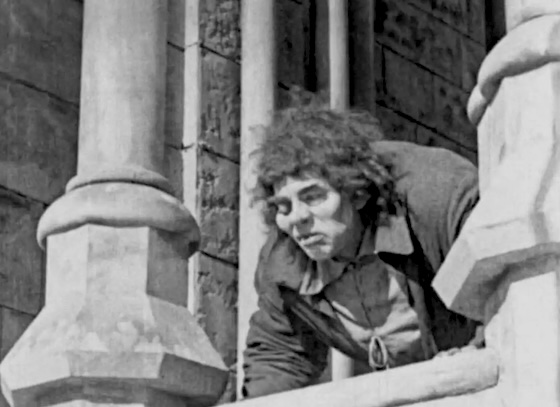
Before Universal gave us Dracula, Frankenstein, or the Wolf Man, they gave us something far more unsettling: a deformed man.
Not a vampire. Not a stitched-together corpse. Not a beast beneath a full moon. Just a broken soul trapped inside a body the world had already decided was monstrous. A century later, that's still the most terrifying thing about The Hunchback of Notre Dame.
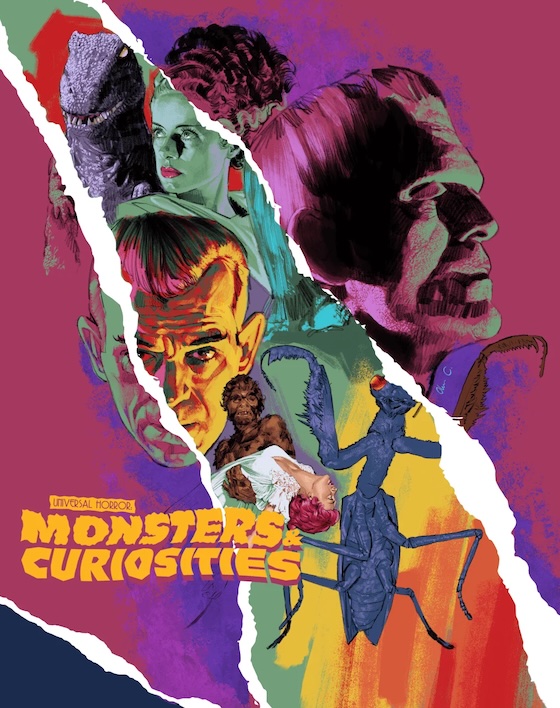
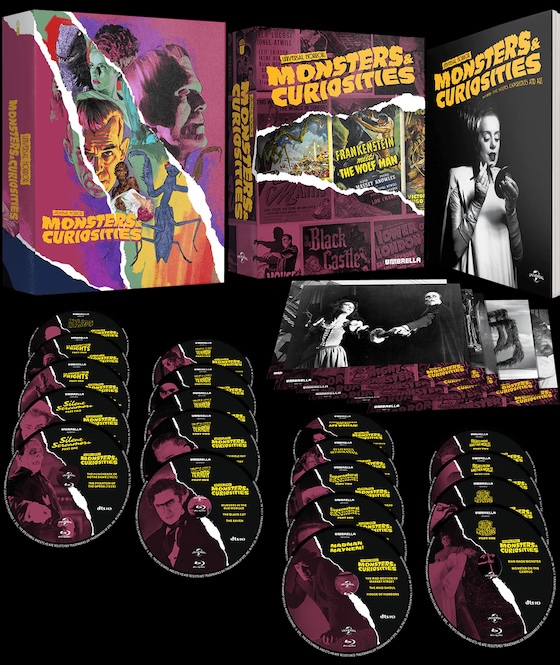
As Umbrella Entertainment kicks off its magnificent Universal Horror: Monsters and Curiosities (1923–1960) collection, they made the perfect choice by leading with Wallace Worsley's silent epic. Yes, horror fans will argue over whether Quasimodo belongs beside Dracula or Frankenstein. I don't care. He absolutely does. Universal's first great monster wasn't supernatural—it was human. And Lon Chaney proved, right out of the gate, that monsters don't need fangs or claws to haunt us forever.
Monsters fascinate us.
Always have. Always will.
Maybe that's because the best monsters aren't the ones hiding under the bed. They're the ones reflecting something back at us we'd rather not see. Universal understood that from the beginning. Long before laboratories sparked to life and castles echoed with wolf howls, the studio built its first legendary creature out of pain, loneliness, cruelty, and impossible compassion.
Watching The Hunchback of Notre Dame in 2026—especially as the opening chapter of Umbrella's lovingly curated collection—is a reminder that Universal's monster legacy didn't begin with horror. It began with empathy.
And that's a hell of a place to start.
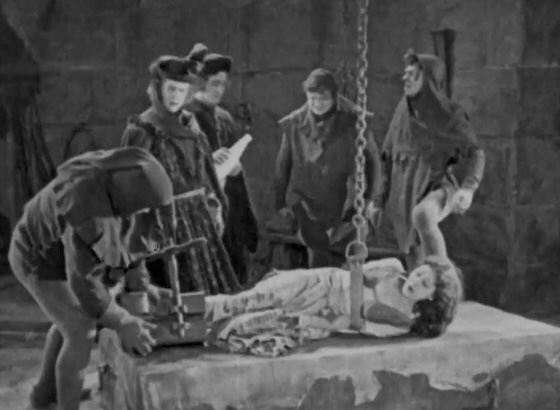
For anyone raised on Disney's sanitized musical, prepare yourself. This isn't singing gargoyles and happy endings. This is Victor Hugo filtered through silent-era ambition, rendered in stone, shadow, and heartbreak. It's darker, sadder, and infinitely more interested in the ugliness of humanity than the deformity of its central character.
The scale alone remains staggering.
Universal essentially built medieval Paris from the ground up. Designed by Elmer Sheeley, the towering Notre Dame façade dominated the Universal lot for years after production wrapped, while acres of city streets stretched beyond it. Around 3,500 extras flooded those streets, giving the film an astonishing sense of life that still impresses more than a century later. Even in an era overflowing with CGI spectacles, there's something undeniably breathtaking about watching thousands of real people inhabit these massive practical sets.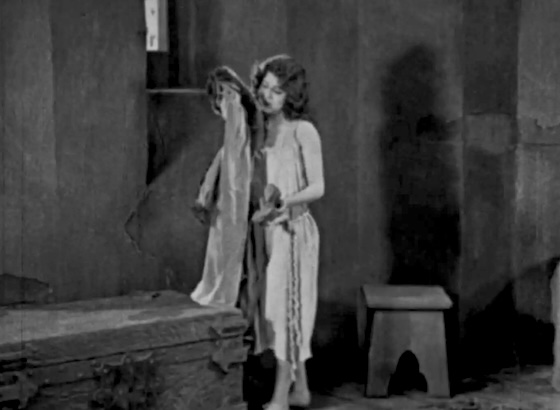
It's easy to forget just how much of a gamble this production was.
Lon Chaney wasn't simply the star. He was the driving creative force behind nearly every aspect of the film. He selected Wallace Worsley, rewrote portions of the screenplay, assembled much of the cast, and designed Quasimodo's agonizing prosthetic hump and restrictive harness himself. Carl Laemmle happened to be away during much of the production, allowing the budget to balloon without his constant oversight. Fortunately for Universal, the gamble paid off. The enormous success of The Hunchback of Notre Dame helped pave the way for another Chaney masterpiece just two years later: The Phantom of the Opera.
And then there's Chaney.
Every generation claims someone as "the actor who disappears into a role." Chaney did it before most of cinema had figured out how to record synchronized dialogue.
His Quasimodo isn't a makeup effect. It's a physical performance so complete that you eventually stop noticing the prosthetics altogether. The swollen eye, twisted spine, uneven gait, and contorted posture are remarkable achievements on their own, but they're only the surface. What truly survives the passage of time is the vulnerability behind them.
Without speaking a single word, Chaney conveys shame, longing, innocence, jealousy, devotion, and unbearable heartbreak through posture, movement, and expression alone. Modern audiences accustomed to dialogue-heavy performances may initially need a few minutes to adjust to silent filmmaking. Once Chaney settles into Quasimodo's skin, that adjustment disappears.
His performance simply takes over.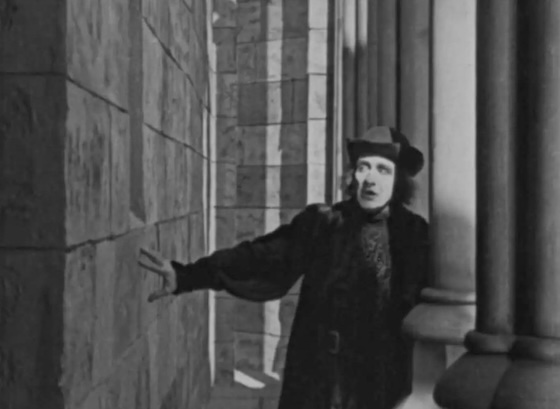
Watching him scramble across cathedral walls, swing among the bells without stunt doubles, and quietly crumble whenever Esmeralda enters the frame remains one of the greatest emotional achievements of silent cinema. His Quasimodo isn't frightening because he looks different. He's frightening because every cruel reaction directed toward him feels painfully recognizable.
Patsy Ruth Miller brings warmth and grace to Esmeralda, Norman Kerry provides suitable heroic swagger as Phoebus, and the supporting cast all understand they're participating in something larger than melodrama. Worsley's direction wisely avoids turning the film into spectacle for spectacle's sake. The massive sets never overwhelm the intimate tragedy unfolding inside them.
Seeing The Hunchback of Notre Dame today also reveals how influential it became. You can trace its DNA through nearly every sympathetic movie monster that followed—from Frankenstein's misunderstood creature to countless outsiders seeking acceptance while society mistakes difference for evil.
Universal didn't just discover a monster formula here. They discovered a philosophy. The real monsters often aren't the ones wearing makeup.
They're the crowds.


Universal Horror: Monsters And Curiosities Blu-ray - Umbrella Entertainment Exclusive / Collector's Edition
Home Video Distributor: Umbrella Entertainment
Available on Blu-ray - July 1, 2026
Screen Formats: 1.33:1; Various
Subtitles: English SDH
Video: 1080p
Audio: DTS-HD Master Audio 2.0
Discs: Blu-ray Disc; nineteen-disc set
Region Encoding: Locked to Region A
As the opening film in Umbrella Entertainment's Universal Horror: Monsters and Curiosities collection, The Hunchback of Notre Dame feels less like a prologue and more like the foundation upon which the entire Universal legacy was built. Revisiting it in 2026 doesn't diminish its power; if anything, it strengthens it.
The production remains astonishing, the emotional core remains devastating, and Lon Chaney's performance continues to stand among the greatest ever captured on film. Universal's monsters would eventually become icons. Their first one became immortal.
Video
Umbrella Entertainment presents The Hunchback of Notre Dame with an excellent high-definition transfer that does justice to one of Universal's earliest triumphs.
Film grain remains natural, contrast is rich without crushing detail, and the restoration allows Elmer Sheeley's monumental sets to shine in ways many viewers have never experienced on home video. Chaney's groundbreaking makeup work benefits tremendously from the increased resolution, revealing subtle textures and expressions that were often lost on older presentations.
For a film more than a century old, it looks remarkably cinematic and serves as a stunning introduction to the Monsters and Curiosities collection.
Audio
As a silent film, the audio presentation lives and dies by its musical accompaniment, and Umbrella delivers a clean, lossless track that beautifully complements the sweeping emotion of the story.
The orchestral score moves effortlessly between grand spectacle and intimate heartbreak, adding weight to Chaney's extraordinary physical performance without ever overwhelming the imagery. The track is free of distracting defects, allowing the music to breathe naturally and reminding viewers just how powerful silent cinema can be when paired with a thoughtfully presented score.
It's a clean, dynamic presentation that reminds viewers how essential music is to the silent film experience.
Supplements:
Commentary:
- None
Special Features:
While The Hunchback of Notre Dame doesn't arrive loaded with a disc devoted solely to bonus material, its greatest special feature is its place within Umbrella Entertainment's lovingly assembled Universal Horror: Monsters and Curiosities (1923–1960) collection.
Surrounded by forty-four additional films chronicling the evolution of Universal's monsters, sequels, gothic melodramas, and forgotten genre gems, the film gains an entirely new level of appreciation.
The collection's handsome packaging, hardcover book filled with essays from horror historians, art cards, and premium presentation transform this release into far more than a Blu-ray set—it's a curated celebration of Universal's horror DNA, and The Hunchback of Notre Dame stands proudly as the emotional and artistic cornerstone that started it all.

| Movie |  |
|
| Video |  |
|
| Audio | |
|
| Extras |  |
|
|
Composite Blu-ray Grade
|
||











![Trick or Treat (1986) – 4K Ultra HD [Standard Edition]](/images/resized/images/stories/2026/trick-or-treat-4k_40_40.jpg "Trick or Treat (1986) – 4K Ultra HD [Standard Edition]")