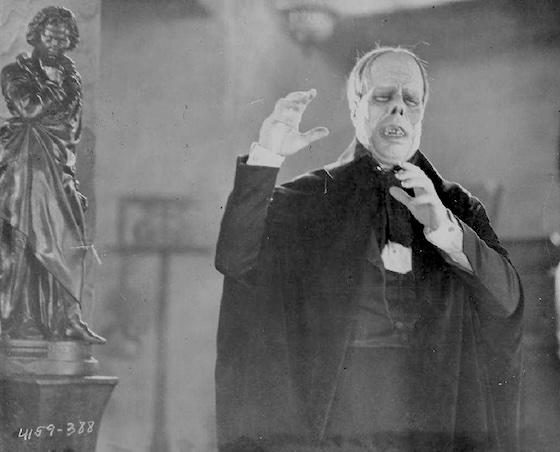
Andrew Lloyd Webber may have turned The Phantom of the Opera into one of the most recognizable musicals on Earth, but for horror fans, there has only ever been one Phantom.
Lon Chaney.
Not because he sang. Not because he wore a cape. And certainly not because he was romanticized into some misunderstood antihero. Chaney's Erik is something much more unsettling. He's brilliant, broken, obsessive, terrifying, and heartbreakingly human all at once. Nearly a century after audiences reportedly screamed and fainted at the famous unmasking sequence, his performance still possesses the power to stop you cold.
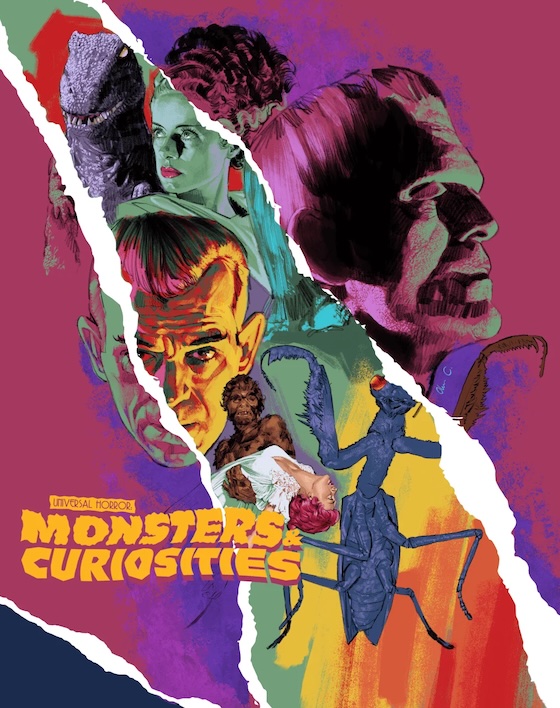
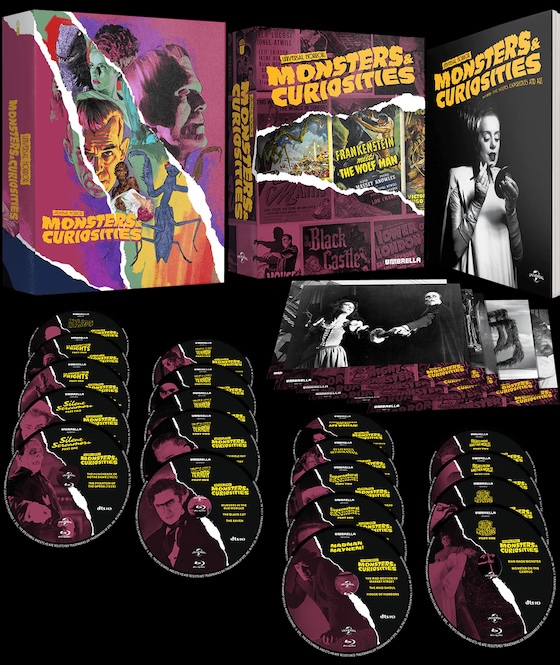
Watching The Phantom of the Opera in 2026 as the second film in Umbrella Entertainment's magnificent Universal Horror: Monsters and Curiosities (1923–1960) collection feels almost poetic. If The Hunchback of Notre Dame introduced Universal's first great sympathetic monster, The Phantom of the Opera perfected the formula. Quasimodo earned our tears. Erik earns our fear...and then quietly steals our sympathy before the final reel fades away.
That's the magic of Lon Chaney.
One film after another, he proved that makeup alone doesn't create monsters.
Pain does.
Released in 1925, The Phantom of the Opera represented another enormous gamble for Universal. Director Rupert Julian may receive the official credit, but production was famously chaotic, with Edward Sedgwick and even Chaney himself stepping behind the camera during reshoots. Like much of Chaney's career, the finished film is the result of sheer determination overcoming behind-the-scenes turmoil.
And then there's the makeup.
Hollywood has spent the last hundred years trying to convince audiences that practical makeup is a dying art. Chaney would disagree.
Designing and applying his own makeup in complete secrecy, Chaney refused to allow photographs of the Phantom's true face before the premiere. Universal leaned into the mystery, and audiences had no idea what was waiting beneath the mask. When Christine tears it away, revealing Erik's skeletal face, sunken eyes, and corpse-like grin, cinema history was made.
Even after decades of imitators, CGI creatures, and elaborate prosthetics, the reveal remains profoundly disturbing. Not because it's graphic. Because it feels wrong. Chaney understood that horror isn't about gore. It's about violating expectations.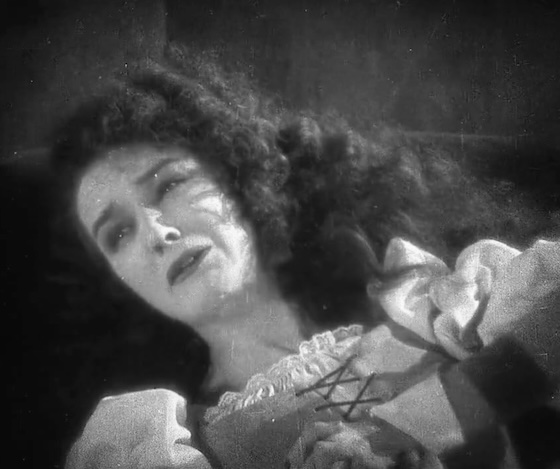
The production surrounding him remains breathtaking. Universal once again spared little expense, constructing a lavish Paris Opera House complete with sprawling underground catacombs, hidden chambers, winding canals, and elaborate staircases that still dwarf many modern productions. Everything feels tangible because it is tangible. Massive sets stretch endlessly into the frame, swallowing the actors whole and creating an atmosphere that modern green-screen filmmaking rarely captures.
Rupert Julian wisely allows those shadows to do much of the storytelling.
The pacing also holds up remarkably well. Silent films continue to battle an unfair reputation for being slow, but The Phantom of the Opera moves with surprising confidence. Letters arrive bearing impossible demands. The Opera House managers descend into panic. Carlotta refuses to surrender her role. Christine follows mysterious music into the darkness below the theater. Before long, the audience is trapped inside Erik's nightmare alongside her.
Mary Philbin makes an appealing Christine, projecting innocence without reducing the character to helplessness, while Norman Kerry provides a capable, if somewhat conventional, romantic hero as Raoul. Their chemistry never quite ignites, but that's hardly the point. Every time Chaney enters the frame, everyone else becomes secondary.
He simply commands the screen.
What's most fascinating about revisiting The Phantom of the Opera today is realizing how much of modern horror it quietly invented. The sympathetic villain. The haunted mansion. The hidden lair. The masked killer. The obsession with beauty. The misunderstood outcast. Countless horror films owe a debt to Chaney's Erik whether they realize it or not.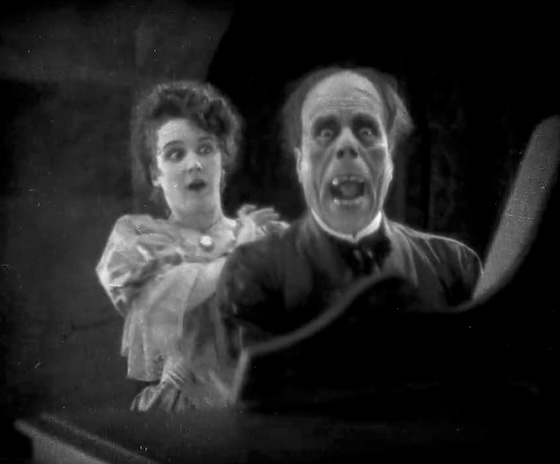
Then comes the Masquerade Ball.
Even in 2026, the surviving two-strip Technicolor footage remains breathtaking. Chaney descends the staircase dressed as the Red Death, wrapped in brilliant crimson while everything around him melts into stunned silence. It's one of the defining images not only of silent horror but of cinema itself. Inspired by Edgar Allan Poe's The Masque of the Red Death, the sequence still lands with startling power because of its simplicity. One figure. One splash of impossible color. One unforgettable entrance.
Iconic gets thrown around far too casually these days. This scene actually earns it.
Viewed alongside The Hunchback of Notre Dame, another truth becomes impossible to ignore. Universal wasn't accidentally creating movie monsters. They were building mythology. Chaney's Quasimodo and Erik established a blueprint that would soon evolve into Dracula, Frankenstein's Monster, the Invisible Man, and the Wolf Man. They weren't simply frightening audiences.
They were teaching Hollywood that horror works best when the monster breaks your heart before it takes your breath away.


Universal Horror: Monsters And Curiosities Blu-ray - Umbrella Entertainment Exclusive / Collector's Edition
Home Video Distributor: Umbrella Entertainment
Available on Blu-ray - July 1, 2026
Screen Formats: 1.33:1; Various
Subtitles: English SDH
Video: 1080p
Audio: DTS-HD Master Audio 2.0
Discs: Blu-ray Disc; nineteen-disc set
Region Encoding: Locked to Region A
As the second chapter in Umbrella Entertainment's Universal Horror: Monsters and Curiosities collection, The Phantom of the Opera doesn't simply continue Universal's monster legacy—it elevates it.
Gorgeous production design, astonishing practical effects, haunting imagery, and another once-in-a-lifetime performance from Lon Chaney combine to create one of the greatest silent horror films ever made.
A century later, the Phantom still lurks beneath the Opera House, and somehow, he's every bit as tragic—and terrifying—as he was in 1925.
Video
Umbrella Entertainment delivers another beautiful high-definition presentation that allows The Phantom of the Opera to shine. Fine detail throughout the lavish Paris Opera House sets is outstanding, black levels are deep without swallowing shadow detail, and film grain remains natural and cinematic.
Most impressive is the surviving two-strip Technicolor Masquerade Ball sequence, whose vibrant reds continue to leap off the screen nearly a century later.
The restoration honors the film's age while presenting it in the strongest home video quality many collectors are ever likely to experience.
Audio
The lossless musical accompaniment is presented with warmth and clarity, providing exactly the kind of sweeping emotional support silent cinema demands. Whether underscoring the grandeur of the Opera House, the eerie quiet of Erik's underground domain, or the escalating tension of the film's famous chase sequences, the orchestral score remains immersive without overpowering the visuals.
It's a clean, dynamic presentation that reminds viewers how essential music is to the silent film experience.
Supplements:
While short on extras, the commentary is just a plethora of film history talking about everything from Whale to the actors to Pre-Code history and much more. It more than compliments the film well.
Commentary:
- None
Special Features:
Like The Hunchback of Notre Dame, The Phantom of the Opera benefits enormously from its inclusion in Umbrella Entertainment's Universal Horror: Monsters and Curiosities (1923–1960) collection. Rather than existing as an isolated classic, it becomes an integral piece of Universal's evolving monster mythology.
The premium collector's packaging, excellent hardcover companion book, and thoughtful curation of forty-five films transform this release into more than a catalog dump—it's a historical archive celebrating the studio that forever changed horror cinema.
And with Chaney delivering another defining performance, it's impossible to imagine a better companion piece to The Hunchback of Notre Dame as Universal's monster universe begins to take shape.

| Movie |  |
|
| Video |  |
|
| Audio | |
|
| Extras |  |
|
|
Composite Blu-ray Grade
|
||








![Trick or Treat (1986) – 4K Ultra HD [Standard Edition]](/images/resized/images/stories/2026/trick-or-treat-4k_40_40.jpg "Trick or Treat (1986) – 4K Ultra HD [Standard Edition]")