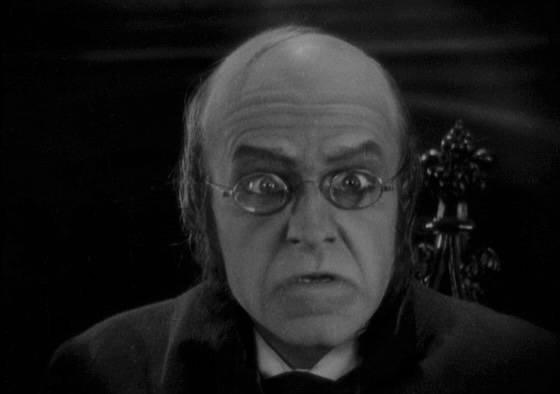
Before haunted houses became a horror cliché...before every creaking floorboard, flickering candle, hidden passageway, and family fortune trapped unsuspecting victims inside a sprawling mansion...there was The Cat and the Canary.
It practically wrote the damn blueprint.
Watching Paul Leni's The Cat and the Canary in 2026, especially as the third film in Umbrella Entertainment's outstanding Universal Horror: Monsters and Curiosities (1923–1960) collection, is a reminder that horror didn't simply evolve from monsters. Sometimes it evolved from atmosphere. Sometimes it evolved from laughter. And sometimes it evolved from locking a handful of greedy people inside a creepy old mansion and letting paranoia do the rest.
Long before Scooby-Doo borrowed the formula. Long before Clue. Long before every "old dark house" mystery you've ever watched, The Cat and the Canary had already figured it out.
And honestly? It still works.
Released in 1927, The Cat and the Canary is one of those films whose influence is impossible to overstate. Adapted from John Willard's enormously successful stage play, the story seems wonderfully familiar today because Hollywood has spent nearly a century copying it.
A wealthy eccentric dies. His relatives gather years later to hear the reading of his will. One of them inherits everything. Someone—or something—doesn't approve. Secret passageways open. Doors refuse to stay shut. Shadows drift across impossible hallways. Sanity begins to crack.
The formula feels comfortable now. Back then, it was revolutionary.
Director Paul Leni, who had already demonstrated an astonishing command of visual storytelling in Germany before joining Universal, turns the mansion itself into the film's real monster. Hallways seem to stretch forever. Staircases disappear into darkness. Curtains breathe with unseen movement. Every corner threatens to conceal another secret. It's expressionism with a wicked grin.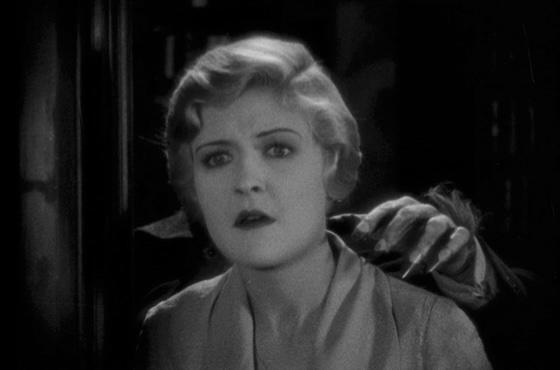
Leni never relies on cheap scares because he doesn't have to. He understands that anticipation almost always beats payoff. The audience spends as much time imagining what could be lurking around the next corner as they do actually seeing anything.
That's horror.
Laura La Plante anchors the film beautifully as Annabelle West, the reluctant heiress whose inheritance comes with more conditions than comfort. Unlike many heroines who followed in her footsteps, Annabelle isn't simply waiting to be rescued. She's frightened, certainly, but she's also observant, resilient, and surprisingly funny. La Plante's performance gives the film an emotional center that balances the escalating absurdity surrounding her.
Creighton Hale provides much of the comic relief as Paul Jones, whose nervous reactions practically invented the horror-comedy sidekick decades before Abbott and Costello ever met Frankenstein. Watching him stumble through hidden rooms and react to every suspicious noise remains genuinely funny, proving that horror and comedy have always shared the same nervous heartbeat.
And then there's "the Cat."
Without spoiling too much for newcomers, the mysterious figure stalking the mansion remains wonderfully eerie because Leni refuses to overexplain anything. Every appearance feels ghostly, every movement feels unnatural, and every glimpse raises more questions than answers. The film wisely understands that mystery often ages better than explanation.
Technically, The Cat and the Canary remains astonishing.
Karl Freund's cinematography drenches every frame in shadow and movement. Strange camera angles, distorted architecture, exaggerated lighting, and constantly shifting perspectives create a dreamlike unease that would influence everyone from James Whale to Alfred Hitchcock and beyond. Watching it today, you can practically see future horror classics taking notes.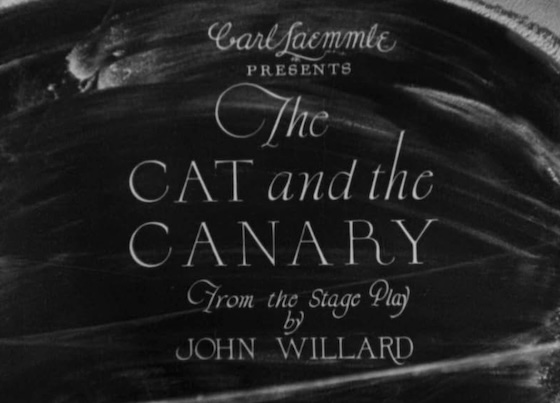
Perhaps the greatest surprise revisiting the film in 2026 is just how briskly it moves.
Clocking in at just over an hour, there's almost no wasted motion. Every scene introduces another clue, another suspicious relative, another hidden corridor, or another reason to distrust everyone gathered beneath the mansion's roof. Modern horror films often confuse length with suspense.
Leni knew better. Get in. Make the audience uncomfortable. Get out before they can catch their breath.
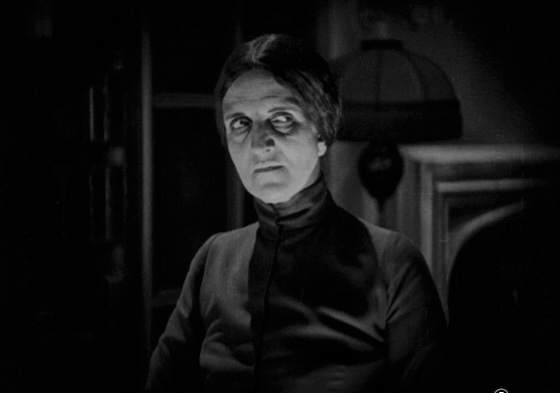
Viewed within Umbrella's collection, The Cat and the Canary also represents something important in Universal's evolution. After the emotional tragedy of The Hunchback of Notre Dame and the gothic grandeur of The Phantom of the Opera, this film shifts the studio toward suspense, mystery, and the haunted-house aesthetic that would become a cornerstone of horror for decades. The monsters haven't completely disappeared—they've simply become psychological.
Sometimes the house is scarier than anything hiding inside it.


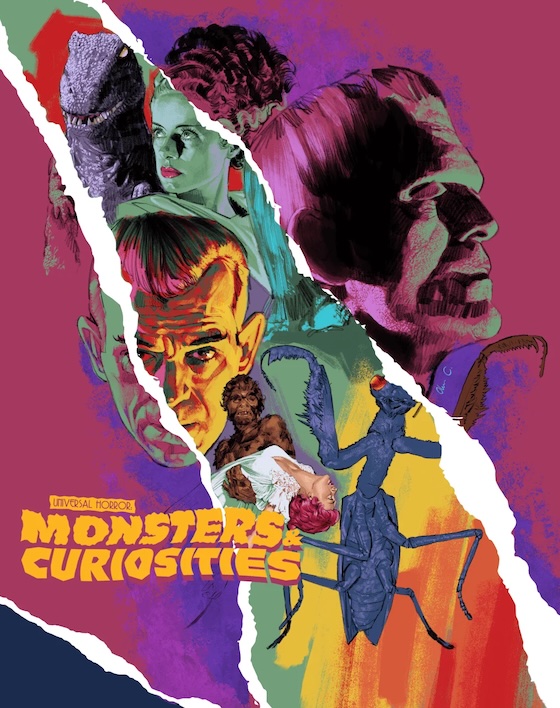
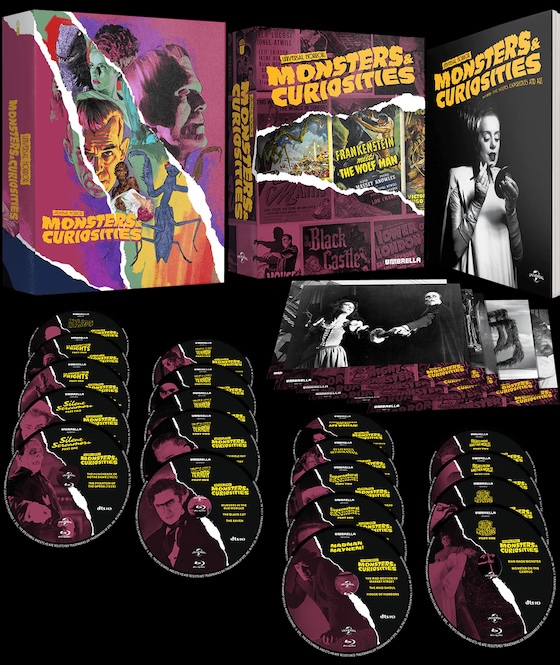
Universal Horror: Monsters And Curiosities Blu-ray - Umbrella Entertainment Exclusive / Collector's Edition
Home Video Distributor: Umbrella Entertainment
Available on Blu-ray - July 1, 2026
Screen Formats: 1.33:1; Various
Subtitles: English SDH
Video: 1080p
Audio: DTS-HD Master Audio 2.0
Discs: Blu-ray Disc; nineteen-disc set
Region Encoding: Locked to Region A
The Cat and the Canary remains one of silent cinema's most entertaining surprises. Equal parts gothic mystery, haunted-house thriller, comedy, and proto-horror, Paul Leni's masterpiece feels remarkably fresh nearly one hundred years after its release.
Its fingerprints are everywhere, influencing countless horror films, mystery stories, and even animated comedies. As the third stop in Umbrella Entertainment's Universal Horror: Monsters and Curiosities collection, it's another reminder that Universal wasn't just producing horror films—they were inventing the language of the genre one unforgettable picture at a time.
Video
Umbrella Entertainment presents The Cat and the Canary with another impressive high-definition transfer that beautifully showcases Paul Leni's expressionistic visual style. Shadow detail is excellent throughout the mansion's labyrinthine interiors, film grain remains organic, and the restoration highlights the intricate production design that often becomes a character unto itself.
Contrast is strong, allowing the gothic imagery to retain its eerie depth without sacrificing detail, making this one of the finest home video presentations the film has received.
Audio
The lossless musical accompaniment perfectly complements the film's shifting moods, moving effortlessly between playful comedy, creeping suspense, and moments of genuine tension. The orchestral score feels appropriately theatrical while never overwhelming the visuals, maintaining excellent clarity and dynamic range throughout.
It's another reminder that a thoughtfully presented silent film can be every bit as immersive as a modern sound production.
Supplements:
Commentary:
- None
Special Features:
While The Cat and the Canary doesn't rely on an extensive slate of standalone extras, its greatest strength is its inclusion within Umbrella Entertainment's exceptional Universal Horror: Monsters and Curiosities (1923–1960) collection. Seen alongside The Hunchback of Notre Dame and The Phantom of the Opera, the film illustrates another crucial step in Universal's early horror evolution, expanding the studio's legacy from sympathetic monsters into atmospheric suspense. Combined with the collection's premium packaging, insightful hardcover book, and carefully curated lineup of forty-five films, this release transforms an often-overlooked silent classic into an essential chapter in horror history.

| Movie |  |
|
| Video |  |
|
| Audio | |
|
| Extras |  |
|
|
Composite Blu-ray Grade
|
||











![Trick or Treat (1986) – 4K Ultra HD [Standard Edition]](/images/resized/images/stories/2026/trick-or-treat-4k_40_40.jpg "Trick or Treat (1986) – 4K Ultra HD [Standard Edition]")