If Dracula made Bela Lugosi a legend and Frankenstein made Boris Karloff immortal, then The Black Cat answered the question horror fans didn't know they were asking. What if they are in the same horror movie? The answer isn't what you'd expect.
This isn't a monster movie. It isn't really an Edgar Allan Poe adaptation either, despite borrowing its title from one of the author's most famous stories. Instead, The Black Cat is something far stranger—a fever dream wrapped in Art Deco architecture, scarred by the trauma of World War I, and populated by two men who hate each other so completely that everyone around them becomes collateral damage.
It remains one of the most fascinating films Universal ever produced.
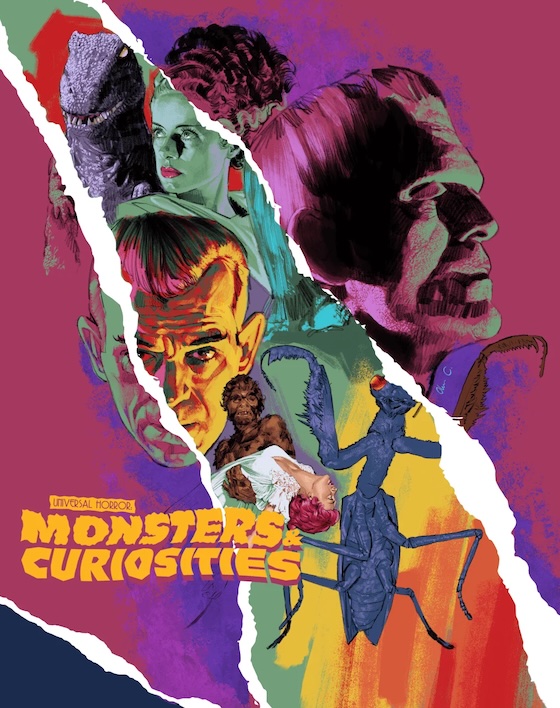
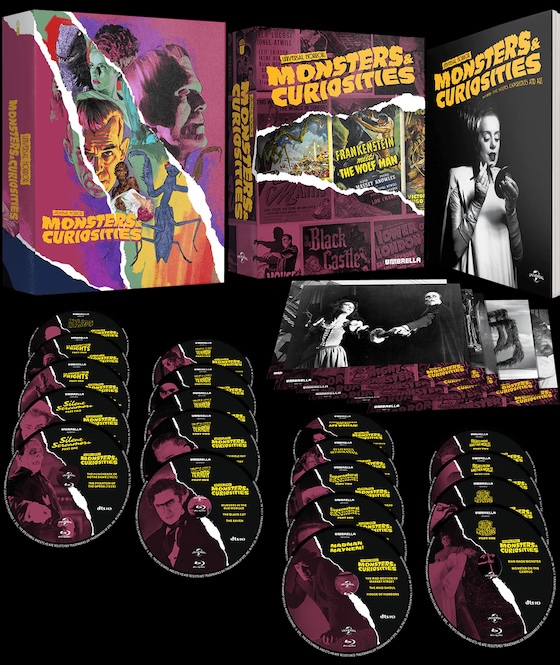
Watching it in 2026 as part of Karloff and Lugosi's Tales of Gothic Terror – Part One in Umbrella Entertainment's Universal Horror: Monsters and Curiosities (1923–1960) collection only reinforces how daring Universal became once audiences embraced horror. Rather than simply recycling vampires and laboratories, the studio ventured into psychological territory where grief, obsession, revenge, and madness became every bit as frightening as monsters.
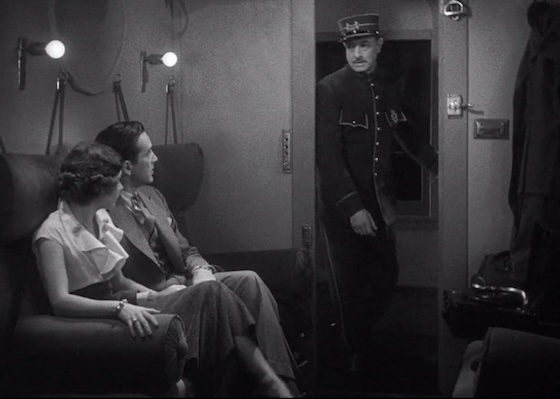
Director Edgar G. Ulmer wastes no time pulling us into his nightmare. Newlyweds Peter and Joan Alison are traveling through Hungary when fate places them alongside the mysterious Dr. Vitus Werdegast (Bela Lugosi). Their journey leads to the isolated home of architect Hjalmar Poelzig (Boris Karloff), a man whose elegant modern mansion has been built atop the ruins of a battlefield where thousands died during the First World War.
That detail matters. Death literally serves as the foundation of everything that follows.
The screenplay quickly reveals that Werdegast and Poelzig share a horrific history stretching back to the war. Betrayal, imprisonment, lost families, stolen lives—every conversation between them carries decades of barely controlled rage. The newlyweds may think they're trapped inside a haunted house, but they're really trapped inside an old vendetta that's been waiting years to explode.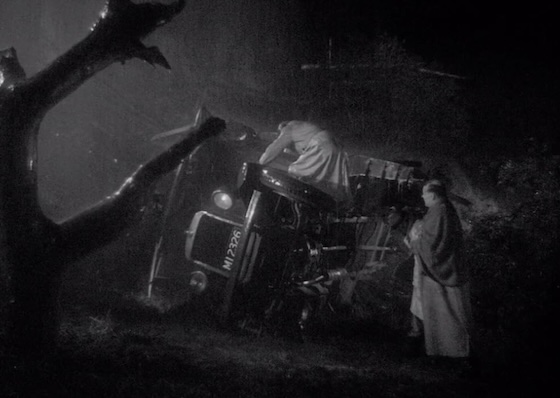
One of the film's greatest strengths is that Karloff and Lugosi aren't competing with one another. They're dancing.
Lugosi gives one of the finest performances of his career. Gone is Dracula's aristocratic confidence. Werdegast is deeply damaged, haunted by memories that refuse to stay buried, yet determined to confront the man responsible for destroying his life. Lugosi allows genuine vulnerability to seep through the performance, making his quest for revenge feel tragically understandable even as events spiral into horror.
Karloff is a powerhouse here. Good lord. Poelzig may be one of the coldest characters Karloff ever played. He isn't loud. He doesn't rant. He rarely raises his voice. Instead, he moves through the film with an almost supernatural calm, treating murder, betrayal, and unspeakable cruelty as if they were minor inconveniences. Karloff understood that real evil rarely needs to announce itself. It simply enters the room, smiles politely, and waits.
The chemistry between these two icons is electric because neither actor is trying to outdo the other. Every scene feels like a chess match played with decades of emotional baggage instead of pieces.
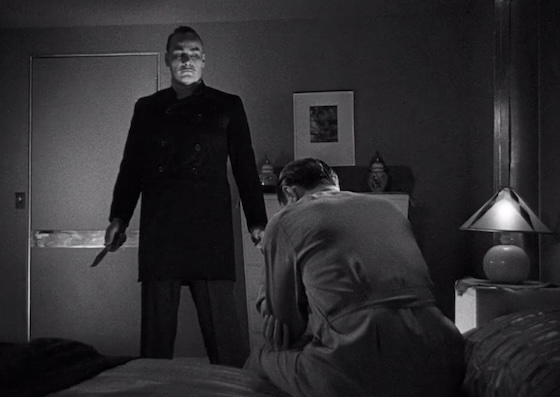
Edgar G. Ulmer's direction deserves just as much praise. While Universal's horror films often embraced Gothic castles, cobwebs, and medieval architecture, The Black Cat heads in the opposite direction. Poelzig's mansion is sleek, geometric, and unnervingly modern. Clean lines replace crumbling stone. Glass, steel, and polished surfaces create an atmosphere that's somehow even more unsettling because it feels emotionally sterile. It's one of the most visually distinctive horror films Universal ever produced, heavily influenced by German Expressionism while simultaneously looking decades ahead of its time.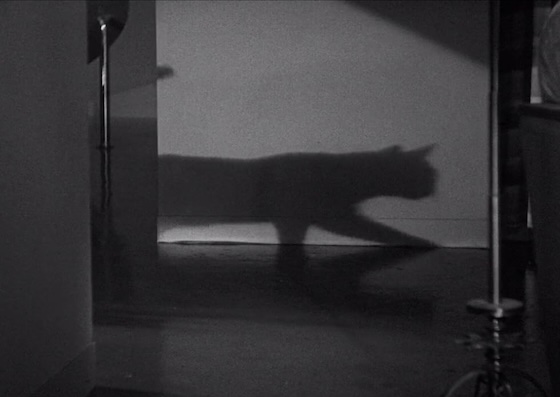
Then there are the Pre-Code elements. Universal was still operating before Hollywood's Production Code was fully enforced, and you can feel that freedom in nearly every frame. Satanic imagery, implied necrophilia, psychological torture, graphic suggestions of violence, and deeply unsettling themes course beneath the surface. Much of it remains implied rather than shown, but sometimes imagination is infinitely more disturbing than explicit imagery could ever be.
Perhaps that's why The Black Cat continues to linger long after the credits roll. It isn't trying to frighten you with monsters. It's asking what war does to the human soul.
Viewed within Umbrella's collection, the film feels like a bridge between Universal's supernatural horror and something much darker. Dracula, Frankenstein's Monster, and the Invisible Man all represented impossible nightmares. Werdegast and Poelzig remind us that history has already produced horrors far worse than anything fiction could invent.


Universal Horror: Monsters And Curiosities Blu-ray - Umbrella Entertainment Exclusive / Collector's Edition
Home Video Distributor: Umbrella Entertainment
Available on Blu-ray - July 1, 2026
Screen Formats: 1.33:1; Various
Subtitles: English SDH
Video: 1080p
Audio: DTS-HD Master Audio 2.0
Discs: Blu-ray Disc; nineteen-disc set
Region Encoding: Locked to Region A
The Black Cat remains one of Universal's boldest and most sophisticated horror films. Edgar G. Ulmer's dreamlike direction, stunning Art Deco production design, and extraordinary performances from Boris Karloff and Bela Lugosi combine to create a film that refuses to fit comfortably into any single genre. It's part revenge drama, part psychological horror, part war allegory, and entirely unforgettable. More than ninety years later, it still feels unsettling in ways that many modern horror films can only hope to achieve.
Video
Umbrella Entertainment presents The Black Cat with another exceptional high-definition transfer that highlights the film's extraordinary visual design. Contrast is beautifully rendered, allowing the deep blacks and striking geometric compositions to retain remarkable depth and clarity.
Fine detail throughout Poelzig's modernist mansion is outstanding, while natural film grain preserves the cinematic texture of the original photography. The restoration beautifully captures why this remains one of Universal's most visually adventurous productions.
Audio
The lossless mono soundtrack offers clean dialogue reproduction and a faithful presentation of Heinz Roemheld's atmospheric score. Karloff's quiet menace and Lugosi's emotionally charged performance come through with impressive clarity, while ambient effects subtly enhance the film's growing sense of dread.
Umbrella's presentation is stable, well-balanced, and respectful of the original theatrical mix.
Supplements:
While short on extras, the commentary is just a plethora of film history talking about everything from Whale to the actors to Pre-Code history and much more. It more than compliments the film well.
Commentary:
- None
Special Features:
As the centerpiece of Karloff and Lugosi's Tales of Gothic Terror – Part One within Umbrella Entertainment's Universal Horror: Monsters and Curiosities (1923–1960) collection, The Black Cat receives the historical context it richly deserves. Seen alongside the studio's early horror classics, the film demonstrates just how willing Universal was to experiment with style, psychology, and mature themes during the Pre-Code era.
Combined with the collection's beautifully produced hardcover companion book, premium collector's packaging, and thoughtfully curated lineup of forty-five films, this release elevates one of Universal's most sophisticated achievements from cult favorite to essential classic.

| Movie |  |
|
| Video |  |
|
| Audio | |
|
| Extras |  |
|
|
Composite Blu-ray Grade
|
||