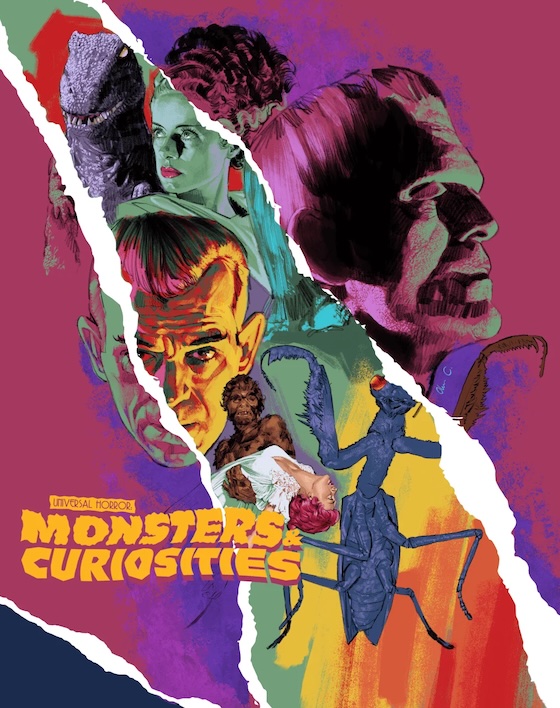
Here's the uncomfortable thing about House of Horrors: Universal didn't have to build its monster.
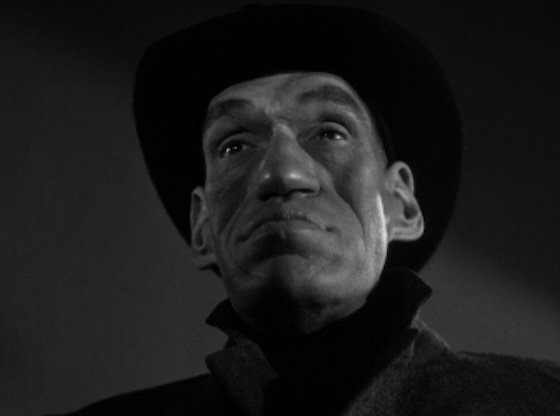
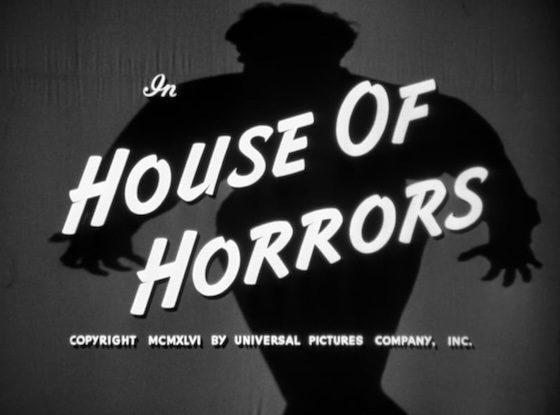
No bolts. No yak hair. No elaborate Jack Pierce transformation requiring somebody to sit in a makeup chair for five hours while another human being glued shit to his face. Universal already had Rondo Hatton, an actor whose acromegaly had dramatically altered his features, and the studio looked at him and saw something it could sell. That's difficult to ignore while watching House of Horrors in 2026 as part of Umbrella Entertainment's Universal Horror: Monsters and Curiosities (1923–1960) collection, especially because the movie itself keeps asking us to stare at Hatton while simultaneously suggesting we should be afraid of him. Yet here's the kicker: the more time I spend with the movie, the less frightening Hatton becomes. The real fucking monster is the supposedly civilized artist who discovers he can point this damaged man toward anyone who hurts his feelings. Universal calls Hatton The Creeper. I'm not entirely convinced he's the one we should be creeping away from.
Marcel De Lange (Martin Kosleck) is a struggling sculptor who has reached that particularly dangerous stage of artistic frustration where criticism is no longer criticism; it's persecution. His work is dismissed, his ego is shredded, and after another professional humiliation he heads toward the river intending to kill himself. Instead, he finds another man drowning and pulls him from the water. That man is The Creeper (Hatton), a wanted killer who responds to Marcel's kindness with an almost childlike loyalty. Marcel gives him shelter, food, and eventually a place inside his artistic world by sculpting his unusual face. For a moment, there's something genuinely touching happening between these two outsiders. Then Marcel realizes his enormous new friend is exceptionally good at killing people, remembers all those critics who said mean things about his sculptures, and thinks, Well, shit. I've got an idea. From there, House of Horrors becomes one of cinema's earliest warnings about what might happen if angry artists could murder everyone who gave them a bad review. As a film critic, I find this premise deeply concerning.
Martin Kosleck goes gloriously big with De Lange, and that's exactly what this movie needs. Marcel doesn't merely dislike criticism; the man treats a negative review like somebody stabbed his mother. Kosleck lets resentment drip from him until De Lange becomes this wonderfully pathetic combination of wounded artist and homicidal narcissist, constantly convincing himself that everyone else is responsible for his failures. Hatton takes the opposite approach. The Creeper barely needs to perform because his physical presence does so much of the work, but there's a strange sadness behind him that becomes more noticeable during a modern viewing. Marcel is the one manipulating him. Marcel provides the targets. Marcel takes another human being's loyalty and turns it into a murder weapon. The Creeper kills, absolutely, but De Lange uses him. That's nastier. It also makes the film far more interesting than another story about a scary-looking man wandering around strangling people. Hatton had previously appeared as the Hoxton Creeper in the Sherlock Holmes film The Pearl of Death, and Universal was clearly interested in turning his screen presence into something larger. House of Horrors feels like the moment the studio decided The Creeper might actually become one of its recurring monsters.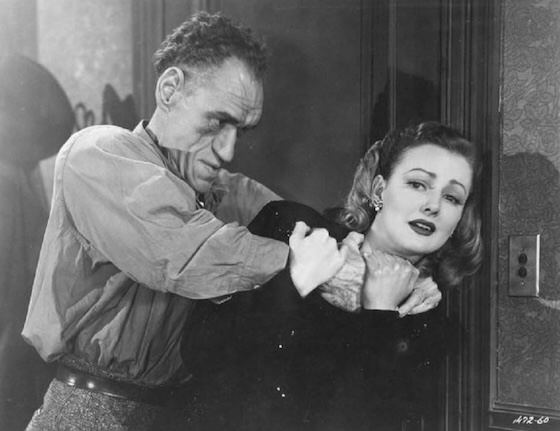
Director Jean Yarbrough doesn't have much time to screw around—the whole thing is barely over an hour—and that's one of the movie's greatest strengths. We get De Lange's artistic meltdown, The Creeper's rescue, murders, newspaper intrigue, police investigation, Virginia Grey's art critic Joan Medford getting suspicious, Robert Lowery's commercial artist Steven Morrow getting dragged into the mess, and Alan Napier appearing as critic F. Holmes Harmon before The Creeper begins handling Marcel's negative reviews personally. The movie moves. Maury Gertsman's photography gives the sculptor's studio exactly the atmosphere it needs, with unfinished figures and enormous shadows making De Lange's artistic sanctuary gradually resemble a mausoleum. And there's something deliciously appropriate about placing a murderer inside a sculptor's studio because everyone is constantly surrounded by representations of human bodies. Flesh becomes stone. Stone resembles flesh. Somewhere among all those frozen faces stands Hatton, the one man everybody keeps staring at because his face doesn't conform to what they're expecting.
That's also why House of Horrors hits differently in 2026. Rondo Hatton died in February 1946, before the movie received its general release on March 29, and Universal had already filmed another Creeper picture, The Brute Man. Plans existed to continue using the character, but Hatton's death ended that possibility. That history hangs over the film now. There's no pretending the studio wasn't exploiting Hatton's appearance; even the contemporary marketing understood that his face was the attraction. But Hatton also created something strangely memorable despite the limitations placed upon him. The Creeper isn't Dracula. He isn't Frankenstein's Monster. He never got enough movies to develop that kind of mythology. What remains is something smaller and considerably sadder: a man Universal tried to turn into a monster because the world had already decided he looked like one.
And watching House of Horrors today, I keep coming back to the same conclusion. The ugliest character in the movie isn't Rondo Hatton. It's Marcel De Lange—the normal-looking asshole who turns friendship into murder because somebody didn't like his fucking sculptures.


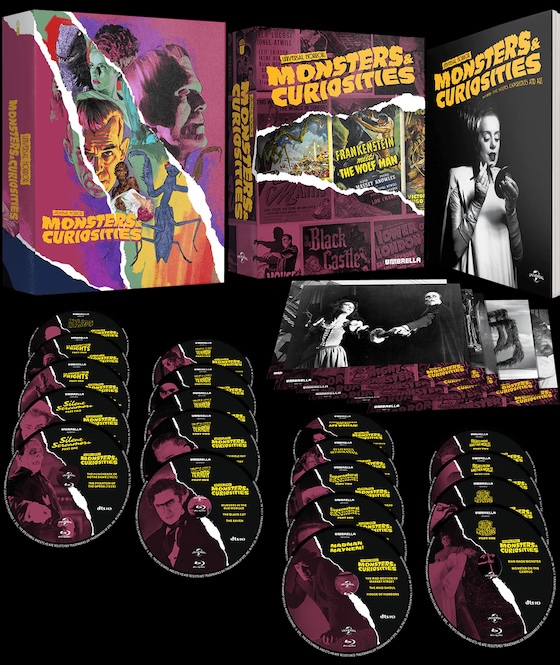
Universal Horror: Monsters And Curiosities Blu-ray - Umbrella Entertainment Exclusive / Collector's Edition
Home Video Distributor: Umbrella Entertainment
Available on Blu-ray - July 1, 2026
Screen Formats: 1.33:1; Various
Subtitles: English SDH
Video: 1080p
Audio: DTS-HD Master Audio 2.0
Discs: Blu-ray Disc; nineteen-disc set
Region Encoding: Locked to Region A
House of Horrors is lean, nasty, atmospheric Universal B-horror with a surprisingly uncomfortable heart beating underneath it. Martin Kosleck is wonderfully unhinged as the world's least emotionally stable sculptor, Jean Yarbrough keeps the picture moving at a furious clip, and Rondo Hatton's Creeper remains impossible to forget. But revisiting the film now requires acknowledging the complicated reality behind the monster Universal was trying to manufacture. Hatton's physical condition became part of the product, yet the movie accidentally gives us something more interesting than exploitation alone. The Creeper becomes another Universal outsider manipulated by someone considerably more monstrous than he appears.
Frankenstein's Monster had stitches. The Wolf Man had fur. The Creeper just had Rondo Hatton's face.
Maybe the horror was that Hollywood thought that was enough.
Video
Umbrella Entertainment's high-definition presentation gives House of Horrors exactly what a movie built around faces, sculptures, shadows, and cramped interiors needs. Maury Gertsman's black-and-white photography benefits from strong contrast throughout De Lange's studio and the film's darker nighttime sequences, while the increased detail makes the textures of the sculptures and surrounding environments much easier to appreciate. Most importantly, the presentation doesn't need to manufacture anything around Hatton.
There isn't elaborate monster makeup to reveal. The camera simply studies him, and the clarity makes the uncomfortable humanity beneath Universal's presentation of The Creeper harder to ignore.
Audio
The mono soundtrack remains appropriately direct, with dialogue coming through clearly and the film's suspense cues and murder sequences carrying sufficient weight without artificial enhancement. Kosleck's increasingly theatrical performance benefits most because Marcel spends much of the picture bouncing between wounded sensitivity and homicidal rage, while Hatton's comparatively limited dialogue remains intelligible and appropriately grounded. At roughly sixty-six minutes, this movie doesn't waste much time on silence; the soundtrack moves right alongside Yarbrough's efficient direction.
Supplements:
While short on extras, the commentary is just a plethora of film history talking about everything from Whale to the actors to Pre-Code history and much more. It more than compliments the film well.
Commentary:
- None
Special Features:
Within Umbrella Entertainment's Universal Horror: Monsters and Curiosities (1923–1960) collection, House of Horrors represents one of the more fascinating attempts by Universal to manufacture another recognizable horror figure as its original monster cycle was losing steam. Hatton's Creeper had appeared in The Pearl of Death, became the centerpiece here, and returned in The Brute Man, which was actually produced as a prequel even though it followed this film's production. Seeing House of Horrors surrounded by Universal's better-known creatures gives the film a context it rarely receives on its own. Dracula and Frankenstein became immortal because generations kept resurrecting them. Rondo Hatton never got that opportunity.
Umbrella putting House of Horrors back among the monsters doesn't change that history.
But it does give The Creeper another chance to walk through the door.

| Movie |  |
|
| Video | |
|
| Audio | |
|
| Extras |  |
|
|
Composite Blu-ray Grade
|
||