By the time The Ghost of Frankenstein rolled into theaters in 1942, Universal's favorite oversized corpse had already been shot, burned, drowned, buried, and generally treated like the world's least appreciated science experiment.
So naturally, they dug him up again.
Because if there's one thing Universal understood long before modern franchises started resurrecting dead characters every other summer, it's this: if audiences love the monster, they'll always find another excuse to bring him back.
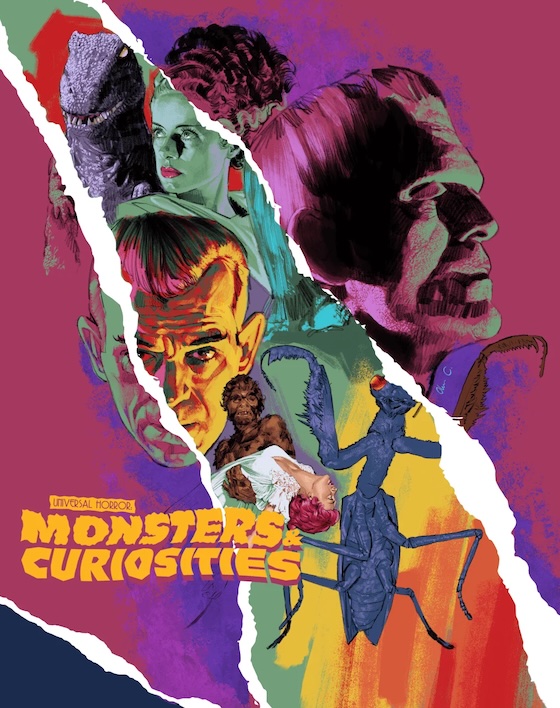
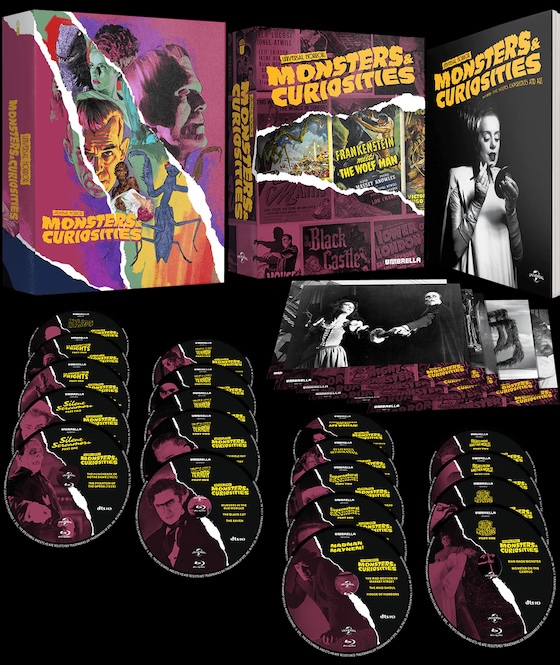
Watching The Ghost of Frankenstein in 2026 as the opening film of Frankenstein Frights Part II in Umbrella Entertainment's Universal Horror: Monsters and Curiosities (1923–1960) collection is fascinating, as it marks the beginning of the series' shift. The gothic tragedy that James Whale perfected gives way to something pulpier, faster, and unapologetically fun. The philosophical weight isn't entirely gone, but it's no longer carrying the whole movie. Instead, Universal leans into mad science, body horror, and increasingly wild mythology.
And honestly? I'm here for it.
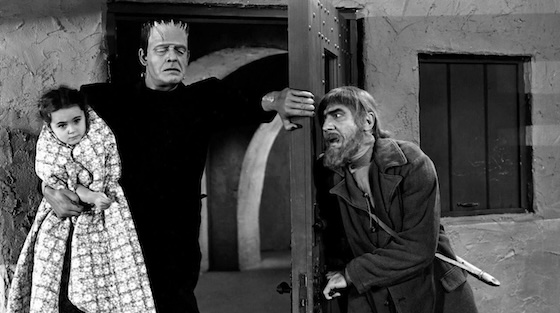
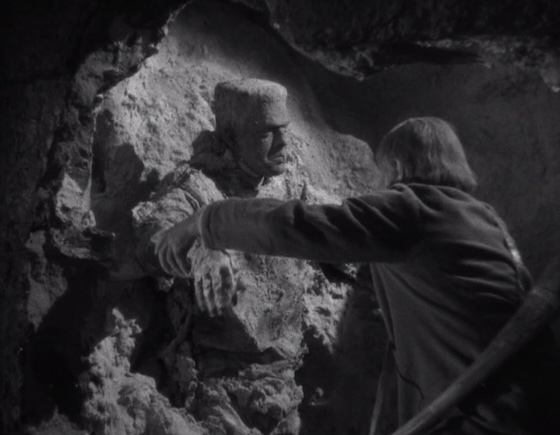
The story picks up where Son of Frankenstein left off. Ygor somehow survives yet another angry mob—seriously, the man is basically indestructible—and digs Frankenstein's Monster out of the sulfur pit where everyone conveniently assumed he was finished for good. Believing only another Frankenstein can restore his gigantic companion, Ygor tracks down Dr. Ludwig Frankenstein (Sir Cedric Hardwicke), Henry's younger son, hoping to revive the Monster and, more importantly, carry out one final scheme that borders on complete insanity.
A brain transplant. Not just any brain. His brain. That's the kind of gloriously ridiculous science this franchise had embraced by the early '40s, and it's impossible not to smile watching it unfold.
One of the biggest changes here is the Monster himself.
For the first time, Boris Karloff is gone, handing the role over to Lon Chaney Jr. That's no small pair of boots to fill. Karloff didn't simply play Frankenstein's Monster—he was Frankenstein's Monster. Chaney wisely doesn't imitate him. His interpretation is heavier, slower, and more physically imposing, emphasizing brute force over quiet melancholy. Does he possess Karloff's heartbreaking vulnerability? Not quite. But he brings a different energy to the role that fits the increasingly frantic direction the series is taking.
The real MVP, however, is Bela Lugosi. Again.
Ygor was already one of Universal's greatest supporting characters in Son of Frankenstein, but here Lugosi cranks everything up another notch. He's manipulative, sarcastic, endlessly entertaining, and somehow manages to be the smartest person in every room despite walking around with a broken neck. Every scene improves the moment he enters it. His chemistry with Chaney's Monster gives the film its personality, and by the climax, you almost forget Frankenstein is supposed to be the title character.
Sir Cedric Hardwicke makes an excellent addition as Ludwig Frankenstein, portraying a man desperately trying to outrun his family's cursed legacy. Unlike Henry, Ludwig genuinely wants nothing to do with creating monsters. Naturally, the universe laughs in his face. That's one of the franchise's recurring strengths: every Frankenstein believes they'll be the rational one.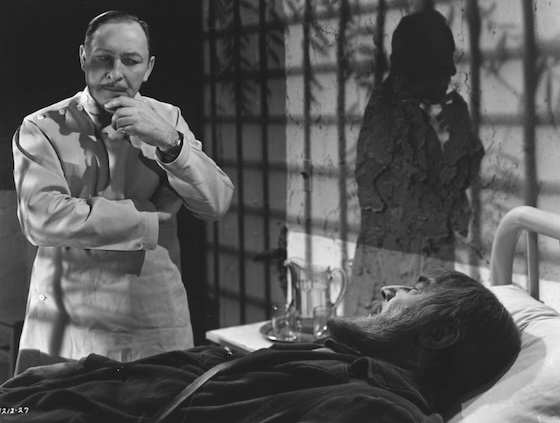
Every Frankenstein is wrong.
Director Erle C. Kenton doesn't possess James Whale's visual poetry, but he understands momentum. The Ghost of Frankenstein barrels from one bizarre scientific idea to the next with barely enough time to question whether any of it makes sense. Laboratories spark to life. Secret passageways appear. Angry villagers organize yet another mob because apparently no one in this universe has ever considered therapy. The pace is brisk, the atmosphere remains satisfyingly gothic, and the film never overstays its welcome.
Perhaps the most fascinating aspect of revisiting the film today is recognizing its influence on later science-fiction horror. Identity. Consciousness. Memory. Brain transplantation. The idea that personality can be physically transferred from one body to another feels surprisingly modern, even if the film approaches it with wonderfully pulpy 1940s logic. The science may be nonsense.
The questions aren't.
Viewed inside Umbrella's collection, The Ghost of Frankenstein marks the moment Universal fully embraced the serialized nature of its monster universe. These films were no longer isolated tragedies. They were interconnected chapters where actions carried consequences from one sequel to the next. That may seem commonplace today, but in 1942 it was laying the groundwork for the shared cinematic universes Hollywood would spend the next eighty years chasing.


Universal Horror: Monsters And Curiosities Blu-ray - Umbrella Entertainment Exclusive / Collector's Edition
Home Video Distributor: Umbrella Entertainment
Available on Blu-ray - July 1, 2026
Screen Formats: 1.33:1; Various
Subtitles: English SDH
Video: 1080p
Audio: DTS-HD Master Audio 2.0
Discs: Blu-ray Disc; nineteen-disc set
Region Encoding: Locked to Region A
The Ghost of Frankenstein may never eclipse Bride of Frankenstein or Son of Frankenstein, but it was never trying to. This is the point where the series trades gothic melancholy for energetic monster mayhem, and it works far better than it often gets credit for. Strong performances from Bela Lugosi and Cedric Hardwicke, a solid debut from Lon Chaney Jr. as the Monster, and enough outrageous mad-science plotting to power three movies make this one of Universal's most entertaining sequels. It may be a little messier.
It also never stops moving. Sometimes that's exactly what a franchise needs.
Video
Umbrella Entertainment continues its impressive work with The Ghost of Frankenstein, presenting the film with a sharp, film-like high-definition transfer that preserves its moody black-and-white photography beautifully.
Detail throughout the laboratory interiors and village exteriors is consistently strong, contrast remains rich without crushing shadow detail, and the natural film grain gives the presentation an authentic cinematic appearance.
Jack Pierce's legendary makeup work also benefits from the increased resolution, making Lon Chaney Jr.'s interpretation of the Monster look better than it has on home video in years.
Audio
The lossless mono presentation faithfully reproduces Hans J. Salter's dramatic score while keeping dialogue clean and well balanced throughout. Laboratory effects, thunder, and electrical machinery retain surprising punch, adding weight to the increasingly ambitious set pieces. As with the other Universal classics in the collection, Umbrella's audio presentation is respectful of the original theatrical mix while providing excellent clarity.
Supplements:
Commentary:
- None
Special Features:
As the film that launches Frankenstein Frights Part II within Umbrella Entertainment's Universal Horror: Monsters and Curiosities (1923–1960) collection, The Ghost of Frankenstein benefits enormously from its placement within the larger Frankenstein saga. Seen immediately after Son of Frankenstein, its narrative evolution and changing tone become much more apparent, illustrating the point where Universal's gothic tragedy began evolving into an interconnected monster universe. Combined with the collection's outstanding hardcover companion book, premium collector's packaging, and carefully curated lineup of forty-five films, this often-overlooked sequel finds exactly the audience—and appreciation—it deserves.

| Movie |  |
|
| Video | |
|
| Audio | |
|
| Extras |  |
|
|
Composite Blu-ray Grade
|
||