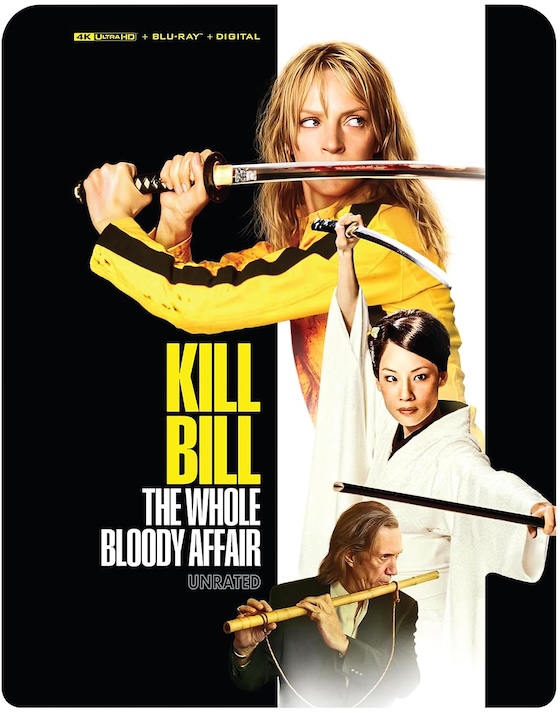
There’s a point somewhere during Quentin Tarantino’s Kill Bill: The Whole Bloody Affair when admiration turns into endurance. Not boredom. Fuck no. Kill Bill is too alive to be boring. Too weird. Too horny for cinema. Too completely drunk on kung fu, spaghetti westerns, samurai pictures, anime, Shaw Brothers, Morricone, Sonny Chiba, blood fountains, bare feet, Pussy Wagons, yellow tracksuits, and Uma Thurman staring holes through people who absolutely deserve what’s coming to them. This is Tarantino finally getting Kill Bill back into the shape he originally wanted: one enormous, bloody, ridiculous revenge epic instead of the two films released in 2003 and 2004. And sitting there watching the whole damn thing unfold uninterrupted, I had an unexpected reaction. I started missing Kill Bill. The two of them. Because as satisfying as it is to finally have The Whole Bloody Affair officially available, the dirty little secret hiding inside Tarantino’s preferred version might be that the studio-mandated split accidentally created two better movies.
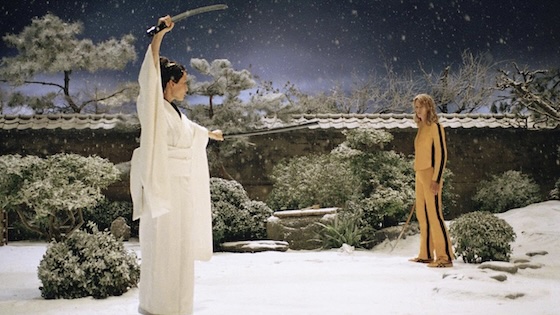
Because Kill Bill: Vol. 1 is a fucking rocket. It doesn’t need to contemplate itself because it barely has time to breathe. Beatrix Kiddo wakes up, remembers what these bastards did to her, makes a list, and starts crossing off names while Tarantino throws virtually everything he loves about movies into a blender and forgets to put the lid on. Lucy Liu’s O-Ren Ishii is magnificent. The anime sequence is vicious. The Crazy 88 massacre keeps escalating until blood stops being a bodily fluid and becomes production design. Then, after all that glorious insanity, Tarantino suddenly gets quiet. Snow. A garden. O-Ren. The Bride. Two swords. That ending matters more than I ever realized because it gives the madness a shape. It gives us somewhere to stop. Then Vol. 2 arrives as an entirely different animal: dusty, mournful, talkative, funny, sad, and weirdly intimate. Budd lives in a trailer and works a shitty job. Pai Mei turns the movie into a kung-fu fever dream. Elle Driver remains magnificently poisonous. Bill finally stops being a voice and becomes a man. Most importantly, Beatrix’s journey stops being about killing people and becomes about why she needed to kill them in the first place. The split created contrast. It created rhythm. It let one movie be an exploitation orgasm, and the other wake up the next morning and wonder what the hell happened.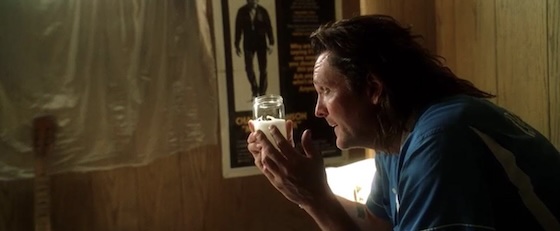
Put them together, and the story undeniably becomes more complete, but the gears also become easier to hear grinding. The Whole Bloody Affair doesn’t end after the House of Blue Leaves. It keeps moving, shifting from martial-arts revenge fantasy into western, melodrama, love story, motherhood, regret, and something approaching tragedy. That’s fascinating, but over four-plus hours it also exposes something about Tarantino that we’ve known forever: the man loves movies so goddamn much that sometimes he doesn’t know when to leave the party. He wants another conversation. Another chapter. Another needle drop. Another reference. Another detour. Another close-up. Another goddamn foot. Usually, I’m perfectly happy to stay, but watching Kill Bill this way made me realize that the original split imposed something Tarantino rarely imposes upon himself: restraint. And maybe that restraint helped. The first film gets to explode. The second gets to ache. Neither has to apologize for becoming something different because each has its own beginning, middle, ending, pulse, and personality. The Whole Bloody Affair gives us Tarantino’s intended architecture, but the theatrical versions gave that architecture rooms.
That doesn’t mean this version isn’t magnificent. There are stretches where the sheer scale of the thing becomes intoxicating, like Tarantino decided to make his own grindhouse Lawrence of Arabia out of Shaw Brothers movies, Sergio Leone westerns, yakuza pictures, anime, exploitation flicks, and whatever else happened to be rattling around his movie-damaged skull. More importantly, Uma Thurman holds the entire crazy bastard together. Watching the story uninterrupted makes it even clearer how much is being asked of her. Beatrix has to be assassin, victim, action hero, grieving mother, romantic lead, comedian, gunslinger, kung-fu student, and unstoppable myth, sometimes within minutes of each other, and Thurman somehow keeps the human being underneath all Tarantino’s cinematic quotation marks alive. That’s why the final confrontation with Bill still lands after all the blood and spectacle. It isn’t the Five Point Palm Exploding Heart Technique that ultimately matters. It isn’t how cool Bill is. It isn’t another movie reference. It’s Beatrix getting her daughter back. After spending the entire sprawling runtime beside her, that emotional release hits hard. The 4K presentation only makes the journey more intoxicating, allowing the yellows, blacks, snowy whites, neon, film grain, and oceans of arterial red to retain their deliberately heightened character without making the movie look embalmed by digital cleanup. It looks like film. It looks dangerous. It looks like Kill Bill.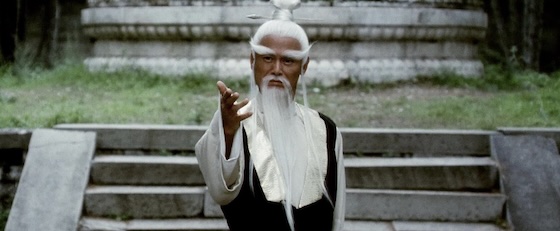
And yet, when I want to watch Kill Bill again, I suspect I’m still going to reach for Vol. 1 and Vol. 2. That surprised the hell out of me. I’m thrilled The Whole Bloody Affair finally exists in an official home-video release. I’m thrilled we can experience Tarantino’s preferred construction, restored material and all, instead of treating it like some mythical cut whispered about by people who caught a special screening years ago. As a cinematic event, it’s glorious. As an experiment, it’s essential. As the supposedly definitive version of Kill Bill, though? I’m not convinced. Sometimes the director’s cut reveals the masterpiece. Sometimes it reveals why somebody made the cut. The Whole Bloody Affair somehow does both. Tarantino’s version gives us the complete journey, but splitting that journey gave each half an identity, a rhythm, and an ending that made the other stronger. Maybe Miramax committed an act of commercial vandalism that accidentally became an act of editing. Maybe Tarantino was right all along, and I’m full of shit. That’s the fun of finally having this version: now we can actually argue about it. For me, The Whole Bloody Affair is the more complete Kill Bill. The two separate films are the better Kill Bill. And I’ll be damned if that isn’t the most Tarantino thing possible.

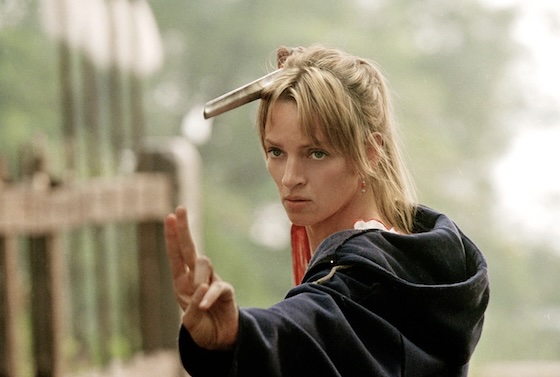

 4K Ultra HD + Blu-ray + Digital 4K
Home Video Distributor: Lionsgate Limited
Available on Blu-ray - July 28, 2026
Screen Formats: 2.39:1
Subtitles: English; English SDH; Spanish
Video: Upscaled 4K; Dolby Vision; HDR10
Audio: English: DTS-HD Master Audio 5.1
Discs: 4K Ultra HD; Blu-ray Disc; Two-disc set
Region Encoding: 4K region-free; blu-ray locked to Region A
Quentin Tarantino’s blood-soaked revenge epic finally becomes what it was always supposed to be. KILL BILL: THE WHOLE BLOODY AFFAIR unites Kill Bill: Vol. 1 and Vol. 2 into one massive, unrated 253-minute odyssey, stripping away the artificial break between films and restoring the Bride’s journey as a single piece of cinematic mayhem. Uma Thurman is Beatrix Kiddo, betrayed, beaten, shot, and left for dead by the Deadly Viper Assassination Squad—and now coming for every last bastard responsible.
Presented in Tarantino’s preferred configuration, The Whole Bloody Affair restores additional violence, keeps the legendary House of Blue Leaves battle in full color, expands O-Ren Ishii’s animated history, removes the original Vol. 1 cliffhanger and Vol. 2 recap, and lets the story barrel straight toward Bill with a traditional intermission along the way. Twenty-plus years after audiences first had to buy two tickets to see it, Kill Bill is finally one movie. One Bride. One list. One Whole Bloody Affair.
VIDEO
Lionsgate presents The Whole Bloody Affair across two BD-100 UHD discs, encoded at 2160p in its 2.40:1 theatrical framing with Dolby Vision. The source history needs to temper expectations: Kill Bill was finished through a 2K digital intermediate, so this isn't some miraculous native-4K resurrection of Tarantino and cinematographer Robert Richardson's photography.
And, frankly, this isn't the reference-quality knockout the words Kill Bill + 4K + Dolby Vision make you hope for. The presentation can look damn good—especially the saturated yellows, reds, deep blacks, Japanese night photography, animation and the volcanic House of Blue Leaves sequence. Dolby Vision gives the color palette considerably more authority, and the restored material finally belongs visually with the rest of the movie instead of looking like an appendage dragged in from an old alternate cut.
But there's inconsistency here. Fine detail and grain aren't always handled as naturally as they should be, and portions of the image can take on a processed, slightly smeared quality. That reaction isn't universal—some owners have been perfectly happy with the upgrade—but enough viewers have noticed it that it's difficult to dismiss. For a movie whose visual identity is this aggressive, tactile and gloriously analog, I wanted the UHD to bite harder. The Dolby Vision color is terrific; the actual 4K transfer is considerably less definitive than the cut of the movie it contains.
AUDIO
Here's another weird decision. After waiting more than two decades for The Whole Bloody Affair to officially hit home video, Lionsgate gives us… DTS-HD Master Audio 5.1. No Dolby Atmos. No DTS:X. No new object-based sonic bloodbath. The release also carries an English descriptive-audio option.
Fortunately, the existing mix still kicks ass. Tarantino's jukebox soundtrack has tremendous presence, dialogue remains locked and clean across the front, and the action sequences explode across the soundstage. Swords slice, bullets crack, bodies hit floors, motorcycles scream and the Crazy 88 sequence turns the room into a wonderfully controlled madhouse. Bass has plenty of punch without turning everything into anonymous subwoofer sludge.
Still, this was the opportunity. Imagine the House of Blue Leaves with a properly engineered Atmos mix—steel flying overhead, bodies dropping around the room, environmental sound extending vertically while "Don't Let Me Be Misunderstood" takes over the theater. The 5.1 is excellent. It also feels like Lionsgate stopped one step before the finish line.
Supplements:
Special Features:
And here's where the release really pisses me off.
After twenty years of waiting, the definitive physical-media release of Quentin Tarantino's four-hour Kill Bill arrives with essentially one on-disc bonus attraction:
- The Lost Chapter: Yuki's Revenge — a Kill Bill/Fortnite collaboration created using Unreal Engine 5 that extends the Kill Bill
That's basically it. No sprawling Tarantino retrospective. No new Thurman interview. No Robert Richardson discussion of the photography. No examination of the differences between Volumes 1 & 2 and The Whole Bloody Affair. No documentary about the film's bizarre twenty-year journey to this release. No archival excavation worthy of the occasion.

| Movie |  |
|
| Video |  |
|
| Audio | |
|
| Extras |  |
|
|
Composite Blu-ray Grade
|
||