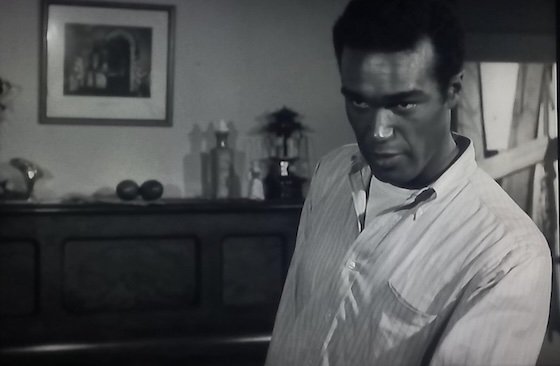
The Dead Live... Again!
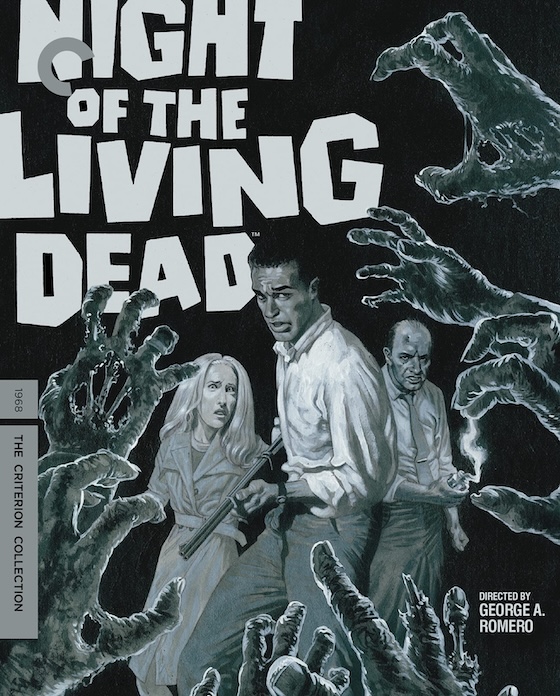
This time in stunning Ultra HD 4K, courtesy of the Criterion Collection.
Criterion's release of Night of the Living Dead isn't just another catalog title getting polished for modern audiences. It's an act of cinematic resurrection. This landmark edition features a meticulous 4K digital restoration supervised by director George A. Romero himself, alongside co-screenwriter John A. Russo, sound engineer Gary R. Streiner, and producer Russell W. Streiner. It also includes Night of Anubis, a rare work-print edit of the film, plus multiple audio commentaries packed with insight and history.
There's no denying it: Criterion's handling of writer/director George A. Romero's Night of the Living Dead may very well be the most important home video release of the year. We already knew the film was a masterpiece. What Criterion has done is remind us why.
And remind us forcefully.
Rescued from decades of public-domain abuse and finally treated with the reverence it deserves, this restoration is nothing short of revelatory. The results? It's like watching the movie for the first time all over again. Seriously.
There's always a brilliance to its unfolding. The farmhouse. The descending night. The monsters in the yard. The creepy cellar. The mounting dread that no amount of boarded windows can keep at bay.
Made for nickels by today's standards, Night of the Living Dead is more than deserving of this George Lucas Family Foundation and Celeste Bartos Fund for Film Preservation-funded restoration. Starring Duane Jones and Judith O'Dea, this Pennsylvania-shot black-and-white horror film hasn't simply endured—it has continued to infect generations of filmmakers and audiences alike.
Criterion includes reflections from Frank Darabont, Guillermo del Toro, and Robert Rodriguez, and rightly so. But the truth is that Romero's influence stretches far beyond a few famous talking heads. There are countless filmmakers, writers, artists, and horror obsessives whose creative DNA begins right here, in this farmhouse, on this terrible night.
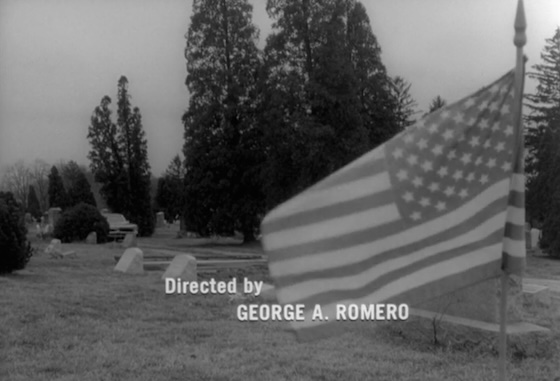
Shot, edited, and directed by Romero just outside Pittsburgh, Night of the Living Dead begins innocently enough. Barbra and Johnny Blair drive through rural Pennsylvania to visit their father's grave. Johnny teases his sister with that immortal line: "They're coming to get you, Baaahhhhbra."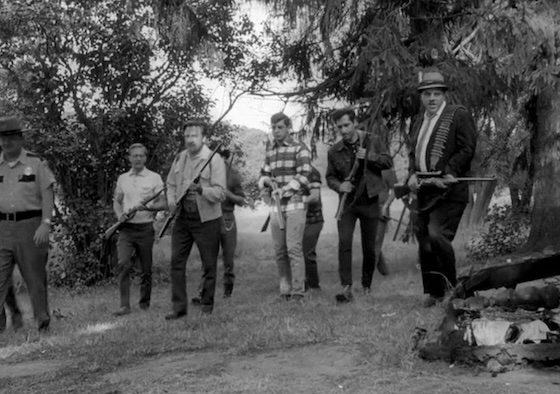
The joke lands. And then it turns into a nightmare. Because they really are coming.
Johnny is the first to fall as a shambling ghoul attacks in broad daylight. Barbra flees across the countryside and takes refuge in a farmhouse where she encounters Ben, played magnificently by Duane Jones, and a group of terrified strangers desperately trying to survive the night.
Windows are boarded. Doors are barricaded. Tempers flare. Some seek safety upstairs while others insist the cellar is the only answer. Outside, the dead gather in growing numbers. Inside, human fear proves every bit as dangerous.
Bodies burn. The house falls apart. And innocence dies long before dawn.
This is a film full of ghouls, Molotov cocktails, and bitter arguments over how to survive a world that has spun violently out of orbit. Maybe it's radiation from a Venus probe. Maybe it's something worse. Romero wisely leaves enough uncertainty to let our fears do the heavy lifting.
What remains certain is this: unless you burn them or destroy the brain, these monsters are relentless.
But the zombies are only half the horror. The other half is us.
And that's where Night of the Living Dead still cuts deeper than most horror films made half a century later. The casting of Duane Jones as Ben was not conceived as a political statement. Romero and his collaborators have said repeatedly that Jones simply gave the best audition. End of story.
But history doesn't always care about intentions.
Jones delivers one of the strongest performances in horror history—period. Intelligent, commanding, resourceful, and stubbornly human, Ben stands in stark contrast to the chaos around him. And the film's devastating ending, arriving amid the social upheaval of 1968, lands with a force that has only grown sharper with time.
Hollywood has spent decades trying to imitate what Romero achieved here. Very few have even come close.
I once believed there was only one first viewing of Night of the Living Dead. I was wrong. Thanks to Criterion, one of the greatest horror films ever made can shock, horrify, and devastate you all over again.
And this time, every shadow is darker, every scream is sharper, and the dead have never looked more alive.


 4K Ultra HD + Blu-ray Edition
Home Video Distributor: Criterion
Available on Blu-ray - October 4, 2022
Screen Formats: 1.37:1
Subtitles: English SDH
Audio: English: LPCM Mono
Discs: 4K Ultra HD; Blu-ray Disc; Three-disc set
Region Encoding: 4K region-free; blu-ray lokced to Region A
Shot outside Pittsburgh on a shoestring budget, by a band of filmmakers determined to make their mark, Night of the Living Dead, directed by horror master George A. Romero, is a great story of independent cinema: a midnight hit turned box-office smash that became one of the most influential films of all time. A deceptively simple tale of a group of strangers trapped in a farmhouse who find themselves fending off a horde of recently dead, flesh-eating ghouls, Romero’s claustrophobic vision of a late-1960s America literally tearing itself apart rewrote the rules of the horror genre, combining gruesome gore with acute social commentary and quietly breaking ground by casting a Black actor (Duane Jones) in its lead role.
VIDEO
This is the kind of restoration that makes you question every previous viewing of Night of the Living Dead. Criterion's new 4K transfer doesn't scrub away the film's rough edges or sand down its gritty, documentary-like texture. Instead, it embraces them. Film grain is organic and consistent, blacks are richer than ever, and shadow detail reveals textures in the farmhouse and the faces of the ghouls that have been obscured for decades.
The image retains all of its raw, low-budget intensity while looking sharper, cleaner, and more cinematic than ever before. Contrast is dramatically improved, giving nighttime scenes a deeper sense of dread and allowing Romero's stark black-and-white photography to shine. This isn't revisionism. It's revelation.
This is Night of the Living Dead as you've never seen it before—and perhaps as it was always meant to be seen.
AUDIO
The newly restored monaural soundtrack won't rattle your walls, nor should it. Criterion wisely preserves the film's original sonic character while cleaning up decades of wear and tear. Dialogue comes through with remarkable clarity, the eerie library music cues hit with renewed force, and the moments of silence are just as unsettling as the screams and gunshots.
There's an immediacy to the track that enhances the film's pseudo-documentary realism; every panicked exchange, every crackling radio bulletin, and every desperate plea feels unnervingly close. This isn't an audio remix designed to modernize Night of the Living Dead.
It's a respectful restoration that lets Romero's soundscape do what it has always done best: make you believe the end of the world is happening just outside your door.
Supplements:
Commentary:
- None
Special Features:
Criterion absolutely loads this release with extras worthy of the film's legendary status. The centerpiece is the stunning new 4K restoration supervised by George A. Romero and key members of the original production team, paired with a newly restored uncompressed monaural soundtrack. Beyond the film itself, fans get Night of Anubis, the rare work-print version of the movie, a sixteen-millimeter dailies reel, and two vintage audio commentaries featuring Romero, John Russo, Judith O'Dea, Karl Hardman, and others.
The supplements dig deep into the making and legacy of the film, including interviews with Romero, Duane Jones, Judith Ridley, Gary Streiner, and Russell Streiner, as well as featurettes on the film's groundbreaking style, iconic score, and the creation and direction of the ghouls. There's also a fascinating discussion featuring filmmakers Frank Darabont, Guillermo del Toro, and Robert Rodriguez on the film's enduring influence, archival newsreels from 1967, promotional trailers and radio spots, and an insightful essay by critic Stuart Klawans. Rounding it all out is striking new cover art by Sean Phillips.
Simply put, Criterion didn't just restore Night of the Living Dead—they built a definitive historical archive around it.
- New 4K digital restoration, supervised by director George A. Romero, coscreenwriter John A. Russo, sound engineer Gary R. Streiner, and producer Russell W. Streiner
- New restoration of the monaural soundtrack, supervised by Romero and Gary Streiner and presented uncompressed
- One 4K UHD disc of the film and two Blu-rays with the film and special features
- Night of Anubis, a work-print edit of the film
- Program featuring filmmakers Frank Darabont, Guillermo del Toro, and Robert Rodriguez
- Sixteen-millimeter dailies reel
- Program featuring Russo on the commercial and industrial film production company where key Night of the Living Dead participants got their starts
- Two audio commentaries from 1994 featuring Romero, Russo, producer Karl Hardman, actor Judith O’Dea, and others
- Archival interviews with Romero and actors Duane Jones and Judith Ridley
- Programs about the film’s style and score
- Interview program about the direction of ghouls, featuring members of the cast and crew
- Interviews with Gary Streiner and Russell Streiner
- Newsreels from 1967
- Trailer, radio spots, and TV spots
- PLUS: An essay by critic Stuart Klawans
- Cover Illustration by Sean

| Movie |  |
|
| Video | |
|
| Audio |  |
|
| Extras | |
|
|
Composite Blu-ray Grade
|
||