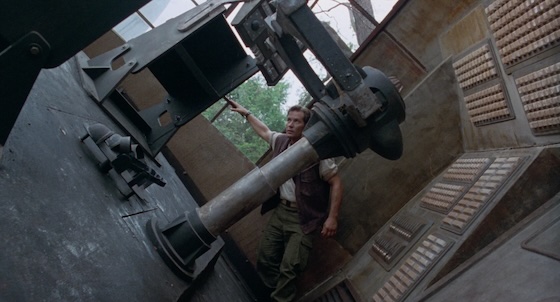
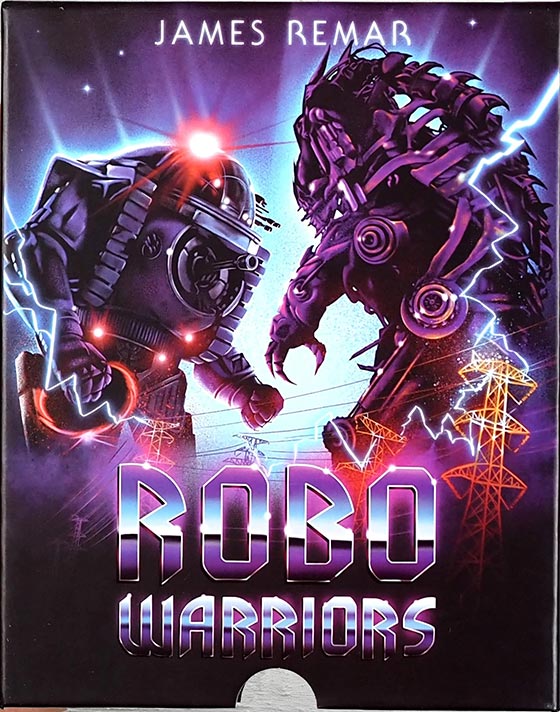
Robo Warriors—not robot warriors, mind you, but Robo Warriors—kicks the door down with the kind of loud, unapologetic energy that tells you exactly what you’re in for. This isn’t sleek, polished sci-fi; it’s scrappy, neon-soaked, VHS-era chaos where giant machines settle humanity’s fate one punch at a time. And honestly? I kind of loved that about it. Set in a dystopian 2036 ruled by the reptilian Teridaxx, the film wastes no time leaning into its wild premise. Thirty-story gladiator robots, lone human pilots, and a world hanging by a thread—it’s ridiculous, sure, but it’s the good kind of ridiculous, the kind that makes you grin instead of groan.
The story unfolds like a half-remembered legend, told by a grandfather to his grandson, which gives everything this hazy, almost mythic quality. Zach, the young protagonist, sets out to find the last Robo Warrior, Ray Gibson, and the fabled Earth Bot. It’s a classic hero’s journey dressed up in chrome and dust, and while it doesn’t exactly reinvent the wheel, it doesn’t need to. There’s a sincerity here that sneaks up on you. I caught myself getting pulled in, rooting for this kid as he chases what might just be a fairy tale in a broken world. It’s simple storytelling, yeah—but sometimes simple works.
Visually, the film swings big, and more often than not, it connects. The effects work by Stargate Films gives the robots a tangible, weighty presence that feels refreshingly real compared to today’s glossy CGI overload. You can see the effort, the craftsmanship—little imperfections and all. Directed by Ian Barry, the movie embraces its limitations and turns them into part of its identity. The action scenes are energetic, occasionally chaotic, but always engaging, with martial arts choreography that adds a nice punch (sometimes literally) to the mix.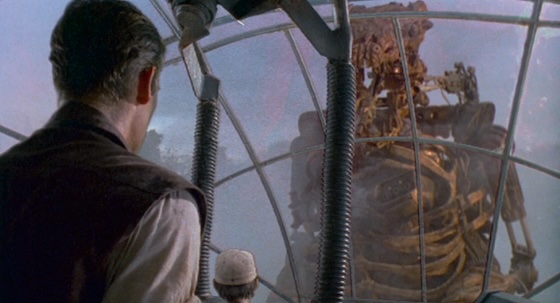
The cast does a solid job grounding the film’s more out-there elements. James Remar brings a rugged, no-nonsense presence that helps anchor the story, while James Tolkan delivers the kind of authoritative performance he’s known for. And then there’s James Lew, who injects a burst of physicality into the action scenes—his experience really shows. Sure, the dialogue can get a little over-the-top, and yeah, there are moments where you can feel the budget constraints, but the performances keep things from falling apart.
In the end, Robo Warriors feels like a time capsule—in the best way. It’s messy, ambitious, and completely unafraid to be a little weird. Watching it, I had this moment where I thought, “They really went for it, didn’t they?” And that enthusiasm is infectious. It’s not trying to be the next big blockbuster; it’s just trying to tell a fun, high-concept story with giant robots and human grit. And you know what? It succeeds more often than you’d expect. Not perfect, not polished—but definitely memorable.
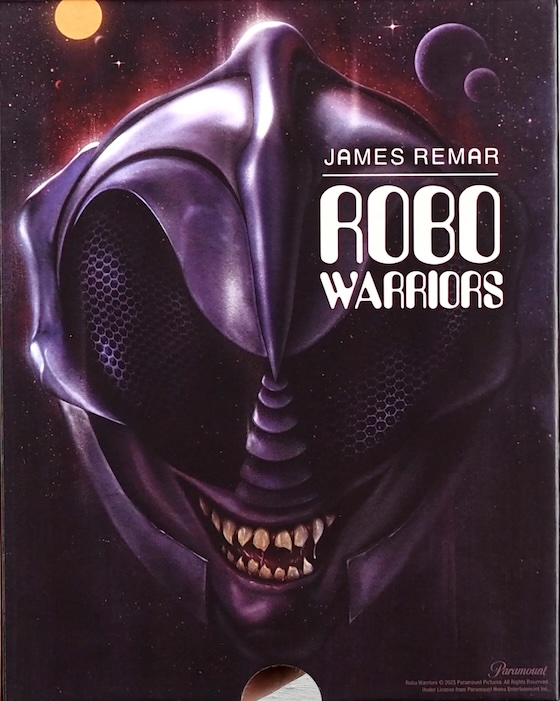
Robo Warriors is part of the Vinegar Syndrome Archive line, a collection dedicated to reviving overlooked, offbeat films from the video store era, inspired by the company’s own physical shop roots in cities like Bridgeport, Denver, Toronto, and Pittsburgh. This release is presented as a hand-numbered limited edition, housed in a custom, bottom-loading VHS-style slipcase that leans hard into retro nostalgia, and it also includes a double-sided poster. Exclusivity is a big part of the appeal here—these editions are only available through Vinegar Syndrome’s website and select indie retailers, with no presence in major retail chains. Designed by JJ Harrison, the spot gloss slipcase version is strictly capped at 5,000 units, making it a true collector’s piece, with only a slim chance of a more standard edition appearing down the line.

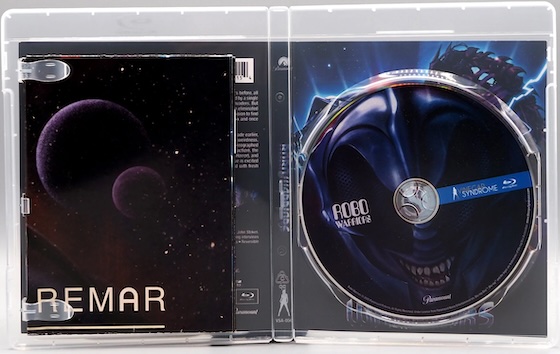

 Vinegar Syndrome Archive Blu-ray - Limited - 5,000 copies
Home Video Distributor: Vinegar Syndrome
Available on Blu-ray - August 26, 2025
Screen Formats: 1.85:1
Subtitles: English SDH
Video: 1080p
Audio: English - DTS-HD Master Audio 2.0
Discs: Blu-ray Disc; single disc
Region Encoding: Locked to Region A
It is the year 2036, and Earth is under harsh occupation by a reptilian alien race called the Teridaxx. Years before, all interplanetary warfare was reduced to a faceoff between two thirty-story-tall gladiator robots, each piloted by a single fighter. One of those fighters, a Robo Warrior from Earth, once upon a time, fought back against these invaders. But these are just dusty old stories, told by Charlie to his twelve-year-old grandson Zach, as the Teridaxx have eliminated all but one final Robo Warrior, Ray Gibson, who has been in hiding for years. Zach sets out on a perilous mission to find Gibson and the mythic Earth Bot, which is humankind's final chance to free itself from the cruel Teridaxx and once again control its own destiny.
Based on characters originally penned by the legendary Stuart Gordon (Re-Animator, From Beyond) a decade earlier, ROBO WARRIORS is a standout piece of futuristic sci-fi-adventure from the 90s era of direct-to-video weirdness, which takes full advantage of the excellent special effects by Stargate Films, as well as expertly choreographed martial-arts action scenes. Shot in the Philippines by prolific television director Ian Barry (The Chain Reaction), the film features James Remar (The Warriors, TV's Dexter), James Tolkan (Back to the Future, The Amityville Horror), and James Lew, a prolific actor and stuntman (Big Trouble in Little China, Timecop). Vinegar Syndrome Archive is excited to reboot this mechanized mission for you, newly restored in 2K from its 35mm interpositive and packed with fresh interviews with its key creators.
Video
The new 2K restoration from Vinegar Syndrome Archive really gives Robo Warriors a second life—like, you immediately notice the bump in clarity. Colors pop harder, especially those sunbaked outdoor scenes, and there’s a surprising amount of detail in the costumes and miniature work that probably got lost on old VHS copies.
It’s not pristine—don’t expect modern digital slickness—but that’s actually a plus. The film grain is intact, textures feel natural, and the image has this warm, analog authenticity that fits the movie’s scrappy charm. Blacks are a bit uneven here and there, and you’ll catch the occasional softness in effects shots, but honestly, that just reminds you what era you’re in.
Overall, it’s a respectful, film-like upgrade that makes revisiting this oddball sci-fi adventure feel fresh without sanding down its rough edges.
Audio
The stereo track gets the job done, and then some—nothing flashy, but it fits the film’s vibe. Dialogue is mostly clear and centered, even when the mix gets a little crowded during action scenes.
You’ll notice the sound design leans heavily on that classic ‘90s punch—metal clanks, laser blasts, and synth-heavy score cues that bounce between channels just enough to give a sense of space.
It’s not a super dynamic mix, though; don’t expect deep bass or modern surround immersion. Still, there’s a certain charm to it. A bit rough, a bit uneven at times, sure—but it feels authentic, like you’re hearing the movie the way it was meant to be experienced, quirks and all.
Supplements:
While short on extras, the commentary is just a plethora of film history talking about everything from Whale to the actors to Pre-Code history and much more. It more than compliments the film well.
Commentary:
- John Stokes, the cinematographer, is the focus of the commentary track.
Special Features:
This Region A Blu-ray release of Robo Warriors comes packed with a solid mix of technical upgrades and fan-focused extras. The film has been newly scanned and restored in 2K from its 35mm interpositive, offering a noticeable improvement in clarity while preserving its gritty, analog feel.
Special features include a commentary track with cinematographer John Stokes, moderated by critic Walter Chaw, along with “The Footsteps of Giants,” a 42-minute making-of documentary featuring insights from director Ian Barry, producer Loucas George, and visual effects supervisor Sam Nicholson. Physical collectors also get a double-sided poster and reversible sleeve artwork, plus English SDH subtitles round out the package.
- Region A Blu-ray
- Scanned and restored in 2K from its 35mm interpositive
- Commentary track with cinematographer John Stokes, moderated by film critic Walter Chaw
- "The Footsteps of Giants" (42 min) - a brand new making-of documentary featuring interviews with director Ian Barry, producer Loucas George, visual effects supervisor Sam Nicholson, and cinematographer John Stokes
- Double-sided poster
- Reversible sleeve artwork
- English SDH subtitles

| Movie |  |
|
| Video |  |
|
| Audio | |
|
| Extras | |
|
|
Composite Blu-ray Grade
|
||













![Trick or Treat (1986) – 4K Ultra HD [Standard Edition]](/images/resized/images/stories/2026/trick-or-treat-4k_40_40.jpg "Trick or Treat (1986) – 4K Ultra HD [Standard Edition]")