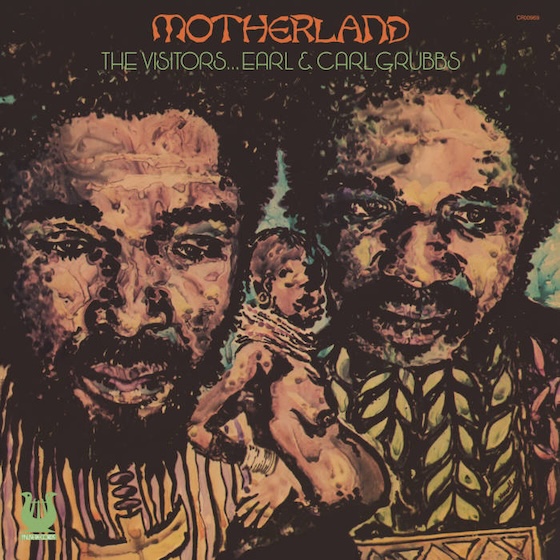
Motherland is the sort of album that makes jazz collectors insufferable. After hearing it, you understand why people have spent years talking about battered original copies and missed opportunities to buy one when prices were reasonable. Originally released in 1976 and now finally getting the reissue treatment it deserves, this final statement from Philadelphia's The Visitors sounds far less like a historical artifact than a record that somehow slipped through the cracks. The connections to John Coltrane are real—Earl and Carl Grubbs were close to his circle—but what struck me most was how quickly the music moves beyond influence and into its own territory.
The opener, "Kimball," grabbed me immediately. It's not mystical or abstract in the way some spiritual jazz records can be. It moves. There's a pulse underneath it that keeps everything grounded while the horns push and pull against each other. The interaction between Earl and Carl Grubbs is one of the album's greatest strengths; they don't sound like musicians taking turns soloing so much as two voices finishing each other's thoughts. Joe Bonner deserves equal credit. His piano playing is all over this record, sometimes driving the music forward, sometimes quietly holding everything together.
What surprised me was how much of Motherland swings. The term "spiritual jazz" can sometimes signal long, meditative excursions where atmosphere takes precedence over momentum. Not here. "Levels" absolutely cooks. The rhythm section digs in, the horns get aggressive, and for a few minutes, the album feels closer to classic hard bop than cosmic jazz. It's probably the track I've returned to most. If anything, I occasionally found myself wishing the band had leaned into that energy a little more often. A couple of the quieter passages are beautiful, but they don't leave the same impression.
The title track and "Fables of Africa" reveal the other side of the group. This is where the spiritual dimension comes to the foreground. Earl Grubbs' soprano saxophone on "Motherland" has a searching, almost conversational quality, while "Fables of Africa" unfolds patiently, letting the groove and collective interplay do the work. Neither track feels forced or overly grand. That's actually one of the album's virtues. Unlike some records from this era that seem determined to achieve transcendence at all costs, Motherland feels comfortable in its own skin. The spirituality emerges naturally from the playing rather than being announced with a neon sign
This album deserves to be seen as more than a collector's prize, though I wouldn't put it quite on the same shelf as the absolute giants of the genre. It's not Karma. It's not Journey in Satchidananda. But that's a high bar, and Motherland doesn't need to clear it to be worthwhile. What it offers is warmth, intelligence, and a band playing with complete conviction. Nearly fifty years after it was recorded, it still sounds fresh, and that's probably the strongest compliment I can give it. The real surprise isn't that it was reissued. It's that so many jazz fans went this long without hearing this peach of an album.
The album is available here from the fine ears over at the Jazz Dispensary. Scoop it up now. Then, drop the needle. Stay there.