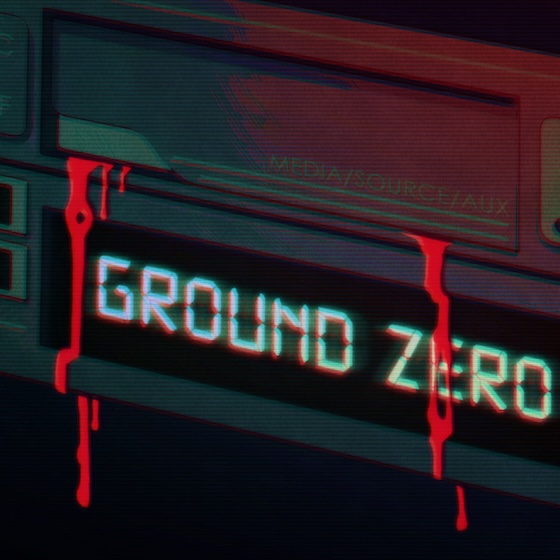
Celebrating a decade as a synthwave artist, Starfounder returns with Ground Zero, an album that moves beyond nostalgia and into something darker, heavier, and more cinematic. Instead of leaning on familiar outrun tropes, this record pushes into colder territory, driven by pulsing beats, ominous synth textures, and a dystopian atmosphere that feels alive and constantly in motion.
From the opening moments of “Phantom Pain,” there’s an immediate sense of descent. It’s a brief introduction, but it sets the mood perfectly, all tension and unease, like stepping into a world lit by flickering neon and smoldering wreckage. When the title track “Ground Zero” kicks in, the album fully opens up. Propulsive rhythms surge beneath icy synth lines while industrial textures add a scorched intensity. It captures what the album does so well throughout: balancing relentless momentum with immersive atmosphere.
That energy carries into “Stubborn,” one of the standout tracks here, where driving sequences and thick analog textures create a powerful sense of forward motion. “Whirlpool” takes a more hypnotic turn, pulling listeners through layered arpeggios and darker ambient currents, while “Odd” shifts the pacing with something stranger and more unpredictable. There’s a constant push and pull across the record—between melody and machinery, tension and release—that keeps it engaging from start to finish.
The two-part “Ambush” sequence feels like the album’s centerpiece. “Ambush (Pt. 1)” simmers with suspense, while “Ambush (Pt. 2)” expands that tension into something larger and more cinematic. Together they play like a single unfolding scene, full of brooding synth waves and pulsing percussion, giving the record a soundtrack-like intensity. It’s some of the album’s most immersive material.
By the time “Heartless” arrives, the mood settles into colder emotional territory. The propulsion is still there, but it feels haunted, almost detached. “Driver” brings another burst of motion, nodding to classic synthwave pulse while keeping the darker industrial edge intact. Then “At What Cost” closes the album in brief but haunting fashion, less a grand finale than an aftershock that lingers long after it ends.
What makes Ground Zero so compelling isn’t just the strength of individual tracks, but how cohesive the full experience feels. The pulsing beats don’t exist just for impact—they carry emotion. The synth work is rich with texture, sometimes glacial and atmospheric, other times urgent and razor sharp, and the production reveals more with each listen. There’s real weight here, but also movement, and even in its bleakest moments the album carries a strange beauty.
After ten years, Starfounder sounds less interested in revisiting synthwave’s past than in evolving its possibilities. Ground Zero expands those aesthetics into something darker, heavier, and more immersive. For fans of dark synth, dystopian electronics, and cinematic instrumental storytelling, it’s a striking release. Available through Bandcamp, where the album can be purchased directly, it also reflects the independent spirit that has long fueled underground electronic music.
Dark, pulsing, and deeply atmospheric, Ground Zero feels like the sound of ruins humming with electricity—another powerful chapter in Starfounder’s decade-long journey.
Available digitally through Bandcamp, where listeners can purchase the album and directly support the artist, Ground Zero feels like both a milestone and a statement—ten years distilled into a darker, more immersive sound.