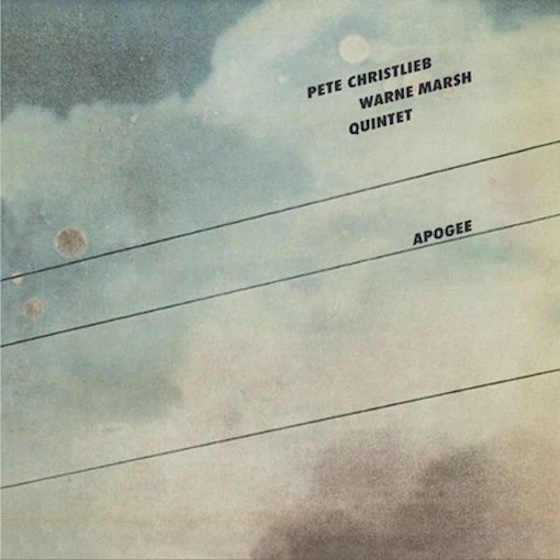
Some albums feel like they were made for late-night discovery, and Apogee is absolutely one of them. It slipped out in 1978 during this incredible stretch when jazz was going everywhere at once—fusion was exploding, bebop veterans were still creating beautiful work, and Los Angeles studio players seemed to have a hand in everything. And right in the middle of all that, Walter Becker and Donald Fagen of Steely Dan quietly produced a straight-ahead jazz album. That alone makes the record fascinating; Apogee feels like serious jazz musicians making a serious jazz record, with Becker and Fagen simply helping capture the magic.
The backstory makes it even better. Saxophonist Pete Christlieb was already tied to the Steely Dan world through that unforgettable solo on “Deacon Blues,” one of those solos people air-conduct without realizing it. Becker and Fagen adored Christlieb, and you can hear why. He had this huge, muscular tenor sound that could growl one second and glide the next. Pairing him with Warne Marsh was inspired, because Marsh was almost his opposite—more elusive, cerebral, all these winding melodic lines that seemed to think out loud. Put those two together and the album becomes this conversation between very different personalities. It reminds me of those rare nights talking with a friend where nobody is trying to win the conversation, you’re just tossing ideas back and forth and suddenly something deeper appears. That’s how this record feels.
And really, Becker and Fagen producing jazz shouldn’t have surprised anyone. Listen closely to Aja and the evidence is all there. Jazz wasn’t a side interest for them; it was embedded in how they heard music. What they brought to Apogee was not some glossy Steely Dan polish forced onto a jazz date, but space. Clarity. Atmosphere. The record breathes. You can hear musicians reacting to each other in real time, and that’s everything in jazz. There’s a kind of intimacy here that makes you lean in.
The music itself has this wonderful sense of shape. It never drifts the way some blowing sessions can. Even when the improvising stretches out, it feels purposeful. “Rapunzel,” the Becker-Fagen composition, is probably the doorway in for Steely Dan fans, but it works because it isn’t a novelty. It swings hard. There’s that sly harmonic twist Becker and Fagen loved, but Christlieb and Marsh make it their own. You can hear them circling each other, poking at ideas, finishing phrases, challenging each other. It feels playful and serious at once.
The title track has this feeling of lift to it, almost as if the music is spiraling upward. That may sound poetic, but it genuinely does. Marsh, especially, has that uncanny way of making a solo feel like someone thinking aloud. Not showing off. Thinking. I’ve always loved players who do that. It feels human. Christlieb brings a totally different energy—earthier, bluesier, more direct—and that contrast gives the whole record tension. That tension is the album’s heartbeat.
The standards and longer blowing pieces are where the record really opens up. Christlieb can come charging in with huge authority, then Marsh answers with these sly, angular lines that seem to float just above the beat. And somehow they keep meeting in the middle. It’s muscle and intellect sharing the same room. I love records where opposites sharpen each other instead of canceling each other out, and this one lives on that edge.
What makes Apogee linger, though, is that it feels like a hidden chapter in several stories at once. It’s part West Coast jazz record, part Steely Dan side-road, part tenor summit meeting. And somehow none of those descriptions fully capture it. It’s just its own thing. There’s a warmth in the playing, but also wit. There’s rigor, but never stiffness. You can hear joy in it. That matters.
I’ve always had a soft spot for records like this, the ones living in the cracks between categories. Not famous enough to be canonical, too good to stay obscure. You stumble across a clean copy, drop the needle, and halfway through you start wondering why nobody talks about it more. Those discoveries feel personal. Like finding a secret someone forgot to hide.
That’s why Apogee matters. Not simply because Becker and Fagen produced it, though that’s a great hook. It matters because it swings, surprises, and still feels alive. Decades later, it doesn’t sound like a curiosity. It sounds like a real conversation is still happening. And to me, the best jazz always does that. It keeps talking long after the record stops spinning.
While previously reissued and remastered, the album can now be found on Discogs, in the bins if luck is with you, or wherever serious jazz collectors still dig.
As always, drop the needle. Stay there.