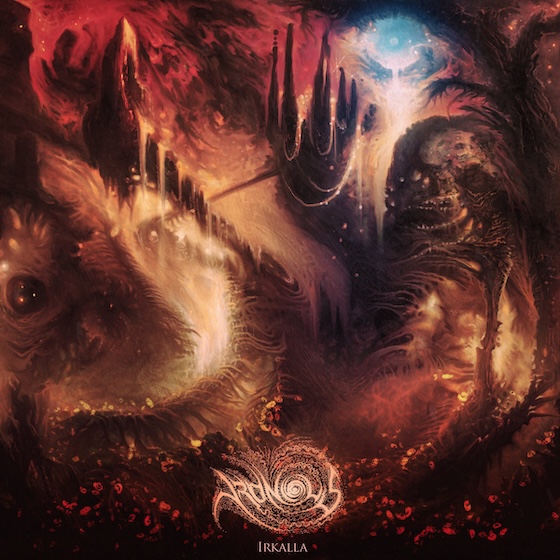
This is an album which opens beneath your feet. The ground fractures. Stone groans. You fall through a wound in the earth into a cursed subterranean temple lit by funeral embers and dying stars, and from somewhere in the black, the riffs come swarming. This album feels less like listening and more like descent—spiraling through obsidian corridors where every blast beat sounds like collapsing pillars and every guitar run twists like hieroglyphs alive with venom. The Artisan Era released something feral here, but also strangely cerebral, a technical death metal record with blood on its hands and cosmology in its teeth.
Aronious thrive in chaos, but Irkalla isn’t random violence. It’s architecture in motion. Riffs coil, fracture, regenerate. Rhythms lurch and surge as if the songs are changing shape while you’re trapped inside them. There’s progressive complexity everywhere, sure, but it never hardens into cold calculation. It breathes. It hunts. It mutates. The guitars slash one second and bloom into an eerie, almost cosmic melody the next, while the drumming sounds inhuman—less performed than summoned.
“Descent of Inanna” lives up to its name with a kind of ritualistic momentum, dragging the listener deeper into the underworld one punishing movement at a time. “Nincubura” spirals with a fevered intensity, packed with writhing riffs that feel like serpents knotting around one another. “Enkidu” hits with barbaric force, but even in its brutality there’s this strange grandeur, a ruined empire looming in the background. Then “Elu Ultu Irkalla” arrives and everything goes darker still, cavernous and imposing, like standing before a basalt throne in the kingdom of the dead.
What makes the album hit so hard is the way it balances total sensory overload with atmosphere. Plenty of tech-death can stun; fewer records transport. Irkalla transports. It smells of ash and old gods. It pulses with myth. You can feel Mesopotamian underworld imagery woven into the music—not as gimmick, but as spirit. This is death metal as a descent narrative.
And the performances are absurd. Kevin Paradis drums like a machine possessed. The guitars—handled by Ryan Brumlic and Nick Weyers—don’t merely riff; they convulse, erupt, speak in tongues. Brandon Brown’s vocals sound excavated from tomb dust and war smoke. Even Andrew Kim’s bass feels alive in the churn, moving beneath the songs like something ancient crawling under stone.
There’s a wildness to Irkalla that recalls Ulcerate at their most dissonant, flashes of Inferi precision, maybe some of Archspire’s manic velocity—but Aronious doesn't sound derivative. They sound like they blasted open an ancient gate and recorded what was screaming behind it. And that’s the thing. This album doesn’t invite you in politely. It drags you by the ankles into the pit. By the time the final notes fade, you don’t feel like you’ve heard a record. You feel like you survived an underworld passage. Burned. Initiated. Marked.
Irkalla is progressive death metal as a labyrinth, as ritual, as collapse. A chrome-toothed beast of a record. Flames licking the temple walls. Dust in your lungs. Ancient gods watching from cracked pillars while the double kicks thunder like war drums below.
Some albums rip. This one devours. Join the ritual here: https://aronious.bandcamp.com/album/irkalla
As always, celluloid fades. Dissonance remains.